Tag Archives: Taiwan silicon shield

The End of Taiwan? The End of U.S. and Europe Combined

Prosecutors in Taiwan indicted  in August 2025 three people in a case about sensitive chip technology, alleging they stole information from Taiwan Semiconductor Manufacturing (TSMC) to help one of TSMC’s top equipment suppliers, Tokyo Electron, win more orders…Taiwanese officials say the theft of trade secrets has grown over the past decade and point most of the blame at China. Over the past couple of years, Taiwan’s investigation bureau has probed more than 120 cases involving trade-secret theft. “If Taiwan’s technology hub falls or its technologies are lost, the impact will extend beyond Taiwan to the U.S., Europe and the rest of the world,” Sun Chen-yi, deputy director general of the investigation bureau at Taiwan’s Ministry of Justice, said in an interview before his retirement in July 2025.

Excerpt from Yang Jie et al., Three Accused of Stealing TSMC Chip Secrets to Aid Japanese Supplier, WSJ, Aug. 28, 2025

Squeezing China: the Asian NATO

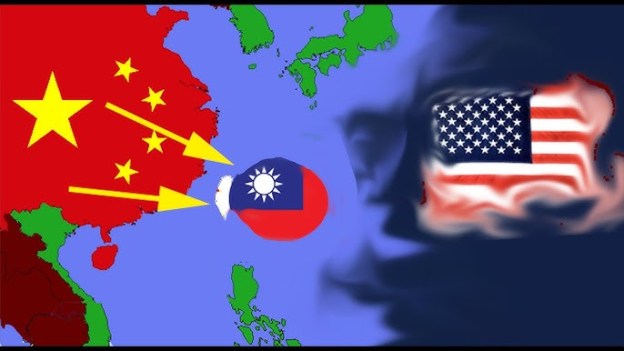
In defense terms, America’s “pivot to Asia” is not a single move, but a weaving of initiatives—with overlapping bi-, tri-, quadri- and multilateral deals—to create an ever-thickening lattice on China’s periphery. Some deals are modest; many are uncertain if tested in war. But they amount to the “fortification of America’s forward defense perimeter in the western Pacific.”…Despite its pacifism, Japan is greatly boosting defense spending. American marines in Okinawa are practicing how to scatter and defend the islands and sea passages. The next link, Taiwan, is under intense strain, given China’s aim to retake the self-governing island by force if necessary. America may soon announce the first “drawdown” of weapons from its own arsenal, pre-emptively strengthening Taiwan much as it has armed Ukraine. The Philippines, the next link, is weaker but has agreed to give America access to nine bases in the country; in return America is helping to beef up its forces….

America is devising ways to disperse its jets in wartime and hardening the defense of Guam. It wants to project more power from Australia, where it rotates air force and marine units. It is working with Britain to supply nuclear-powered submarines to Australia under the aukus deal; the three are also working on new weapons, including hypersonic missiles. Farther afield, the Quad—America, Australia and Japan working with India—is not a formal security grouping, but their navies exercise together. Across the region, American-led war-games are becoming bigger and more sophisticated. Sometimes America’s security arrangements are limited, for instance its new defense deal with Papua New Guinea; or its efforts to help littoral states improve “maritime domain awareness” to, say, curb illegal fishing by Chinese fleets. This, too, helps enmesh America in the region…

China accuses America of building an “Asian NATO”. But the reality is a looser system. America’s friends and allies in the “Indo-Pacific” have no mutual-defense commitments akin to NATO’s Article 5, under which an attack on one is an attack on all, nor integrated multinational commands.

Excerpts from America and China: The Chain, Economist, June 15, 2023

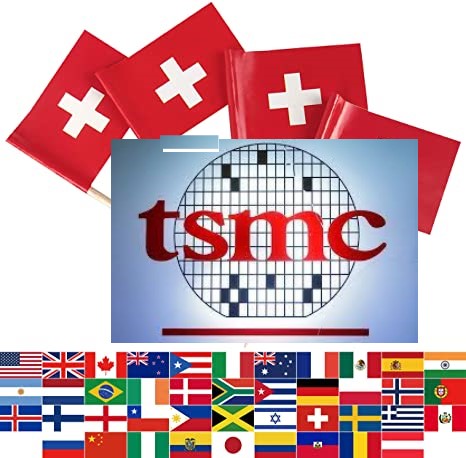
Can the Switzerland of Chips Crush the Global Economy?

Taiwan Semiconductor Manufacturing Co (TSMC) has emerged over the past several years as the world’s most important semiconductor company, with enormous influence over the global economy. With a market cap of around $550 billion, it ranks as the world’s 11th most valuable company. Its dominance leaves the world in a vulnerable position, however. As more technologies require chips of mind-boggling complexity, more are coming from this one company, on an island that’s a focal point of tensions between the U.S. and China, which claims Taiwan as its own.

The situation is similar in some ways to the world’s past reliance on Middle Eastern oil, with any instability on the island threatening to echo across industries….Being dependent on Taiwanese chips “poses a threat to the global economy,” research firm Capital Economics recently wrote. Its technology is so advanced, Capital Economics said, that it now makes around 92% of the world’s most sophisticated chips, which have transistors that are less than one-thousandth the width of a human hair. Samsung Electronics Co. makes the rest. 

The U.S., Europe and China are scrambling to cut their reliance on Taiwanese chips. While the U.S. still leads the world in chip design and intellectual property with homegrown giants like Intel Corp. , Nvidia Corp. and Qualcomm, it now accounts for only 12% of the world’s chip manufacturing, down from 37% in 1990, according to Boston Consulting Group. President Biden’s infrastructure plan includes $50 billion to help boost domestic chip production. China has made semiconductor independence a major tenet of its national strategic plan. The European Union aims to produce at least 20% of the world’s next-generation chips in 2030 as part of a $150 billion digital industries scheme.

The Taiwanese maker has also faced calls from the U.S. and Germany to expand supply due to factory closures and lost revenues in the auto industry, which was the first to get hit by the current chip shortage.

Semiconductors have become so complex and capital-intensive that once a producer falls behind, it’s hard to catch up. Companies can spend billions of dollars and years trying, only to see the technological horizon recede further. A single semiconductor factory can cost as much as $20 billion. One key manufacturing tool for advanced chip-making that imprints intricate circuit patterns on silicon costs upward of $100 million, requiring multiple planes to deliver

Taiwanese leaders refer to the local chip industry as Taiwan’s “silicon shield,” helping protect it from such conflict. Taiwan’s government has showered subsidies on the local chip industry over the years, analysts say.

Excerpts from Yang Jie et al., The World Relies on One Chip Maker in Taiwan, Leaving Everyone Vulnerable, WSJ, June 19, 2021