Tag Archives: tax avoidance

The Essence of Capitalism: Shelters

SKU Distribution in Mesa, Arizona., is experiencing rapid growth as companies seek to access foreign-trade zones and navigate rising U.S. tariffs. Companies can use foreign-trade zones to defer tariff payments until products are sold, which operators say helps them manage supply chains and avoid bottlenecks. The foreign-trade zone program dates back to the 1930s, with roughly 260 such facilities now in the U.S. In some, inquiries from companies have recently quadrupled.

SKU Distribution had just one customer in 2024 at its Mesa, Arizona, warehouse. In 2025, it is teeming with new business from companies storing items such as aluminum poles, ice picks, carabiners and firearm safes. That is because the warehouse is the ultimate U.S.-based tariff refuge

Arizona is the foreign-trade zone capital of America, its facilities employing more workers than those of any other state, Commerce Department data shows. Apple, Intel, Honeywell Aerospace, Sub-Zero and Ball Corp. all manufacture within the Arizona facilities, together processing more than $7.5 billion in merchandise in 2023. The program has helped turn this strip of the Phoenix-area desert into a chip-making hot spot. Now, Trump’s tariffs are drawing a clientele of smaller companies looking for refuge from the trade war.

Excerpt from Owen Tucker-Smith, Inside the Arizona Warehouse That Has Become Shelter in Tariff Storm, WSJ, May 12, 2025

See also United States as a Tax Haven
Out-of-Fashion: Aggressive Tax Planning

In December 2019, Royal Dutch Shell voluntarily published its revenue, profit, taxes and other business details in each of 98 countries. The disclosure aligns with a drive by the energy company, which often attracts criticism from environmental activists, to present itself as forward-thinking, transparent and socially-minded.  That didn’t stop the information feeding a predictable host of headlines in the U.K., where the company is partly based, that it didn’t pay taxes in the country (because of losses carried forward and tax refunds). In the U.S., Shell accrued $137 million of tax—a rate of 8%.  This kind of detailed reporting is required by tax authorities in about 100 countries including the U.S. since 2017, based on rules agreed by the Organisation for Economic Cooperation and Development, but it is rarely made public.

Companies that don’t jump may soon be pushed. Economy ministers from European Union countries are considering a proposal that would require all large companies with total revenue of more than €750 million ($834 million) operating in the bloc to publish the information annually. The Global Reporting Initiative, an organization that establishes sustainability standards, recently agreed to include a similar requirement. Greater transparency could also spur reform efforts and reduce incentives for complex tax arrangements. Companies, investors and states all agree that it is best to find a global solution to the problem of aggressive tax planning.

Excerpts from Rochelle Toplensky, Beginning of the End of Tax Secrecy, WSJ, Dec. 20, 2019

Predators: Tax Avoidance in Luxembourg

Antoine Deltour and Raphaël Halet, two ex-employees of PwC, an accounting firm, and Edouard Perrin, a French journalist, had been tried in Luxembourg for their role in leaking documents that revealed sweetheart tax deals the Grand Duchy had offered to dozens of multinationals. ..The whistle-blowers faced up to ten years behind bars. However, the prosecutor—perhaps sensitive to the strong public and, in some places, political support for them abroad—called for suspended sentences of 18 months. In the end the judge handed Messrs Deltour and Halet suspended sentences of 12 months and nine months, respectively. But a conviction is a conviction; Transparency International, an anti-corruption group, called it “appalling”. Mr Perrin, who had published an article that drew on the leaked documents, was acquitted.

The “LuxLeaks” affair has highlighted the role played by certain European Union countries, including Ireland and the Netherlands as well as Luxembourg, in facilitating tax avoidance. Luxembourg is not a typical tax haven levying no or minimal income tax; its statutory rate is 29%. Instead, it is a haven “by administrative practice”, argues Omri Marian of the University of California, Irvine, who has studied LuxLeaks in detail. Luxembourg’s tax authority in effect sold tax-avoidance services to large firms by rubber-stamping opaque arrangements that helped them to cut their tax bills dramatically in both their countries of residence and their countries of operation.]

Excerpt from Tax avoidance: Grand dodgy, Economist, July 2, 2016

The Rape of Europe by Internet Giants: tax avoiding, data mining

The raid by the European Commission’s antitrust gumshoes this month on Orange (formerly France Telecom), Deutsche Telekom and Telefónica of Spain seemed to come out of the blue. The companies professed a surprise verging on stupefaction. Even some Brussels insiders were caught on the hop.  Naming no names, the commission said the inquiry involved internet connectivity. The question is whether entrenched telecoms firms are abusing their strength in the market for internet traffic to deny video-streaming websites and other content providers full access to their networks to reach consumers. Besides the content providers themselves, the other potential plaintiffs are the “wholesalers” that the content providers use to ship their data across borders (and usually the Atlantic). These rely on incumbent internet-service providers (ISPs) such as Orange to take the data the last bit of the way to subscribers’ screens and mobiles.

All eyes turned to Cogent Communications, an American wholesaler which handles data for the likes of YouTube. Cogent has complained, fruitlessly, to French and German regulators that their former monopolies were asking too much to handle data, and throttling the flow to consumers when bigger fees were not forthcoming. It is appealing against the French decision.  In theory Orange and the other network providers might simply pass on to their customers the cost of all their streaming and downloading… But Europe’s market is fiercely competitive; and regulators place all sorts of constraints on how networks can charge for their services, while haranguing them to invest in new technology and new capacity to keep up with rising traffic. Though there are similar spats in America (for instance between Cogent and Verizon, a big network operator), it looks to some Europeans like another example of the rape of the old continent by America’s data-mining, tax-avoiding internet giants.

The broader issue—and the reason, perhaps, why the antitrust watchdogs chose to weigh in—is that Europe is on the brink of big regulatory change. A draft law to be published in September will subtly alter the principle of “net neutrality”, the idea that companies which own the infrastructure cannot give priority to some traffic (eg, from their own websites) over that of others.;”

Internet access: Congestion on the line, Economist, July 20, 2013

Multinationals and their Stateless Income

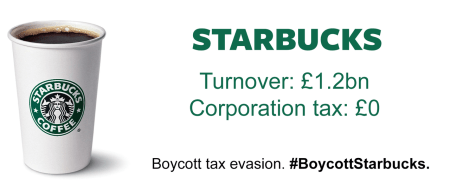
Cross-border corporate taxation is fiendishly complex, the lobbying around it furious. Several recent academic studies show just how pervasive tax avoidance is.  The ability to shift profits to low-tax countries by locating intellectual property in them, which is then licensed to related businesses in high-tax countries, is often assumed to be the preserve of high-tech companies. Yet in “Through a Latte, Darkly”, a new study of how Starbucks has largely avoided paying tax in Britain, Edward Kleinbard of the University of Southern California shows that current tax rules make it easy for all sorts of firms to generate what he calls “stateless income”: profit subject to tax in a jurisdiction that is neither the location of the factors of production that generate the income nor where the parent firm is domiciled. In Starbucks’s case, the firm has in effect turned the process of making an expensive cup of coffee into intellectual property.

In another new paper Harry Grubert of America’s Treasury and Rosanne Altshuler of Rutgers University delve into tax returns by American multinationals in 2006. They examine all the foreign profits held abroad by these firms (because bringing the money home would incur tax). A remarkable 36.8% of these profits were recorded in countries taxing them at a rate of 0-5%, and a further 9.1% were in countries taxing at 5-10%. Given how much more aggressive their tax-avoidance strategies are believed to have become since, it seems likely that the proportion of foreign profits held by American firms in low-tax countries is now well over half. It will take more than fine words in a communiqué to change behaviour when so much is at stake,

Excerpt, The G8 summit: T time, Economist, June 22, 2013, at 72