Tag Archives: weaponized bugs

How to Engineer Bacteria to Search for Underground Chemical Weapons: DARPA

U.S. military researchers asked in 2019 two companies to develop new kinds of biological sensors that can detect underground disturbances or the presence of buried chemicals or weapons.

Officials of the U.S. Defense Advanced Research Projects Agency (DARPA) in Arlington, Va., are looking to Raytheon BBN Technologies, and Signature Science, for the BioReporters for Subterranean Surveillance program.  This project seeks to use indigenous and engineered organisms to sense changes of interest to military commanders in natural and built environments. Raytheon BBN and Signature Science won separate $1.6 million contracts for the Subterranean Surveillance progam.

The two companies will perform laboratory research and proof-of-concept demonstrations of biological sensing systems in well- controlled field tests that take advantage of recent advances in microbial science and synthetic biology to develop biological sensors, signal transducers, and reporters that can reveal subterranean phenomena at a distance.  Bio Reporters should be able to sense a phenomenon at least one meter below the surface, propagate a signal to the surface within seven days, and be continuously detectable on the surface at a distance of 10 meters over the subsequent seven days.

DARPA researchers want Raytheon BBN and Signature Science experts to take advantage of the extensive biological networks that exist underground to monitor large areas to increase the military’s ability to detect subterranean events without the need for precise coordinates.

Excerpts from John Keller, Researchers eye new biological sensors to to detect underground objects like buried chemicals and weapons, https://www.militaryaerospace.com,  Nov. 6, 2019

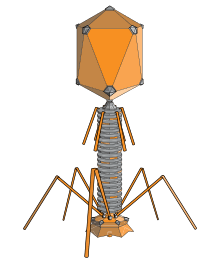
In more detail  Signature Science and its partner, the Texas A&M University Center for Phage Technology, aim to leverage modern and synthetic phage biology and the straightforward molecular genetics of the harmless soil bacterium Bacillus subtilis to generate a new platform to recognize and report on specific chemical threats underground. The Spore-Phage Amplified Detection (SPADe) method, potentially extensible to explosives, radiation or physical disturbance sensing, seeks to substantially advance currently used techniques which rely heavily on manual soil testing. 
Humans as Lab Rats: Weaponizing Ticks

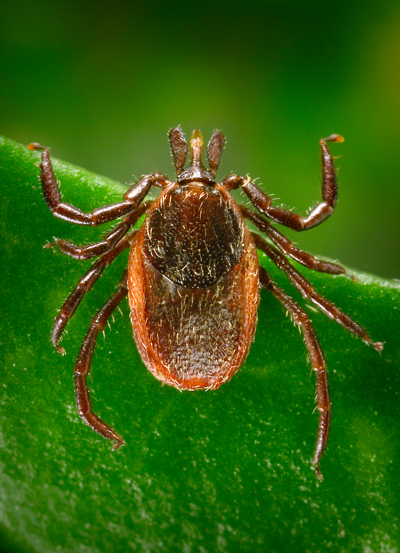
In July 2019, the US House of Representatives added an unusual amendment to the 2020 U.S. defense budget: a requirement that the Department of Defense reveal details of any biological warfare research it did involving ticks during the Cold War. The requirement stems from allegations that Lyme disease was actually a biowarfare experiment accidentally released into the wild.  The amendment was added to the defense budget by New Jersey Congressman Christopher Smith. It calls on the U.S. government to “conduct a review of whether the Department of Defense experimented with ticks and other insects regarding use as a biological weapon between the years of 1950 and 1975.”

If there was any sort of research the Pentagon Inspector General “must provide the House and Senate Armed Services committees with a report on the experiments’ scope and ‘whether any ticks or insects used in such experiments were released outside of any laboratory by accident or experiment design.’”

The call for information comes after the publication of the book Bitten: The Secret History of Lyme Disease and Biological Weapons. A major allegation in the book is that Willy Burgdorfer, the discoverer of the bacterium that causes Lyme Disease, claimed that the disease was the result of a biological weapons program that went awry. Burgdorfer himself was involved in biological warfare programs that involved using blood-sucking insects, including fleas, ticks, and mosquitoes, as vectors for the transmission of human diseases.

Weaponizing bugs isn’t a completely novel idea. Imperial Japan weaponized insects, typically fleas infected with plague and cholera, where they were used against the civilian population in China. The Japanese military organization responsible for the research, Unit 731, was later rounded up by the U.S. military after the war.  Despite committing serious, egregious crimes against humanity, including vivisection, members of the unit were only lightly punished by the Allies, reportedly in exchange for research data.

Lyme Disease affects approximately 30,000 people a year, primarily in the northeastern United States. The book alleges biowarfare research involving ticks took place at Fort Detrick, Maryland, and Plum Island, New York—both areas where CDC maps note the disease is very prevalent, but the CDC itself does not have an opinion on the allegation.

So…Did the Pentagon Use Ticks for Biological Warfare?, Popular Mechanics. July 17, 2019.