Tag Archives: Baltic Shield

The Undeclared War in the Baltic

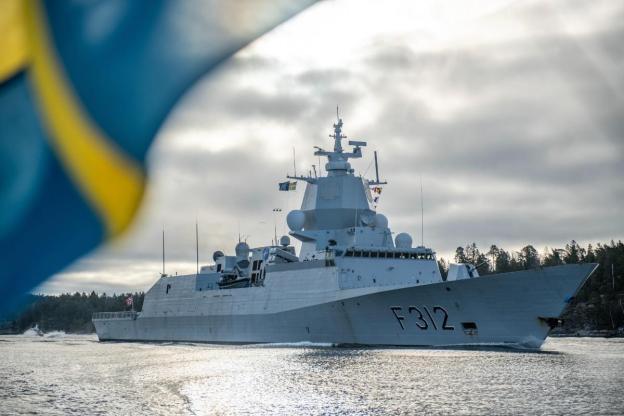
In January 2025, NATO launched the operation, dubbed Baltic Sentry, after a string of undersea cables and pipelines were damaged by ships—many with links to Russia—that had dragged their anchors.  “We are functioning as security cameras at sea,” said Kockx, the Belgian commander, whose usual duty is clearing unexploded mines from the busy waterway… New undersea drones are keeping a watchful eye on pipes and cables. NATO surveillance planes from the U.S., France, Germany and occasionally the U.K. take turns scanning the seaway from high above. NATO has also strengthened its military presence on the Baltic…NATO’s goal is to prevent more damage to subsea infrastructure and respond faster if something occurs…

The Baltic, a central theater in two world wars, is littered with wrecks and explosives that still pose danger. Surrounding NATO members are world leaders in finding and disposing of sea mines, officials say….Commercial traffic on the Baltic ranks among the world’s densest, with more than 1,500 ships plying its waves on any day, so policing it all is difficult. Further complicating NATO’s sentry duty initially was a lack of comprehensive information about all the critical infrastructure snaking across the sea’s muddy bottom. Details of pipes and cables have traditionally been kept by national governments or private companies. Nobody had a picture of everything...NATO’s new undersea infrastructure center in 2024 assembled the first unified map of the Baltic’s floor.

Excerpt from Daniel Michaels, How NATO Patrols the Sea for Suspected Russian Sabotage, Mar. 31, 2025

Mining the Earth to Save it

The rush to secure green-energy metals is bringing new life to one of the world’s oldest mining hubs. Like the United States, Europe is worried that it is too reliant on China for supplies of once-obscure natural resources, such as lithium and rare-earth metals, that are seen as climate-friendly successors to oil and gas…. 

On both sides of the Atlantic, one of the best answers to long-simmering worries about green-energy security is to look north…, for example, to the “Canadian Shield,” a vast band of rock encircling Hudson Bay. The “Baltic Shield” that stretches across Scandinavia to western Russia is similarly mineral-rich. It helps explain why Sweden in particular has such a long mining heritage. In the mid-17th century, the country’s “Great Copper Mountain” near Falun provided two-thirds of the world’s copper. Even today, 80% of iron ore mined in the EU comes from a site near the Arctic town of Kiruna that Swedish state operator LKAB has exploited for well over a century.

The energy transition is an opportunity for Sweden’s mining complex. LKAB said in January 2023 that it had identified Europe’s largest body of rare-earth metals close to its existing Kiruna operation…Digging up the planet to save it is an awkward pitch. The only way for miners to counter accusations that they are adding to the problem they want to solve is by decarbonizing operations. Here Sweden is again helped by the geology of the Baltic Shield, whose river valleys are favorable for green-energy production. Roughly 45% of the country’s electricity comes from hydroelectric power, with much of the remainder provided by nuclear and wind. It is also cheap, particularly in the Arctic, where many mines are located. Against a favorable geopolitical backdrop, the biggest risk for investors is political. Mines, which can bring a lot of noise and relatively few jobs to an area, don’t tend to be popular locally.

There is a reason the West relies on autocracies for a lot of its oil.

Excerpts from Stephen Wilmot, For Mining EV Metals, the Arctic Is Hot, WSJ, Feb. 14, 2023