Tag Archives: big tech

Nvidia CEO Has a Magic Needle

Nvidia’s market share in China fell to 50% from 95% over the past four years under U.S. restrictions, Huang, Nvidia’s CEO,  said in May 2025.  He visited China at least three times in 2025 to reassure Chinese tech executives and government officials that Nvidia was committed to the market…. Huang has met with top executives of Chinese cloud-computing leader Alibaba, smartphone and automaker Xiaomi and OpenAI challenger MiniMax.People in China’s tech industry said they appreciated Huang’s efforts to modify his chips so they could be sold in China. Engineers there nicknamed him “Magic Tailor” for his skill in designing chips to thread the needle of U.S. regulations.

Knowing the importance of the Chinese market to Nvidia, Beijing increased pressure on the company: China’s cybersecurity regulator recently summoned Nvidia representatives to discuss alleged security risks of the H20 chips, citing comments by U.S. lawmakers about the need for a bill to require tracking capabilities for advanced chips sold abroad….

Excerpt from Lingling Wei et al, With Billions at Risk, Nvidia CEO Buys His Way Out of the Trade Battle, WSJ, Aug. 11, 2025


Can AI Do That? Knowledge Impossible to Copy

Zuckerberg hasn’t had much success in his efforts to hire the field’s biggest stars, including OpenAI’s co-founder Ilya Sutskever and its chief research officer, Mark Chen. Many candidates are happy to take a meeting at Zuckerberg’s homes in Palo Alto and Lake Tahoe. In private, they are comparing gossip and calculating Meta’s chances of winning the AI race.

The handful of researchers who are smartest about AI have built up what one described as “tribal knowledge” that is almost impossible to replicate. Rival researchers have lived in the same group houses in San Francisco, where they discuss papers that might provide clues for achieving the next great breakthrough. 

Excerpt from Ben Coen et al, It’s Known as ‘The List’—and It’s a Secret File of AI Geniuses, WSJ, June 27, 2025

The Road to Success is Paved with Dirty Secrets

Amazon.com is the latest to face possible sanctions over allegations it improperly withheld tens of thousands of business records—including some unflattering to founder Jeff Bezos—in defending against an action by the Federal Trade Commission. At Google, a federal judge in San Francisco has ruled the company didn’t properly save evidence in a case brought by Epic Games, and its behavior has become a yoke as the Justice Department seeks to break up the search giant after winning two landmark antitrust cases. A different federal judge recently referred the behavior of Apple to the Justice Department, in part because of alleged efforts to hide documents from legal scrutiny…

Each company is accused of being overly aggressive in holding back internal documents under special legal standing—known as privilege—that should have, in fact, been turned over to the government or lawyers…Maybe it isn’t surprising the companies can’t help themselves in pushing the limits. It is, after all, what has made them so successful as disrupters turned conquerors. In their minds, they are the underdogs, whether they are facing the rise of AI, China or the next Big Thing lurking beyond the horizon. 

Excerpt from Tim Higgins, What Is Big Tech Trying to Hide?, WSJ, May 17, 2025

The Billionaires Who Conquer the World One Country at a Time

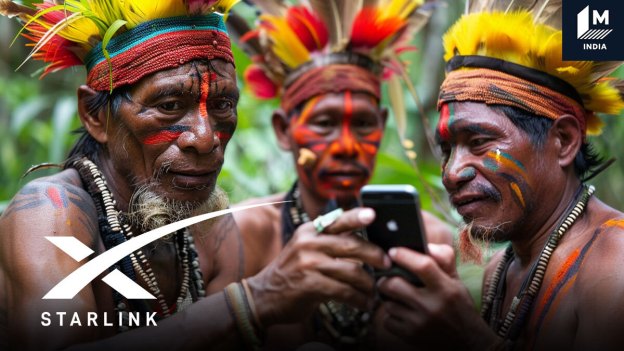
Elon Musk is so popular in this farming region of Brazil that his face is plastered in stores alongside herds of cows, and local magazines depict him as a superhero. The billionaire’s appeal is simple: His satellite company Starlink has connected Brazil’s vast rural and jungle expanses to the internet.  “We were all rooting for Starlink to come to Brazil…we knew what a big change it would make,” said Arthur Cursino, a ginger farmer here who once had to climb a tree to get a cellphone signal and now, thanks to Starlink, runs one of Brazil’s most popular YouTube channels on farming.

But Starlink’s rapid expansion has come as officials in the administration of leftist President Luiz Inácio Lula da Silva have raised concerns about Musk’s growing influence over the country. After getting regulatory approval two years ago, Starlink eclipsed competitors in May 2024 to become the country’s biggest satellite internet provider.  Musk, a billionaire whose companies include social-media platform X and electric-car maker Tesla, has courted right-wing leaders around the world, including da Silva’s predecessor and rival, Jair Bolsonaro. Musk threw his support behind the candidacy of former President Donald Trump.

The regions where Starlink has become popular—Brazil’s agricultural heartland and the Amazon rainforest—are Bolsonaro strongholds where da Silva faces deep political opposition. Now, Brazil’s federal audit court is investigating Starlink’s use by public authorities in the country, threatening to place restrictions on the service. Anatel, the telecoms regulator, has opened a separate inquiry into Starlink, saying that its rapid growth in subscribers of more than 20% a month could crowd out new players.

Excerpt from Samantha Pearson, Brazil Sees Elon Musk’s Starlink as a Political Threat, July 26, 2024

Facebook Denizens Unite! the right to privacy and big tech

The European Union’s (EU) approach to regulating the big tech companies draws on its members’ cultures tend to protect individual privacy. The other uses the eu’s legal powers to boost competition.  The first leads to the assertion that you have sovereignty over data about you: you should have the right to access them, amend them and determine who can use them. This is the essence of the General Data Protection Regulation (GDPR), whose principles are already being copied by many countries across the world. The next step is to allow interoperability between services, so that users can easily switch between providers, shifting to firms that offer better financial terms or treat customers more ethically. (Imagine if you could move all your friends and posts to Acebook, a firm with higher privacy standards than Facebook and which gave you a cut of its advertising revenues.)

Europe’s second principle is that firms cannot lock out competition. That means equal treatment for rivals who use their platforms. The EU has blocked Google from competing unfairly with shopping sites that appear in its search results or with rival browsers that use its Android operating system. A German proposal says that a dominant firm must share bulk, anonymised data with competitors, so that the economy can function properly instead of being ruled by a few data-hoarding giants. (For example, all transport firms should have access to Uber’s information about traffic patterns.) Germany has changed its laws to stop tech giants buying up scores of startups that might one day pose a threat.

Ms Vestager has explained, popular services like Facebook use their customers as part of the “production machinery”. …The logical step beyond limiting the accrual of data is demanding their disbursement. If tech companies are dominant by virtue of their data troves, competition authorities working with privacy regulators may feel justified in demanding they share those data, either with the people who generate them or with other companies in the market. That could whittle away a big chunk of what makes big tech so valuable, both because Europe is a large market, and because regulators elsewhere may see Europe’s actions as a model to copy. It could also open up new paths to innovation.

In recent decades, American antitrust policy has been dominated by free-marketeers of the so-called Chicago School, deeply sceptical of the government’s role in any but the most egregious cases. Dominant firms are frequently left unmolested in the belief they will soon lose their perch anyway…By contrast, “Europe is philosophically more sceptical of firms that have market power.” ..

Tech lobbyists in Brussels worry that Ms Vestager agrees with those who believe that their data empires make Google and its like natural monopolies, in that no one else can replicate Google’s knowledge of what users have searched for, or Amazon’s of what they have bought. She sent shivers through the business in January when she compared such companies to water and electricity utilities, which because of their irreproducible networks of pipes and power lines are stringently regulated….

The idea is for consumers to be able to move data about their Google searches, Amazon purchasing history or Uber rides to a rival service. So, for example, social-media users could post messages to Facebook from other platforms with approaches to privacy that they prefer…

Excerpts from Why Big Tech Should Fear Europe, Economist, Mar. 3, 2019; The Power of Privacy, Economist, Mar. 3, 2019