Deep southern Negev desert, Israel, there is a small town called Baladia, with a main square, five mosques, cafés, a hospital, multi-storey blocks of flats, a kasbah and a cemetery. Oddly, it also has a number of well-constructed tunnels. The only people milling around in its streets are Israeli Defence Force (IDF) soldiers. Baladia, the Arab word for city, is part of the Tze’elim army base**. It has been built to provide a realistic training ground for the next time the IDF is required to go into Gaza to destroy Hamas missile launchers…Acceptance among Western armies that future fights are most likely to take place in cities. Megacities with populations of more than 10m are springing up across Africa and Asia. They are often ringed by closely packed slums controlled by neighbourhood gangs. Poor governance, high unemployment and criminality make them fertile territory for violent extremism.
It is hardly surprising that non-state adversaries of the West and its allies should seek asymmetric advantage by taking the fight into cities. Air power and precision-guided munitions lose some of their effectiveness in urban warfare because their targets can hide easily and have no scruples about using a densely packed civilian population as a shield.
Valuable lessons have been learned from the battle for Sadr City, a large suburb of Baghdad, in 2008, Israel going into Gaza in 2014 and the defeat of Islamic State (IS) in Mosul 2017….As General Mark Milley, the head of the US Army, puts it, “it took the infantry and the armour and the special operations commandos to go into that city, house by house, block by block, room by room…and it’s taken quite a while to do it, and at high cost.” He thinks that his force should now focus less on fighting in traditional environments such as woodland and desert and more on urban warfare.
To that end, he advocates smaller but well-armoured tanks that can negotiate city streets, and helicopters with a narrower rotor span that can fly between buildings. At the organisational level, that means operating with smaller, more compartmentalised fighting units with far more devolved decision-making powers…
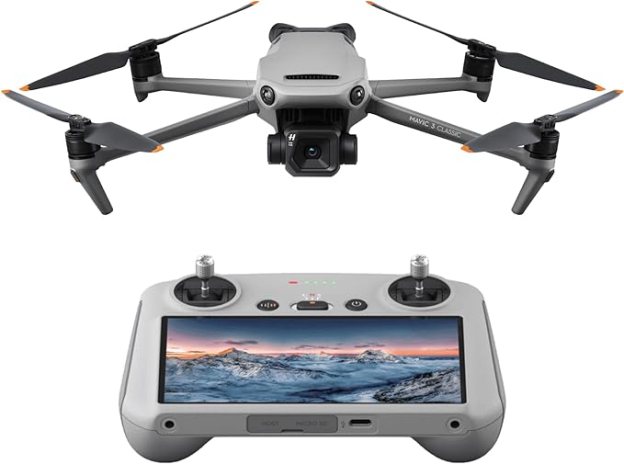
Western military forces should still enjoy a significant technological edge. They will have a huge range of kit, including tiny bird- or insect-like unmanned aerial vehicles that can hover outside buildings or find their way in. Unmanned ground vehicles can reduce the risk of resupplying troops in contested areas and provide medical evacuation for injured soldiers, and some of them will carry weapons….
For all the advances that new technologies can offer, General Milley says it is a fantasy to think that wars can now be won without blood and sacrifice: “After the shock and awe comes the march and fight…to impose your political will on the enemy requires you…to destroy that enemy up close with ground forces.”
Excerpt from House to House in the The New Battlegrounds, Economist Special Report, the Future of War, Jan. 27, 2018
***In 2005, the Israeli Defense Forces, with assistance from the United States, built the Urban Warfare Training Center at the Tze’elim Army Base, at a cost of $45 million. Nicknamed “Baladia” it is a 7.4 square mile training center used to instruct soldiers in urban warfare techniques, and consists of an imitation Middle Eastern style city with multiple multistory buildings. It has been used to train various military organizations, including the US Army and UN peacekeepers. Wikipedia


 Law-In-Action