Tag Archives: boeing

How Boeing Maimed Itself and Killed 346 People

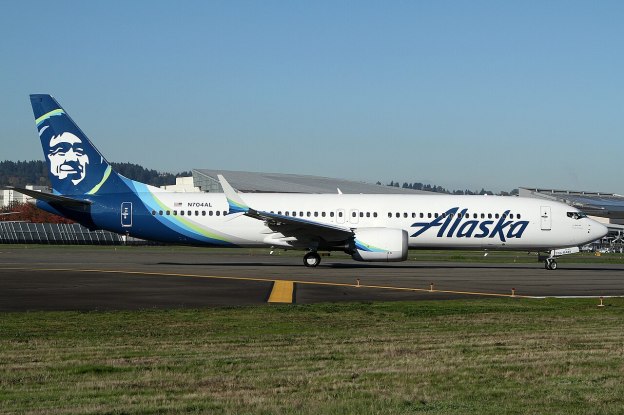
Spirit AeroSystems is going full circle, from part of Boeing till 2005 to independent supplier in 2005 (when Boeing sold to a private equity firm) and back to part of Boeing in 2024. It is the perfect example of a realization dawning on corporate America: Outsourcing isn’t all it was once cracked up to be. The deal’s logic of vertical reintegration makes sense in light of recent history, with air-travel safety likely benefiting from centralized supervision and a simpler workflow between plants. Yet it is also an indictment of what executives in most industries have been doing for almost three decades….’

At the core of the outsourcing trend that lasted 30 years was the idea that an “asset-light” firm focused on intellectual property and its “core” expertise would be better run. With this mindset, jettisoning aerostructures operations seemed like a no-brainer….
It wasn’t just aerostructures: In the 2000s, Boeing outsourced more than 70% of the 787 Dreamliner program. But the problems with becoming an assembler of planes, as opposed to a true manufacturer, gradually became apparent. The company lost control of supply, resulting in years of delays and cost overruns…

Aerospace isn’t the only industry to revive vertical integration. Intel is beefing up chip manufacturing in the U.S., General Motors is building battery plants and Sweden’s IKEA is acquiring containerships. One general flaw of the asset-light model is that, over time, firms can lose their innovative edge because a lot of “learning by doing” happens when production processes interact. Another is that low-margin bits of the supply chain get worn down to just a few sources. These may not have the financial muscle to make big investments in times of turmoil, or they may be geopolitically sensitive. Such risks were underscored by post-Covid shortages, particularly in the largely “fabless” U.S. microchip industry, which has outsourced chip making to foundries in East Asia in a way that echoes what happened to aerostructures.

Excerpts from Jon Sindreu, Boeing Calls Time on the Great American Outsourcing, July 2, 2024
The B-3 Nuclear Capable Bomber

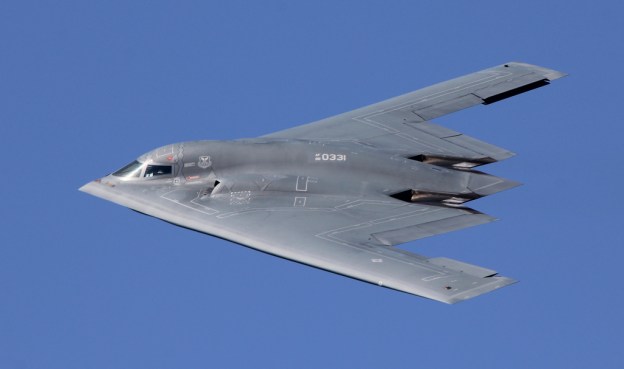
The US Air Force wants to to build a new long-range strike bomber. The B-3, as it is likely to be named, will be a nuclear-capable aircraft designed to penetrate the most sophisticated air defences. The contract [that would be signed by the  US Air Force and  a weapons company] itself will be worth $50 billion-plus in revenues to the successful bidder, and there will be many billions of dollars more for work on design, support and upgrades. The plan is to build at least 80-100 of the planes at a cost of more than $550m each.

The stakes could not be higher for at least two of the three industrial heavyweights… On one side is a team of Boeing and Lockheed Martin; on the other, Northrop Grumman. The result could lead to a shake-out in the defence industry, with one of the competitors having to give up making combat aircraft for good.  After the B-3 contract is awarded, the next big deal for combat planes—for a sixth-generation “air-dominance fighter” to replace the F-22 and F-18 Super Hornet—will be more than a decade away. So Richard Aboulafia of the Teal Group, an aviation-consulting firm, believes it will be hard for the loser to stay in the combat-aircraft business. ..

Usually in a contest of this kind, particularly this close to its end, a clear favourite emerges. Industry-watchers rate this one as still too close to call. That is partly because the degree of secrecy surrounding what is still classified as a “black programme” has remained high. Only the rough outlines of the aircraft’s specification have been revealed. It will be stealthy, subsonic, have a range of around 6,000 miles (9,650km) and be able to carry a big enough payload to destroy many targets during a single sortie. …

The target for the plane to come into operation is the mid-2020s—if possible, even earlier. In part this is because of fast-emerging new threats and in part because the average age of America’s current bomber fleet, consisting of 76 geriatric B-52s, 63 B-1s and 20 B-2s, is 38 years. Keeping such ancient aircraft flying in the face of metal fatigue and corrosion is a constant struggle: just 120 are deemed mission-ready. None of these, except the B-2s, can penetrate first-rate air defences without carrying cruise missiles—and the missiles are of little use against mobile targets.

In the kind of one-sided wars that America and its allies fought in the years after the September 11th 2001 attacks, such deficiencies were not a problem. But during that period China, in particular, has invested heavily in “anti-access/area-denial” (A2/AD) capabilities. These include thousands of precision-guided missiles of increasing range that could threaten America’s bases in the Western Pacific, and any carriers sailing close enough to shore to launch their short-range tactical aircraft….A new long-range bomber that can penetrate the most advanced air defences is thus seen as vital in preserving America’s unique ability to project power anywhere in the world.

Excerpts from Military aircraft: Battle joined, Economist, May 2, 2015, at 55.

Cold World Nuclear Experiments in California

Several environmental groups on Aug. 6, 2013 sued state regulators over the cleanup of a former nuclear research lab, saying low-level radioactive waste was improperly shipped to landfills.  Consumer Watchdog, along with other groups, filed a lawsuit Tuesday in Sacramento County Superior Court against the Department of Public Health and Department of Toxic Substances Control, which oversees the cleanup at the Santa Susana Field Laboratory.  Located about 30 miles northwest of Los Angeles, Santa Susana was once home to nuclear research and rocket engine tests. In 1959, one of the reactors suffered a partial nuclear meltdown. Responsible parties including Boeing Co., NASA and the U.S Energy Department have been working with state officials to meet a 2017 deadline to rid the nearly 2,900-acre site of contaminated soil.

In their complaint, the groups contend that materials from several buildings that were demolished were sent to landfills and metal recycling shops that are not licensed to accept radioactive waste. They also sought a temporary restraining order to stop Boeing from tearing down a plutonium fuel fabrication building on the hilltop complex….Officials at the toxic control agency rejected the allegations, saying that debris sent offsite posed no threat to human health or the environment.

Stewart Black, a deputy director at DTSC, said the state followed the rules in the demolishing and disposal of old buildings.   During the Cold War, workers at the site tested thousands of rockets and experimented with nuclear reactors, which were operational until 1980. And by the time the rest of the lab closed in 2006, a toxic legacy of radioactive and chemical contamination had been left.  Former workers and residents in nearby neighborhoods have blamed the lab for a variety of health problems.

Groups sue to block demolition at ex-nuclear site, Associated Press, Aug. 6, 2013

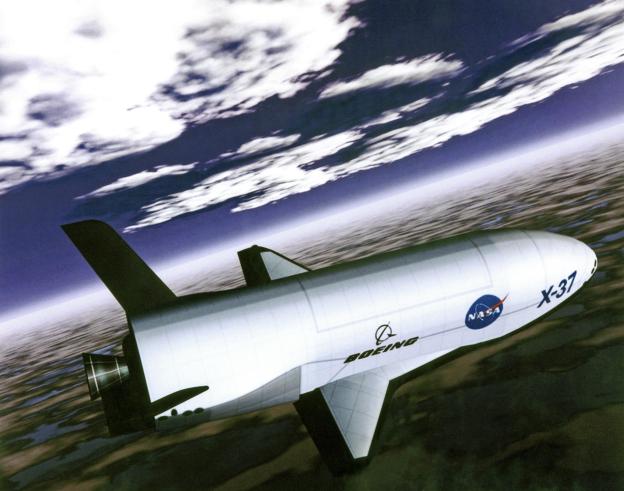
The Third X-37B Space Drone

An experimental robotic space plane developed for the Air Force is slated to be launched Tuesday (Dec. 11, 2012) from Cape Canaveral, Fla., fueling an ongoing mystery about its hush-hush payload and overall mission.  Air Force officials offered few details about the mission. They said the unmanned space plane, which resembles a miniature space shuttle, simply provides a way to test technologies in space, such as satellite sensors and other components.

This is the third time that the Air Force will send an X-37B Orbital Test Vehicle into orbit.   The first X-37B was launched in April 2010 and landed 224 days later on a 15,000-foot airstrip at Vandenberg Air Force Base, northwest of Santa Barbara. The second X-37B spent 469 days in space.  The only information the government released was when the space plane was launched and when it returned.

Because of its clandestine nature, some industry analysts say it could be a precursor to an orbiting weapon, capable of dropping bombs or disabling foreign satellites as it circles the globe.  But the Pentagon has repeatedly said the X-37B is simply a “test bed” for other technologies.

The X-37B is about 29 feet long, about the size of a small school bus, with stubby wings that are about 15 feet from tip to tip. It is one-fifth the size of the space shuttle and is powered by unfolding solar panels. It is designed to stay in orbit for 270 days.  The spacecraft was built in tight secrecy by Boeing Co.’s Space and Intelligence Systems unit in Huntington Beach. Engineering work was done at the company’s facilities in Huntington Beach and Seal Beach. Other components were supplied by its satellite-making plant in El Segundo.

Weather permitting, the plane is set to be launched Tuesday atop a 19-story Atlas V rocket, which will lift the spacecraft into orbit inside the nosecone. Once in orbit, the X-37B will emerge for its estimated nine-month journey.

By W.J. Hennigan, Another secretive space drone is set for launch, LA Times, Dec. 11, 2012