Tag Archives: Boeing Defence Space and Security

How to Make Money No Matter What

Sales of U.S. weapons to Israel have surged since October 2023, with Washington approving more than $32 billion in armaments, ammunition and other equipment to the Israeli military…Israel responded to the Oct. 7, 2023, attack led by Hamas, which killed about 1,200 people and took 251 hostages, with a military invasion that has killed more than 68,000 people in Gaza—including more than 18,000 children—according to Gaza health authorities…The fighting throughout the region has presented a fresh opportunity for defense companies in the American heartland and, to a lesser extent, tech giants on the West Coast…

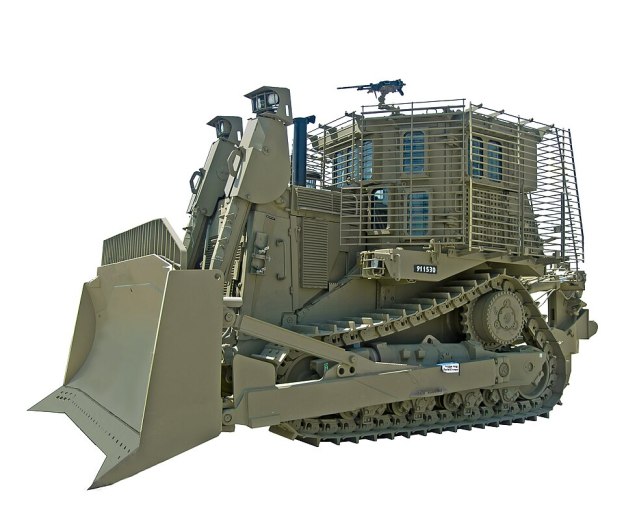
The American company that has brought in the most Israeli business since the Gaza war began is Boeing. The U.S. greenlighted an $18.8 billion sale of Boeing F-15 strike fighters in 2024 to Israel for delivery beginning in 2029. In 2025, various partnerships in which Boeing plays a leading role got approval for $7.9 billion of sales of guided bombs and associated kits…The biggest defense sales approved by Washington are for jet fighters and airborne-guided bombs, reflecting the crucial role of aerial bombings in the conflict…Israel’s Eitan armored fighting vehicles, which have been used widely across Gaza, are equipped with a hull from Wisconsin-based Oshkosh and an engine made by Rolls-Royce’s U.S. unit in Michigan. Caterpillar’s D9 armored bulldozers—used to clear rubble and destroy residences and other structures in Gaza—have been ubiquitous.

In some cases, companies have faced a backlash from investors and employees over their sales to the Israeli military. In 2024, three Norwegian investment funds have sold their stakes in Oshkosh, Palantir Technologies, Caterpillar and Thyssenkrupp over the use of their products for the war in Gaza. On Oct. 1 2025, Dutch pension fund ABP—the biggest in the Netherlands, with more than $400 billion under management—sold its €387 million, or $448 million, stake in Caterpillar, citing concerns over Gaza.

In September 2025, Microsoft disabled the Israeli Defense Ministry’s access to some cloud services in response to staff protests. Before the war began, Microsoft and a partnership between Alphabet-owned Google and Amazon.com had clinched deals with Israel to provide artificial-intelligence and cloud-computing services to the military. Meanwhile, AI giant Palantir, co-founded by Trump ally Peter Thiel, entered into a partnership with the Israeli Defense Ministry in January 2024. At a May 2025 conference, Palantir Chief Executive Alex Karp responded to accusations from a protester that Israel used Palantir’s technology to kill Palestinians, saying that those who were killed were “mostly terrorists.”

American companies have also found business opportunities in responding to the humanitarian crisis sparked by the war. The U.S. State Department said in June 2025 that it had allocated $30 million to the Gaza Humanitarian Foundation, led by former Trump adviser Johnnie Moore, to oversee aid handouts. The foundation hired American contractors Safe Reach Solutions and UG Solutions to provide security for the distribution efforts, which have been beset by dysfunction and violence.

In its 2025 annual report, Lockheed Martin said it had benefited from increased American defense funding related to Israel and Ukraine, notably munitions purchases. Revenue at its missiles division rose 13% last year to $12.7 billion…Armored-vehicles maker Oshkosh said an Israeli order of tactical vehicles had extended the lifespan of a production line that was due to shut in 2024.  In its latest 2025 report, Italian contractor Leonardo, whose U.S. unit is selling tanker trailers to Israel, said its international sales should remain stable in 2025 because of “the continuing conflicts in both Ukraine and Israel.”

Excerpt from Benoit Faucon, The Gaza War Has Been Big Business for U.S. Companies, WSJ, Nov. 12, 2025
How Boeing Maimed Itself and Killed 346 People

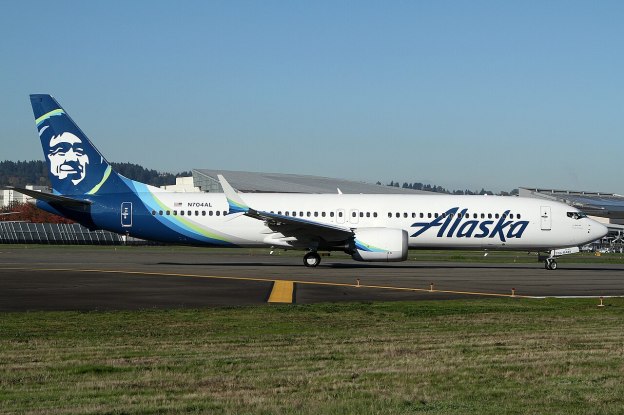
Spirit AeroSystems is going full circle, from part of Boeing till 2005 to independent supplier in 2005 (when Boeing sold to a private equity firm) and back to part of Boeing in 2024. It is the perfect example of a realization dawning on corporate America: Outsourcing isn’t all it was once cracked up to be. The deal’s logic of vertical reintegration makes sense in light of recent history, with air-travel safety likely benefiting from centralized supervision and a simpler workflow between plants. Yet it is also an indictment of what executives in most industries have been doing for almost three decades….’

At the core of the outsourcing trend that lasted 30 years was the idea that an “asset-light” firm focused on intellectual property and its “core” expertise would be better run. With this mindset, jettisoning aerostructures operations seemed like a no-brainer….
It wasn’t just aerostructures: In the 2000s, Boeing outsourced more than 70% of the 787 Dreamliner program. But the problems with becoming an assembler of planes, as opposed to a true manufacturer, gradually became apparent. The company lost control of supply, resulting in years of delays and cost overruns…

Aerospace isn’t the only industry to revive vertical integration. Intel is beefing up chip manufacturing in the U.S., General Motors is building battery plants and Sweden’s IKEA is acquiring containerships. One general flaw of the asset-light model is that, over time, firms can lose their innovative edge because a lot of “learning by doing” happens when production processes interact. Another is that low-margin bits of the supply chain get worn down to just a few sources. These may not have the financial muscle to make big investments in times of turmoil, or they may be geopolitically sensitive. Such risks were underscored by post-Covid shortages, particularly in the largely “fabless” U.S. microchip industry, which has outsourced chip making to foundries in East Asia in a way that echoes what happened to aerostructures.

Excerpts from Jon Sindreu, Boeing Calls Time on the Great American Outsourcing, July 2, 2024

SpaceX Falcon

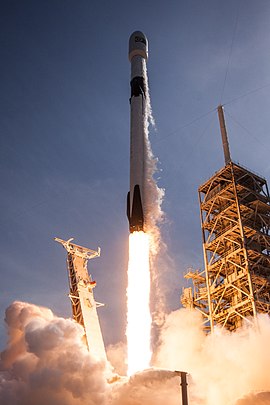
A SpaceX Falcon rocket lifted off from the Kennedy Space Center in Florida on May , 2017 to boost a classified spy satellite into orbit for the U.S. military, then turned around and touched down at a nearby landing pad.
It was the 34th mission for SpaceX, but its first flight for the Department of Defense, a customer long-pursued by company founder Elon Musk. The privately owned SpaceX once sued the Air Force over its exclusive launch services contract with United Launch Alliance (ULA), a partnership of Lockheed-Martin and Boeing.)  The liftoff of a classified satellite for the National Reconnaissance Office (NRO) officially broke ULA’s 10-year monopoly on launching U.S. military and national security satellites.

In addition to the NRO’s business, SpaceX has won two Air Force contracts to launch Global Positioning System satellites in 2018 and 2019.  For now, the military’s business is a fraction of more than 70 missions, worth more than $10 billion, slated to fly on SpaceX rockets. But with up to 13 more military satellite launches open for competitive bidding in the next few years and ULA’s lucrative sole-source contract due to end in 2019, SpaceX is angling to become a majo launch service provider to the Department of Defense.

A month ago, SpaceX for the first time launched one of its previously flown rockets to send an SES communications satellite into orbit, a key step in Musk’s quest to demonstrate reusability and slash launch costs.

Excertps, SpaceX Launches US Spy Satellite on Secret Mission, Nails Rocket Landing, Space.com, May 1, 2017

U.S. Military Spending 2015

U.S. Deputy Defense Secretary Robert Work on Wednesday, Jan. 28, 2015 urged NATO allies to develop and make more innovative weapons, and said bold action was needed to stay ahead of rapid weapons development by China, Russia and other countries.  Work said the Pentagon has a new plan called “Defense Innovation Initiative” and a separate effort targeting longer-term projects to ensure that the United States continues to have a decisive competitive advantage against potential foes.

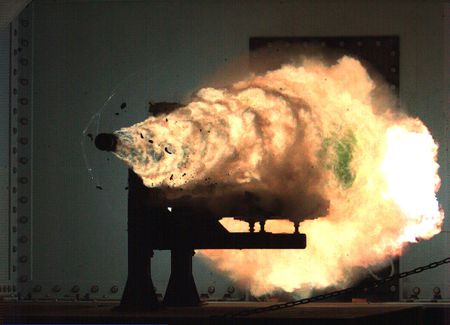
Work said concerns about advances by other countries were a key reason that the Pentagon’s fiscal 2016 budget plan to be delivered to Congress will exceed budget caps set by Congress and reverse five years of declines in U.S. military spending.   He said the budget would include “significant” investments in nuclear weapons, space control capabilities, advanced sensors, missile defense and cyber, as well as unmanned undersea vehicles, high-speed strike weapons, a new jet engine, high-energy lasers and rail gun technology…..Lockheed Martin Corp  and Boeing  and other key weapons makers have repeatedly urged the Pentagon to step up investments in key technologies….

Kendall said the department would also earmark funds for development and prototyping of a new “next-generation X-plane” that would eventually succeed the F-35 fighter jet, and a new engine.

Excerpts, ANDREA SHALAL, Pentagon official urges NATO to focus on innovative weapons. Jan 28, 2015

Boeing Africanizes its Weapons

Boeing airliners are well known and operated in almost every country of the world, Boeing are more selective as to whom they sell their military products. Up to now, the African activities of Boeing Defence, Space & Security have been restricted to North Africa.This, however, is about to change. Whilst the Middle East and Asia-Pacific are trending, Chris Chadwick, President of Boeing Military Aircraft, has seen an emerging set of needs coming out of Africa, including sub-Sahara countries..“We are looking at ways to Africanise Boeing products,” said Paul Oliver, Vice President, Middle East & Africa. An example would be an AH-6i with certain systems deleted and integrated with local weapons…

Egypt is already a large-scale Boeing military aircraft customer, operating both the CH-47 Chinook and the AH-64 Apache in large numbers. Despite the recent US suspension of some foreign military assistance to Egypt, Boeing is committed to supporting equipment in Egypt.

There are other North African customers that Boeing won’t mention, but Morocco has Boeing weapons integrated onto their F-16s and has ordered additional CH-47s for delivery in 2016….Algeria in particular is interested in acquiring Boeing’s C-17 and evaluated the aircraft earlier this year. The North African country has also expressed interest in transport helicopters and intelligence, surveillance and reconnaissance (ISR) aircraft.

Excerpts, Dean Wingrin, Boeing sows seeds for African growth, DefenceWeb, Nov. 27, 2013