Tag Archives: bunkers for storage of gold

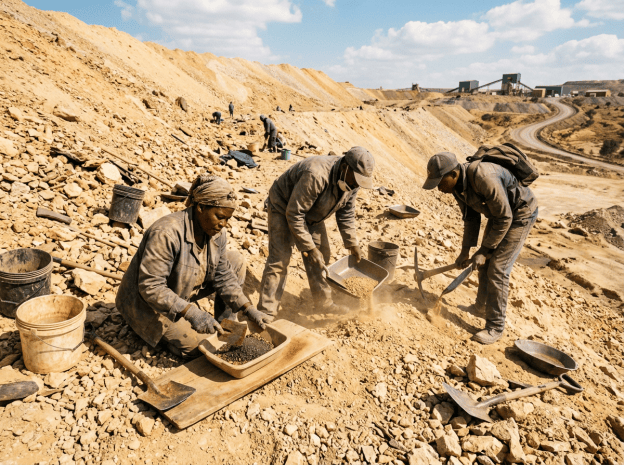
Workers manually sorting rocky material at an open-pit mining site

Can Gold be Ethically Mined? The Death of Miners in Tanzania

Families of two independent gold prospectors allegedly killed by security forces at a Tanzanian mine are taking their grievances directly to global markets, suing the London Bullion Market Association (LBMA) that certified metal from the deposit as ethically produced.  The legal maneuver in the case—going after the London Bullion Market Association rather than the mining company (Barrick Mining), the gold refiner, Tanzanian authorities or the alleged killers—challenges the very system that companies, governments and consumers rely on to ensure the bullion and gold-based goods they buy is certified based on social-responsibility standards.

In court documents, the claimants allege the association, known as the LBMA, “negligently certified gold sourced from the mine as untainted by human-rights abuses,” which “cloaked a pattern of violence at the mine and fueled ongoing violations.” The LBMA said it “denies the claim in full,” and described the case as an attempt to make the association responsible for the actions of entities, such as the police, miners and refiners, it neither controls nor regulates. The LBMA, a nonprofit trade association, however, provides clean-gold certification to metal if it deems producers to have followed its Responsible Gold Guidance. It says it bases its decisions on information from gold refiners, verified by auditors, but doesn’t carry out mine inspections itself.

The North Mara mine, which has both open-pit and underground operations, sits near Tanzania’s border with Kenya, a short drive from the famous wildlife of the Maasai Mara and Serengeti National Park. Villagers living nearby have long sifted through the mine’s waste rock hunting for overlooked gold…In July 2019, a villager used a ladder to climb over a wall surrounding the mine’s waste-rock area and “proceeded to search for gold-bearing rocks,” according to the claimants’ court filing. Mine security forces and Tanzanian police chased the prospectors away with “disproportionate and unjustified force, including the use of live ammunition and tear gas,” the filing said. The man escaped, but police were “lying in wait” and “violently assaulted” him, the filings said. He “suffered injuries consistent with a gunshot wound” to the leg and died from “a loss of blood,” the filing said.

Excerpts from Yusuf Khan, Families of Dead Prospectors Sue Authority That Certifies Gold as Ethically Produced, WSJ, Oct. 6, 2026
Military Bunkers for the Rich

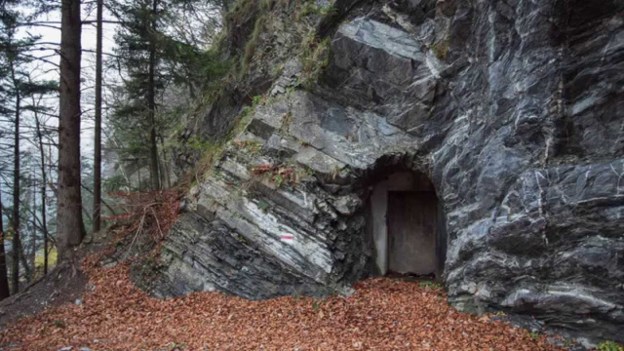
Deep in the Swiss Alps, next to an old airstrip suitable for landing Gulfstream and Falcon jets, is a vast bunker that holds what may be one of the world’s largest stashes of gold. The entrance, protected by a guard in a bulletproof vest, is a small metal door set into a granite mountain face at the end of a narrow country lane. Behind two farther doors sits a 3.5-ton metal portal that opens only after a code is entered and an iris scan and a facial-recognition screen are performed. A maze of tunnels once used by Swiss armed forces lies within.

The owner of this gold vault wants to remain anonymous for fear of compromising security, and he worries that even disclosing the name of his company might lead thieves his way…

Demand for gold storage has risen since the 2008 financial crisis. Many of the wealthy see owning gold as a hedge against the insecurity of banks and a reasonable investment at a time when markets are volatile and bank accounts and low-risk bonds pay almost no yield. It may also be a way to avoid the increasing scrutiny of tax authorities. In high-profile cases, U.S., French, and German prosecutors have gone after citizens of those countries with undeclared Swiss bank accounts.

Swiss storage operations such as these don’t have the same obligation that Swiss banks do to report suspicious transactions to federal regulators. Americans aren’t required under the U.S. Foreign Account Tax Compliance Act to declare gold stored outside financial institutions.
Of the roughly 1,000 former military bunkers still in existence across Switzerland, a few hundred have been sold in recent years, and about 10 are now storage sites holding gold as well as computer data, according to the Swiss defense department.

Few match the opulence of the airstrip setup, whose owner claims to run the largest store of gold for private clients—and the seventh-largest gold vault in the world. Near the runway sits the VIP lounge and a pair of luxurious apartments for clients. The walls of the apartments are lined with aged wood from Polish barns. South African quartzite was chosen for the floors to match the faded gray timber, and the amenities—bathroom mirror, TV screens—can retract into the ceiling, counter, or wall. The owner offers a place for clients to sleep and eat, because “many do not want to leave a paper trail of credit card receipts and passports” at hotels and restaurants…

Some miles away, Dolf Wipfli, the founder and chief executive officer of a different company, Swiss Data Safe, is one of the few operators willing to be interviewed about his business. The gold Swiss Data Safe stores for clients is kept in a mountainside bunker outside the hamlet of Amsteg.

Excerpts from Secret Alpine Gold Vaults Are the New Swiss Bank Accounts, Bloomberg, Sept. 30, 2016