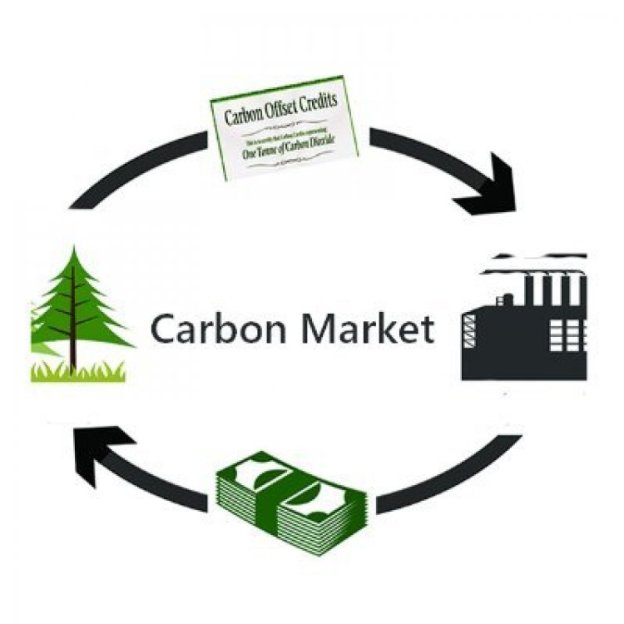
Tag Archives: carbon credits markets

Indigenous Peoples against Netflix and Meta: Northern Kenya Rangelands Carbon Project

The Northern Kenya Rangelands Carbon Project managed by the Northern Rangelands Trust, a Kenyan nonprofit, is the world’s largest soil-carbon plan, its boosters say. Launched in 2012, it was designed to preserve some 4.7 million acres of grasslands to lock in carbon on land communally owned by the Maasai, Borana and other pastoralist groups, which is part of a network of protected areas hosting threatened species such as cheetahs, black rhinos and… giraffes.

On May 13, 2025, an international nonprofit , Verra, that certifies carbon credits suspended approval for the project, adding to the questions about the credibility of similar carbon-capture projects and whether they actually benefit the people who live off the land….A spokesperson for the group, Verra, said credits are now on hold as it reviews the program after a long-running dispute between the conservationists who created the rangelands project and local herders, who say the project disrupts grazing patterns built over the course of centuries…

The dispute reached a flashpoint in 2021, when 165 pastoralists from two conservation areas sued the Northern Rangelands Trust in Kenyan court for allegedly using their land without consent. The plaintiffs accused the trust of creating the conservancies—which acted as the herders’ representatives in the carbon deal—through pressure and intimidation rather than informed consent. The court ruled in their favor in January 2025.

Lawyers and rights groups representing pastoralists say the ruling, which applies to one of the biggest conservancies, invalidates around 20% of the entire project’s credits. They say credits in around half of the project’s 14 wildlife conservancies could be vulnerable to similar lawsuits. That could leave big corporations holding invalid offsets and open to charges from rights groups that they overstate their commitment to environmentally friendly practices.

The trust has sold over six million carbon credits, worth between $42 million and $90 million depending on market prices, to buyers including Netflix and Facebook parent Meta. Tech companies use credits to offset emissions from their energy-intensive operations, such as producing movies, running data centers to stream video, powering social media and training cutting-edge artificial-intelligence models, as well as from employee travel. Meta became carbon neutral—that is, it purchased enough credits to compensate for all of its emissions—in 2020, and Netflix followed suit two years later.

Excerpts from Caroline Kimeu, Netflix and Meta’s Carbon Credits Snared in Dispute With Maasai Herders, WSJ, May 13, 2025

See also Kenya: Landmark court ruling delivers devastating blow to flagship carbon offset project

Fraud and Manipulation in Voluntary Carbon Markets

The $2 billion voluntary carbon-offsets market has suffered allegations that many credits don’t deliver the emissions cuts they promise, but multiple efforts to rebuild credibility face an uphill battle. In 2023 the US Commodity Futures Trading Commission said it would make policing carbon offsets a priority. Nestlé decided to leave the market and standard setters published guidelines that few existing buyers would meet…“The offset industry’s inability to self-regulate has produced a slow-moving crisis,” said Danny Cullenward, research fellow at the Institute for Carbon Removal Law and Policy at American University. “Companies are asking whether the marketing benefits are worth the legal risks.”

Morgan Stanley estimated in February 2023 that that carbon offsets could be a $100 billion market by 2030. However, over the past year the market’s credibility has suffered after a series of allegations that credits aren’t delivering on their emissions-reduction promises. It has left many companies with cold feet.

Each carbon credit is supposed to equal one metric ton of carbon dioxide avoided or removed from the atmosphere. Removal credits usually fund restoration projects such as tree planting, while the most common offset or avoidance credits fund energy-efficiency projects, renewable energy or protect forests. These so-called voluntary credits are separate and usually cheaper than government-regulated carbon trading that polluters pay for in the European Union and elsewhere. There are also some voluntary credits for mechanically removing CO2 directly from the air, which are currently much more expensive.

0In June 2023, the CFTC— the US federal regulator of derivatives—created an environmental task force focused on rooting out fraud in carbon markets. Earlier that month, the agency called for whistleblowers to expose misconduct. “As carbon credit markets continue to grow, we will act to foster the integrity of these markets by fighting fraud and manipulation,” CFTC Enforcement Director Ian McGinley said.

Excerpts from Dieter Holger, Rebuilding Trust in Carbon Offsets Faces Uphill Battle, WSJ, July 12, 2023

From Lunatic to Feasible? Getting Rid of Carbon by Storing it into the Earth

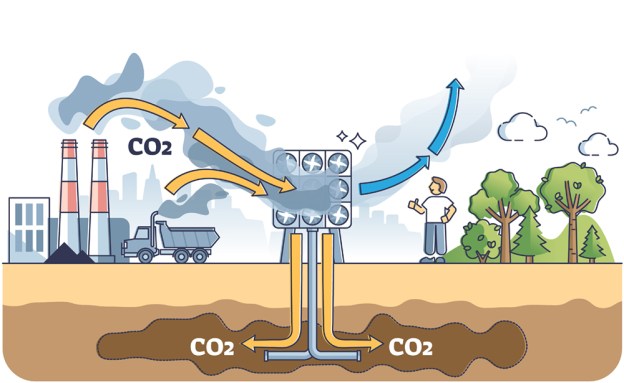
The boom in carbon removal, whether from the air , what is called direct air capture (DAC) or from industrial point sources , what is called carbon capture and storage (CCS), cannot come fast enough. The UN-backed Intergovernmental Panel on Climate Change (IPPC) assumes that if Earth is to have a chance of warming by less than 2°C above pre-industrial levels, renewables, electric vehicles and other emissions reductions are not enough. Carbon Capture and Storage (CCS)and sources of “negative emissions” such as DAC must play a part. The US Department of Energy calculates that America’s climate targets require capturing and storing between 400m and 1.8bn tonsof CO2 annually by 2050, up from 20m tons today. ..

For years DAC and CCS projects were regarded as technically plausible, perhaps, but uneconomical but carbon capture, utilization and storage (CCUS) may attract $150bn in investments globally this decade. A factor behind the recent flurry of carbon-removal activity is government action. One obvious way to promote the industry would be to make carbon polluters pay a high enough fee for every ton of carbon they emit that it would be in their interest to pay carbon removers to mop it all up, either at the source or from the atmosphere….The emerging view among technologists, investors and buyers is that carbon removal will develop like waste management did decades ago—as an initially costly endeavor that needs public support to get off the ground but can in time turn profitable…

Maybe the biggest sign that the carbon-removal business has legs is its embrace by the oil industry. Occidental is keen on DAC. ExxonMobil says it will spend $17bn from 2022 to 2027 on “lower-emissions investments”, with a slug going to CCA…Equinor and Wintershall, a German oil-and-gas firm, have already secured licenses to stash carbon captured from German industry in North Sea sites. Hugo Dijkgraaf, Wintershall’s technology chief, thinks his firm can abate up to 30m tons of CO2 per year by 2040. The idea, he says, is to turn “from an oil-and-gas company into a gas-and-carbon-management company”.

Excerpts from Can Carbon Removal Become a Trillion-Dollar Business?, Economist, May 27, 2023