Microorganisms have shaped Earth for almost four billion years. At least a trillion microbial species sustain the biosphere — for instance, by producing oxygen or sequestering carbon. Microbes thrive in extreme environments and use diverse energy sources, from methane to metals. And they can catalyse complex reactions under ambient temperatures and pressures with remarkable efficiency.
And bacteria or fungi are already being used to produce materials, fuels and fertilizers in ways that reduce energy consumption and the use of fossil-fuel feedstocks, as well as to clean up waste water and contaminants…For instance, a start-up firm called Carbios, based in Clermont-Ferrand, France, has developed a modified bacterial enzyme that breaks down and recycles polyethylene terephthalate (PET), one of the most common single-use plastics. Another company — Oil Spill Eater International in Dallas, Texas — uses microbes to clean up oil spills, and large waste-management corporations in North America are using bacteria called methanotrophs to convert the methane produced from landfill (a more potent greenhouse gas than CO2) into ethanol, biofuels, polymers, biodegradable plastics and industrial chemicals….The company Floating Island International in Shepherd, Montana, is even building artificial floating islands on lakes and reservoirs that have been polluted by excessive nutrient run-off, so that methane-metabolizing microbes (which colonize the underside of the islands) can remove methane originating from lake sediments. The goal in this case is to transform inland lakes and reservoirs from net methane sources into carbon sinks…
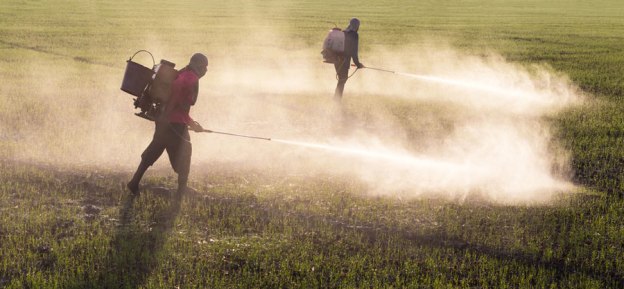
Finally, microbes could be used to make food production less reliant on chemical fertilizers and so more sustainable. Many bacteria and archaea can be used to produce nitrogen fertilizer with much lower greenhouse-gas emissions than synthetic fertilizers…Several companies are now selling biofertilizers, which are formulations containing bacteria called rhizobia or other microbes that can increase the availability of nutrients to plants. A growing number of microbial biopesticides are also offering food producers a way to control crop pests without harming human or animal health or releasing greenhouse gases into the atmosphere8..
Many solutions, such as using bacteria to degrade crude oil or plastics, have been shown to be effective and safe in a laboratory setting. Yet scaling up their use to the levels needed to reduce global emissions or global biodiversity loss could lead to unforeseen complications. Certain safeguards — designing bacteria that can persist in an ecosystem for only a short time or that can exist under only specific environmental conditions — are already being developed and applied.
Excerpts from Rino Rappuoli, et al., Microbes can capture carbon and degrade plastic — why aren’t we using them more?, Nature, Mar. 25, 2025

 Law-In-Action