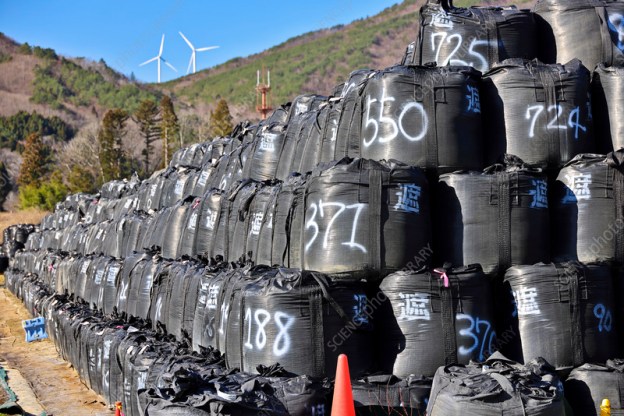
Japan’s approach for recycling and disposing of soil and radioactive waste from decontamination activities after the 2011 Fukushima Daiichi Nuclear Power Station (FDNPS) accident as currently planned is consistent with IAEA Safety Standards, an International Atomic Energy Agency (IAEA) report released on September 10, 2024.
About 13 million cubic meters of soil and about 300,000 cubic meters of ash from incineration of organic material was removed as part of decontamination activities in Fukushima Prefecture and stored at an Interim Storage Facility (ISF) covering an area of 16 square kilometres, spanning across the Okuma Town and Futaba Town…Japan plans to recycle roughly 75% of the removed soil – the soil which has low levels of radioactivity – by using it, if demonstrated safe, for civil engineering structures including embankments for roads, railways, seawalls, waste treatment sites, coastal protection, agricultural land, and land reclamation. The remaining soil which cannot be recycled will be disposed of permanently and Japan intends to confirm the site selection and disposal process in 2025.
Excerpt from Japan’s Fukushima Soil Recycling and Disposal Plan Meets Safety Standards, IAEA Says, Press Release, Sept. 10, 2024
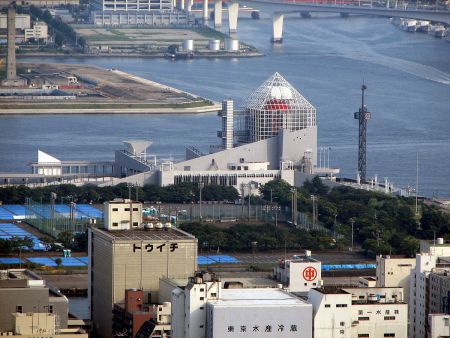
 Radioactive cesium from the crippled Fukushima No. 1 nuclear power plant continued to flow into Tokyo Bay for five years after the disaster unfolded in March 2011, according to a researcher. Hideo Yamazaki, a former professor of environmental analysis at Kindai University, led the study on hazardous materials that spewed from the nuclear plant after it was hit by the Great East Japan Earthquake and tsunami on March 11, 2011.
 Law-In-Action