Tag Archives: chip factories or fabs

The End of Taiwan? The End of U.S. and Europe Combined

Prosecutors in Taiwan indicted  in August 2025 three people in a case about sensitive chip technology, alleging they stole information from Taiwan Semiconductor Manufacturing (TSMC) to help one of TSMC’s top equipment suppliers, Tokyo Electron, win more orders…Taiwanese officials say the theft of trade secrets has grown over the past decade and point most of the blame at China. Over the past couple of years, Taiwan’s investigation bureau has probed more than 120 cases involving trade-secret theft. “If Taiwan’s technology hub falls or its technologies are lost, the impact will extend beyond Taiwan to the U.S., Europe and the rest of the world,” Sun Chen-yi, deputy director general of the investigation bureau at Taiwan’s Ministry of Justice, said in an interview before his retirement in July 2025.

Excerpt from Yang Jie et al., Three Accused of Stealing TSMC Chip Secrets to Aid Japanese Supplier, WSJ, Aug. 28, 2025

How Boeing Maimed Itself and Killed 346 People

Spirit AeroSystems is going full circle, from part of Boeing till 2005 to independent supplier in 2005 (when Boeing sold to a private equity firm) and back to part of Boeing in 2024. It is the perfect example of a realization dawning on corporate America: Outsourcing isn’t all it was once cracked up to be. The deal’s logic of vertical reintegration makes sense in light of recent history, with air-travel safety likely benefiting from centralized supervision and a simpler workflow between plants. Yet it is also an indictment of what executives in most industries have been doing for almost three decades….’

At the core of the outsourcing trend that lasted 30 years was the idea that an “asset-light” firm focused on intellectual property and its “core” expertise would be better run. With this mindset, jettisoning aerostructures operations seemed like a no-brainer….
It wasn’t just aerostructures: In the 2000s, Boeing outsourced more than 70% of the 787 Dreamliner program. But the problems with becoming an assembler of planes, as opposed to a true manufacturer, gradually became apparent. The company lost control of supply, resulting in years of delays and cost overruns…

Aerospace isn’t the only industry to revive vertical integration. Intel is beefing up chip manufacturing in the U.S., General Motors is building battery plants and Sweden’s IKEA is acquiring containerships. One general flaw of the asset-light model is that, over time, firms can lose their innovative edge because a lot of “learning by doing” happens when production processes interact. Another is that low-margin bits of the supply chain get worn down to just a few sources. These may not have the financial muscle to make big investments in times of turmoil, or they may be geopolitically sensitive. Such risks were underscored by post-Covid shortages, particularly in the largely “fabless” U.S. microchip industry, which has outsourced chip making to foundries in East Asia in a way that echoes what happened to aerostructures.

Excerpts from Jon Sindreu, Boeing Calls Time on the Great American Outsourcing, July 2, 2024

Great Fear and Uphill Struggle: US, Japan and China

In Japan’s glory days of the the late 1980s, the country accounted for about half of the global semiconductor industry, and the U.S. was left to beg, plead and threaten as it tried to get a small slice of the Japanese market. A bestselling book in Japan during the Cold War’s waning days called “The Japan That Can Say No” suggested that Tokyo could leverage its dominance in semiconductors to control the world’s military balance—and perhaps help the Soviet Union instead of the U.S.

Today, the great fear driving chip investments in both U.S. and Japan is China. The U.S. policy calls for helping allies such as Japan build a supply chain that is less exposed to risks posed by a hostile Beijing. While the U.S. is expanding its own chip production through the Chips and Science Act, which includes some $53 billion of spending, people involved in the Rapidus project (between U.S. and Japan) said the U.S. needed further global diversification. ..The Rapidus project aims to get Japan back into the heart of the business of chip making by building facilities on the northern island of Hokkaido, known for its ski resorts. Rapidus says it wants to begin pilot production in 2025 and full-scale production in 2027. Some 6,000 workers are being drafted to put up the factory.

Japan’s Ministry of Economy, Trade and Industry has said that it intends to help Rapidus achieve its goals, and that it wants the Japanese semiconductor industry to have revenue of some $100 billion in 2030, triple the 2020 figure. The ministry is pitching in billions of dollars for additional projects in Japan. TSMC is building an $8.6 billion factory on the southern island of Kyushu and is in talks about a second. Assuming it gets the money, Rapidus still has to master a level of manufacturing technology attained so far by only two companies, TSMC and South Korea’s Samsung Electronics. Both are projected to have the ability to mass-produce 2-nanometer chips by 2025.

Excerpts from Peter Landers and  Yang Jie, Japan’s Plan to Become a Chipmaking Champ Hinges on This Football-Loving Engineer, WSJ, July 6, 2023

How to Exclude China from the Global Technology Base: the Role of IMEC

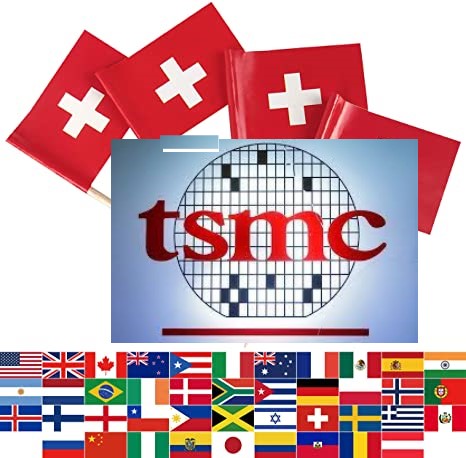
The Interuniversity Microelectronics Centre (IMEC) located in Leuven, Belgium, does not design chips (like America’s Intel), manufacture them (like TSMC of Taiwan) or make any of the complicated gear (like ASML, a Dutch firm). Instead, it creates knowledge used by everyone in the $550bn chip business. Given chips’ centrality to the modern economy and increasingly to modern geopolitics, too, that makes it one of the most essential industrial research-and-development (R&D) center on the planet. Luc Van den hove, IMEC’s boss, calls it the “Switzerland of semiconductors”.

IMEC was founded in 1984 by a group of electronics engineers from the Catholic University of Leuven who wanted to focus on microprocessor research. In the early days it was bankrolled by the local Flemish government. Today IMEC maintains its neutrality thanks to a financial model in which no single firm or state controls a big share of its budget. The largest chunk comes from the Belgian government, which chips in some 16%. The top corporate contributors provide no more than 4% each. Keeping revenue sources diverse (partners span the length and breadth of the chip industry) and finite (its standard research contracts last three to five years) gives IMEC the incentive to focus on ideas that help advance chipmaking as a whole rather than any firm in particular.

A case in point is the development of extreme ultraviolet lithography (EUV)…It took 20 years of R&D to turn the idea into manufacturing reality. IMEC acted as a conduit in that process… Advanced toolmakers want a way to circulate their intellectual property (IP) without the large companies gaining sway over it. The large companies, meanwhile, do not want to place all their bets on any one experimental idea that is expensive (as chipmaking processes are) and could become obsolete.

IMEC’s neutrality allows both sides to get around this problem. It collects all the necessary gear in one place, allowing producers to develop their technology in tandem with others. And everyone gets rights to the IP the institute generates. Mr Van den hove says that progress in the chip industry has been driven by the free exchange of knowledge, with IMEC acting as a “funnel” for ideas from all over the world…IMEC’s revenues, which come from the research contracts and from prototyping and design services, doubled between 2010 and 2020, to €678m ($773m).

The deepening rift between America, home to some of the industry’s biggest firms, and China, which imported $378bn-worth of chips last year, threatens IMEC’s spirit of global comity. China’s chip industry is increasingly shielded by an overbearing Communist Party striving for self-sufficiency, and ever more ostracized by outsiders as a result of American and European export controls. All this limits the extent to which IMEC can work with Chinese semiconductor companies…IMEC would not comment on individual partnerships but says it has “a few engagements with Chinese companies, however not on the most sensitive technologies, and always fully compliant with current European and US export regulations and directives”.

Excerpts from Neutral but not idle: IMEC offers neutral ground amid chip rivalries, Economist, Sept. 25, 2021

Can the Switzerland of Chips Crush the Global Economy?

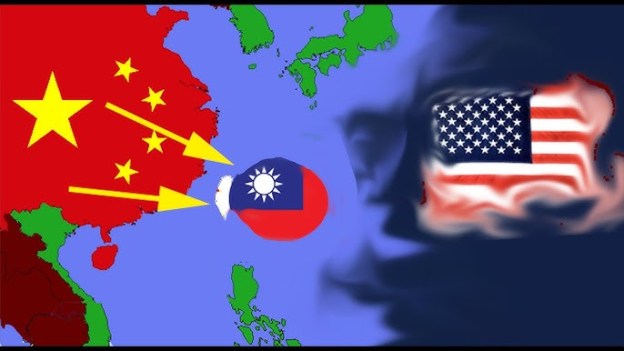
Taiwan Semiconductor Manufacturing Co (TSMC) has emerged over the past several years as the world’s most important semiconductor company, with enormous influence over the global economy. With a market cap of around $550 billion, it ranks as the world’s 11th most valuable company. Its dominance leaves the world in a vulnerable position, however. As more technologies require chips of mind-boggling complexity, more are coming from this one company, on an island that’s a focal point of tensions between the U.S. and China, which claims Taiwan as its own.

The situation is similar in some ways to the world’s past reliance on Middle Eastern oil, with any instability on the island threatening to echo across industries….Being dependent on Taiwanese chips “poses a threat to the global economy,” research firm Capital Economics recently wrote. Its technology is so advanced, Capital Economics said, that it now makes around 92% of the world’s most sophisticated chips, which have transistors that are less than one-thousandth the width of a human hair. Samsung Electronics Co. makes the rest. 

The U.S., Europe and China are scrambling to cut their reliance on Taiwanese chips. While the U.S. still leads the world in chip design and intellectual property with homegrown giants like Intel Corp. , Nvidia Corp. and Qualcomm, it now accounts for only 12% of the world’s chip manufacturing, down from 37% in 1990, according to Boston Consulting Group. President Biden’s infrastructure plan includes $50 billion to help boost domestic chip production. China has made semiconductor independence a major tenet of its national strategic plan. The European Union aims to produce at least 20% of the world’s next-generation chips in 2030 as part of a $150 billion digital industries scheme.

The Taiwanese maker has also faced calls from the U.S. and Germany to expand supply due to factory closures and lost revenues in the auto industry, which was the first to get hit by the current chip shortage.

Semiconductors have become so complex and capital-intensive that once a producer falls behind, it’s hard to catch up. Companies can spend billions of dollars and years trying, only to see the technological horizon recede further. A single semiconductor factory can cost as much as $20 billion. One key manufacturing tool for advanced chip-making that imprints intricate circuit patterns on silicon costs upward of $100 million, requiring multiple planes to deliver

Taiwanese leaders refer to the local chip industry as Taiwan’s “silicon shield,” helping protect it from such conflict. Taiwan’s government has showered subsidies on the local chip industry over the years, analysts say.

Excerpts from Yang Jie et al., The World Relies on One Chip Maker in Taiwan, Leaving Everyone Vulnerable, WSJ, June 19, 2021

Designers Not Doers: Who’s Gonna Save the Chip Industry?

Although designing chips for electronic devices is now easier than ever, making them has never been harder requiring spending vast—and growing—sums on factories (called fabs) stuffed with ultra-advanced equipment.

At the turn of the millennium, a cutting-edge factory might have cost $1bn… More recently, a TSMC factory that produces 3 nm (nanometer) chips, completed in 2020, in southern Taiwan, cost $19.5bn. The firm is already pondering another for factory for 2nm chips, which will almost certainly be more. ..Asia’s nanoscale manufacturing duopoly remains fiercely competitive, as Samsung and TSMC keep each other on their toes… At some point, one company, in all likelihood TSMC, could be the last advanced fab standing. For years, says an industry veteran, tech bosses mostly ignored the problem in the hope it would go away. It has not…

The other big industry rupture is taking place in China. As America has lost ground in making chips, it has sought to ensure that China lags behind, too. The American tech embargo began as a narrow effort against Huawei over national security, but bans and restrictions now affect at least 60 firms, including many involved in chips. SMIC, China’s chip champion, has just been put on a blacklist, as has Xiaomi, a smartphone firm.

Excerpts from Betting All Chips, Economist, Jan. 23, 2021 and Semiconductors: A New Architecture, Economist, Jan. 23, 2021