Tag Archives: CITES convention

Behind Bars: Snakes, Frogs and the Blooming Pet Industry

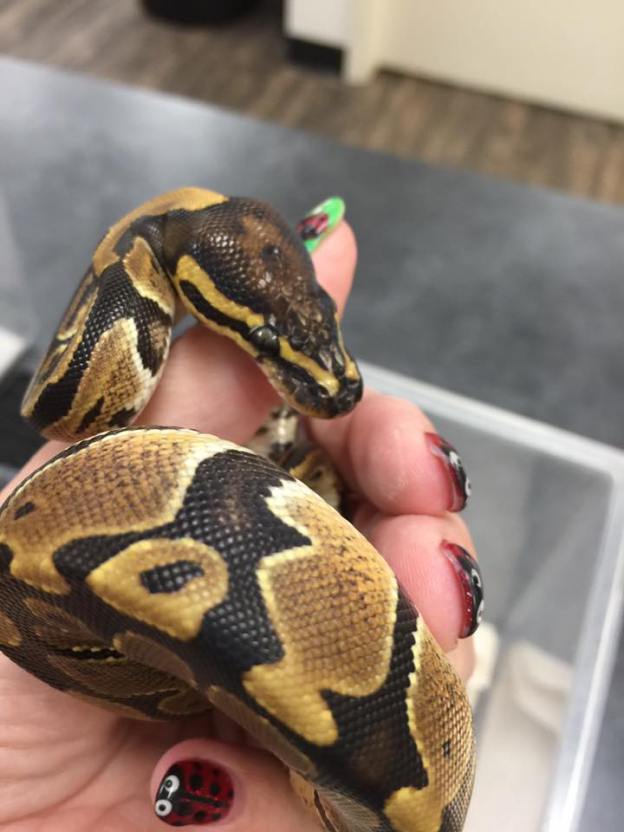
‘Exotic’ wild animals are becoming ever more desired as pets. This trade  harms many animals but is having a disproportionate impact on reptiles and amphibians. These animals typically attract less funding and attention for conservation and research than do ‘charismatic’ birds and mammals, and are less effectively protected by laws and regulations.  Many are silent in transit, easy to hide in parcels. Some can fetch thousands of dollars. And illegally traded species can be difficult to distinguish from those traded legally.

From a niche business in the 1990s, the global reptile and amphibian pet industry has ballooned. The trade in reptiles alone is worth US$2.5 billion today, with millions of reptiles and amphibians imported into North America and Europe from around the world each year. Species such as the ball python and the leopard gecko are now commonly sold in pet shops, marketed as requiring little space and care and serving as the beginning of a lifelong pursuit of rare species by some hobbyists. Influencers promote reptiles and amphibians as cool pets on social media.

But more than 50% of reptiles and 40% of amphibians that are traded as pets and for other purposes have been taken directly from the wild. This practice harms wild populations. The ploughshare tortoisein Madagascar is one of the world’s most endangered tortoises, mainly because of poaching for the pet trade.

Imported animals can also cause problems at their final destination. Some carry undetected pathogens. The salamander chytrid fungus, for example, has caused mass die-offs of native fire salamanders in western Europe after being introduced through the pet trade. And animals that escape can wreak havoc — Burmese pythons, for instance, are associated with declines in bobcat, raccoon and opossum populations in the United States.

What’s more, poor welfare is common. Snakes are often kept in small drawers that prevent climbing, burrowing and other natural behaviors. These conditions are associated with behavioral abnormalities, chronic stress and altered brain development…

At the highest level, the Convention on International Trade in Endangered Species of Wild Fauna and Flora (CITES) regulates trade in thousands of threatened or potentially threatened species. Species included in CITES appendices I and II require specific permits to be traded between countries. Permits are granted only when the exporting country has determined that the trade is legal and that it will not be detrimental to the survival of the wild population. For species in Appendix I, the importing country must also make a sustainability determination and confirm that the import is not for mainly commercial purposes.

However, CITES covers just 1,206 reptile species (9.5% of all reptile species) and 384 amphibian species (4.2% of all amphibian species). Adding species to appendices I and II is a slow and often politicized process that can be undermined by trade interests. New species are listed only after a two-thirds majority of parties to the treaty has agreed to the addition…

At the national level, nearly 90% of UN member states criminalize some offences against wildlife — such as collecting from the wild or exporting protected wildlife without permits. But national legislation typically safeguards only a limited set of species. Because newly discovered reptile and amphibian species are especially sought-after as pets, existing policies struggle to keep up.

Excerpt from Neil M. Vora et al., The pet trade puts reptiles and amphibians at risk: close legal gaps now, Nature, Sept. 14, 2026

Surveillance for Conservation: the Smart Wildlife Parks in Africa

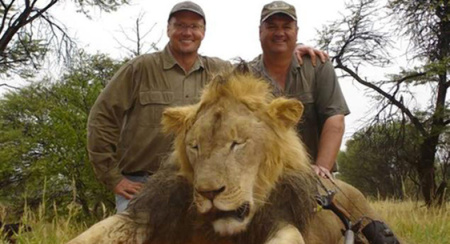
In 2010, Rwanda’s government partnered with international conservation group African Parks to manage the Akagera Park…African Parks, based in South Africa, is known for reviving troubled national parks. The nonprofit worked to strengthen Akagera’s security, brought in anti-poaching dogs, purchased better field equipment, and hired and trained more rangers. The number of patrols increased from about 1,500 in 2011 to more than 5,400 last year.

Since 2013, poaching has dropped dramatically, which led to a wildlife revival that once seemed inconceivable. In 2017 Akagera reintroduced 18 black rhinos from South Africa. In a conservation milestone, the first rhino calves were born in the park a year later. As for lions, seven were reintroduced to the park in 2015. Today there are at least 35 of them prowling Akagera’s highlands, grassy plains, and forests…The Howard Buffett Foundation even donated a helicopter to the Rwandan government for rhino patrols.

Fences, more patrols, and reintroductions are all part of the park-rehabilitation playbook, but Akagera is also using a distinctive new technology to help even the odds against poachers. In 2017, Akagera became the world’s first “Smart Park” when it tested and installed a telecommunications network called LoRaWAN, or Long Range Wide-Area Network for securely tracking and monitoring just about anything in the park. Poachers can potentially intercept the conventional radio signals parks use to track animals but the low-bandwidth LoRa signals are relayed on a private, closed network on various frequencies, making them harder to crack. The network also runs on solar energy and is cheaper than satellite tracking technology.

Akagera partnered with Dutch conservation technology group Smart Parks to install LoRa receivers on towers throughout the park. (Smart Parks is the result of a merger between the Shadow View Foundation and the Internet of Life.) LoRa sensors, which vary in size and can be small enough to fit in one’s hand, can then communicate with towers to track the location of rangers, vehicles, equipment, and more. In 2017 they collected more than 140,000 location updates per day. Next year the park plans to install 100 sensors to monitor tourist vehicles as well, says Hall.

Excerpt from AMY YEE , In Rwanda, Learning Whether a ‘Smart Park’ Can Help Both Wildlife and Tourism, Atlas Obscura, Nov. 24, 2020

Saving the Giraffe from Trophy Hunting and Meat Production

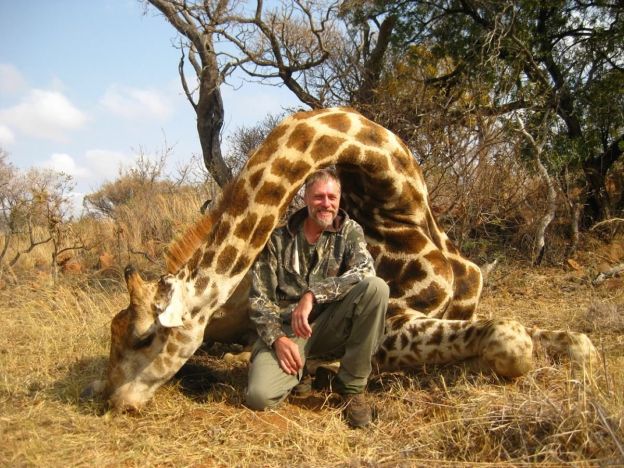
In August 2019, countries agreed to monitor trade in giraffes and their body parts to help conserve the species, now deemed vulnerable to extinction. From 1985 to 2015, the wild giraffe population shrank by about 40% to approximately 68,000 adults. The declines were especially sharp in eastern and Central Africa where giraffes’ savanna and forest habitat has been turned into farms and the animals are poached for meat; most trophy hunting of giraffes happens in southern Africa, where populations have been increasing… The only figures on trade in giraffe parts show that about 40,000—including hides, carved bones, and hunting trophies such as mounted heads—were brought into the United States from 2006 to 2015.

Excerpt from Giraffe Trade to Be Tracked, Science, Aug. 30, 2019

How to Market Freshly-Poached Ivory

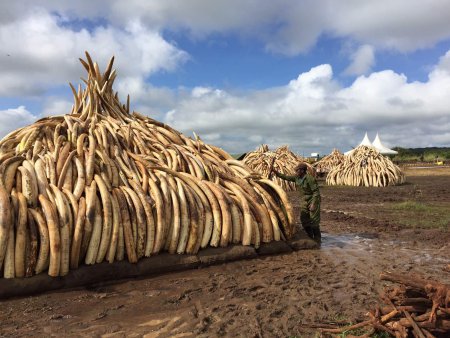
In spite of a ban, illegal ivory trading still flourishes in the European Union, as traders use a loophole allowing exchange of very old pieces, an Oxford University study sponsored by a campaign group found.

European law allows ivory obtained prior to 1947 to be traded freely. Ivory obtained after 1947 but before 1990 can be sold with a government certificate, while selling ivory obtained after the global ivory trade was banned is illegal.

Campaign organisation Avaaz purchased more than 100 pieces of ivory from 10 different EU countries to undergo carbon testing at Oxford University. Scientists concluded 75% of the ivory was from after 1947 and 20% was ivory obtained since 1989.  Many traders use the provision which allows free trade of old ivory to illegally trade newer ivory, fuelling the market and incentivising the killing of elephants, Avaaz said.

Exceprts, Illegal ivory breezes past EU law – campaign grou Reuters, Tuesday, July 10, 2018

Exporting Apes Alive

Daniel Stiles, a self-styled ape trafficking detective in Kenya, had been scouring Instagram, Facebook and WhatsApp for weeks, looking for pictures of gorillas, chimps or orangutans. He was hoping to chip away at an illicit global trade that has captured or killed tens of thousands of apes and pushed some endangered species to the brink of extinction.
Malnourished and terrified apes have been seized across the world, in undercover busts or at border checkpoints, in countries as varied as France, Nepal, Thailand, the Democratic Republic of Congo and Kuwait. Two years ago, at Cairo’s international airport, the Egyptian authorities discovered a baby chimp curled up into a ball and stashed in a piece of hand luggage. Just this summer, the authorities in Cameroon stopped a smuggler at a roadblock who was trying to move 100 pounds of pangolin scales and a tiny chimp, not even a month old, hidden in a plastic sack…

Wildlife researchers say that a secret ape pipeline runs from the lush forests of central Africa and Southeast Asia, through loosely policed ports in the developing world, terminating in wealthy homes and unscrupulous zoos thousands of miles away. The pipeline, documents show, is lubricated by corrupt officials (several have been arrested for falsifying export permits) and run by transnational criminal gangs that have recently drawn the attention of Interpol, the international law enforcement network.

Apes are big business — a gorilla baby can cost as much as $250,000 — but who exactly is buying these animals is often as opaque as the traffickers’ identity.

Wildlife officials said that a handful of Western businessmen had also been arrested. But the majority of recent busts, they added, have been in Africa or Southeast Asia, usually of low-level traffickers or poorly paid underlings, not the bosses who control underground exports and travel abroad to make deals…

“They have consciousness, empathy and understanding,” said Jef Dupain, an ape specialist for the African Wildlife Foundation. “One day we will wonder how did we ever come up with the idea to keep them in cages.”…

But a baby was different, he said. There was a specific market for infant apes, so he would sell them alive, for at least $10 each, to local traders who would then smuggle them to Kinshasa and sell them to foreigners for many times that amount…

In Boende, a small town up another tributary of the Congo River, three hunters were recently caught with bonobo carcasses and sentenced to several years in a stifling colonial-era prison. The men said they were simply trying to feed their families by selling bonobo meat. But poaching an ape is a serious crime in Congo, and nonprofit wildlife groups have been assisting the Congolese authorities in prosecuting offenders.“There is a culture here to eat meat, meat from the forest,” said the town’s prosecutor, Willy Ndjoko Kesidi. “Me, I like fish.”  Mr. Kesidi expressed some sympathy for the hunters he had just jailed, saying that the prison where they were housed was a horrible place where many prisoners had died…

Many illegal wildlife transactions start online, specifically through Instagram or WhatsApp. Mr. Stiles has made several trips to the United Arab Emirates, which he considers a new hub for the illegal online wildlife business. Dealers in the Middle East have posted many pictures of apes for sale, sometimes advertising them as friendly pets for children…

Several years ago, the Indonesian police rescued a female orangutan who had been shaved and was being used as a prostitute at a brothel.

Excerpts from JEFFREY GETTLEMAN, Smuggled, Beaten and Drugged:
The Illicit Global Ape Trade, NY Times, Nov. 4, 2017

See also Stolen Apes (pdf)

Industrial-Scale Hunting

Starting September 25, 2016,  thousands of conservationists and top government officials will be thrashing out international trade regulations aimed at protecting different species.A booming illegal wildlife trade has put huge pressure on an existing treaty signed by more than 180 countries — the Convention on International Trade in Endangered Species (CITES)….

[T]he plight of Africa’s elephants, targeted for their tusks, generated fierce debate as the talks kicked off.Zimbabwe, Zambia, South Africa and Namibia castigated Western-based animal charities, saying they “dictated” on how African resources should be managed.”Please leave us alone, don’t just come and dictate what we should be doing,” Zambian Tourism Minister Stephen Mwansa said.Fortune Charumbira, head of Zimbabwe’s traditional chiefs, blasted “elitist NGOs who are coming from countries where there are no animals”, describing them as “domineering”.

A coalition of 29 African countries is pressing for a total halt to the ivory trade to curb poaching of elephants, but other delegates believe it would only fuel illegal trading…CITES forbids trade in elephant ivory, but Namibia and Zimbabwe have made a proposal asking for permission to sell off stockpiles to raise funds for local communities that co-exist with the animals….

CITES’ secretary general John Scanlon… warned illegal wildlife trafficking was “occurring on an industrial scale, driven by transnational organised criminal groups”.

African countries lash out at Western charities at international wildlife conservation meeting, ABC News, Sept. 24, 2016

Killing Spree of Endangered Species

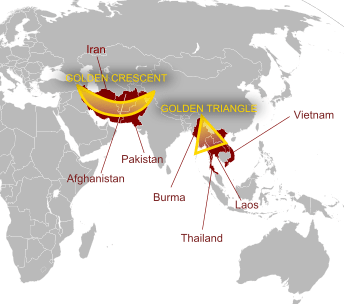
Laos’s biggest breeding facility, near Thakhek, reportedly holds around 400 tigers. Many are bred solely for their parts. The skins are prized as decorations. Farmed-tiger parts mostly move to China through the unruly Golden Triangle where Myanmar, Thailand and Laos converge. The region is a hotspot for trade in protected species: the Environmental Investigation Agency (EIA), an NGO based in UK  visited the Golden Triangle Special Economic Zone in Laos, popular with Chinese tourists. [It] found tiger-bone wine, bear-bile pills, pangolin scales and carvings from the beaks of helmeted hornbills openly on sale. Outside the God of Fortune restaurant was a caged bear-cub that could be killed and cooked to order.

Laos also offers a link to the most lucrative of all illegal wildlife enterprises: the trade in rhinoceros horn, which the UN Office on Drugs and Crime (UNODC) estimated six years ago was worth $8m a year. Since then the number of rhinos slaughtered annually by poachers in Africa has more than tripled (the poaching of Asia’s depleted stock of rhinos is modest). Poachers are sometimes caught; those higher up the chain rarely are. The only high-level trafficker in jail is a Thai, Chumlong Lemtongthai, who is serving a 13-year sentence in South Africa. He was charged in 2011 with bringing Thai prostitutes to South Africa so they could claim they had shot rhinos on legal hunts and were thus entitled under South African law to export horns as trophies. It was the most bizarre of several methods used to get hold of a substance that can fetch up to $70,000 a kilo—almost twice the price of gold.

Mr Chumlong has been linked to a man who has been described as the Pablo Escobar of wildlife-trafficking, Vixay Keosavang, a former soldier in the Lao People’s Army who operates from a walled compound far off the beaten track in the central province of Bolikhamxay. In 2013 the American government offered $1m for information that would help dismantle the network it believes that Mr Vixay heads, which it suspects of trading wild-animal parts across several countries. Mr Vixay has denied wrongdoing.

Some experts believe that the surge in rhino-poaching, which has cut the world’s population by a fifth since 2008, has been driven by a surge in demand in Vietnam. There, rhino-horn shavings are a supposed cure for hangovers; entire horns are given as gifts and displayed as ornaments. Others believe that much of the rhino-horn taken to Vietnam ends up in China.

As their country opened up in recent decades, “some enterprising Vietnamese citizens got residential status in South Africa and very quietly began trading,” says Tom Milliken of Traffic, an NGO. In at least two cases, professional South African hunters have been caught shooting rhino for Vietnamese clients and, in two others, Vietnamese nationals have been arrested trying to smuggle rhino-horns out of South Africa by air. Hunts have been arranged for citizens of the Czech Republic, which has had a large Vietnamese community since the cold war. Since that ruse was discovered, Slovaks, Poles, Ukrainians and Russians have been enlisted as bogus trophy-hunters. “Some Vietnamese residents have bought their own game ranches, so they are now able to buy rhinos at auction and organise sports hunts,” says Mr Milliken.

The international nature of the trade poses big problems for law-enforcement. Documents that would prove decisive in a prosecution for rhino-horn trafficking can sit in a South African office for months awaiting translation, says Mr Milliken; the situation is no better for other animal parts. “None of what we do for drugs do we do for wildlife trafficking,” an international official involved in the fight against organised crime laments. “Extraditions are rare. There are no controlled deliveries. Sophisticated investigative techniques are seldom deployed. We’re not doing any of the things we could be doing to stop it.”

Excerpts from The Trade in Wild Animals: Last Chance to See?, Economist, Apr. 18, 2016, at 49