Tag Archives: endangerd species act

Behind Bars: Snakes, Frogs and the Blooming Pet Industry

‘Exotic’ wild animals are becoming ever more desired as pets. This trade  harms many animals but is having a disproportionate impact on reptiles and amphibians. These animals typically attract less funding and attention for conservation and research than do ‘charismatic’ birds and mammals, and are less effectively protected by laws and regulations.  Many are silent in transit, easy to hide in parcels. Some can fetch thousands of dollars. And illegally traded species can be difficult to distinguish from those traded legally.

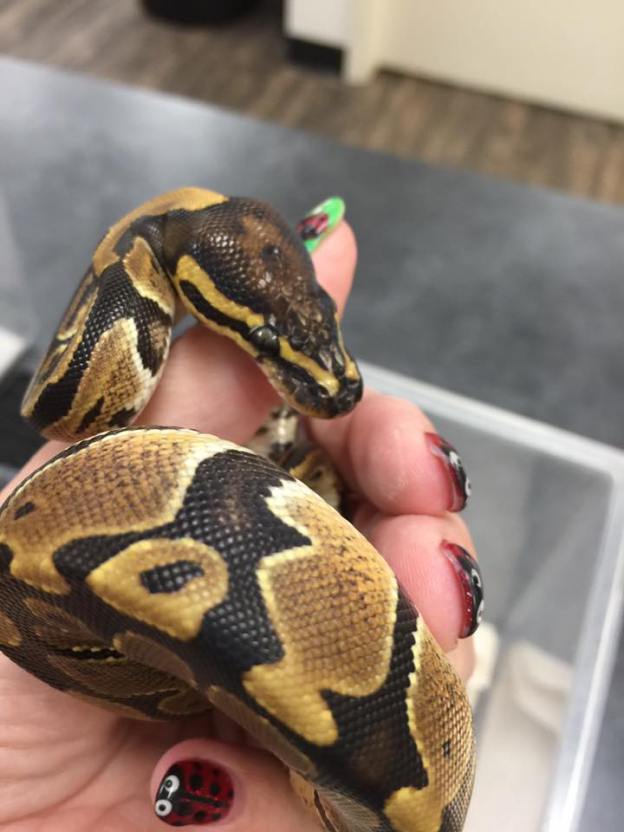
From a niche business in the 1990s, the global reptile and amphibian pet industry has ballooned. The trade in reptiles alone is worth US$2.5 billion today, with millions of reptiles and amphibians imported into North America and Europe from around the world each year. Species such as the ball python and the leopard gecko are now commonly sold in pet shops, marketed as requiring little space and care and serving as the beginning of a lifelong pursuit of rare species by some hobbyists. Influencers promote reptiles and amphibians as cool pets on social media.

But more than 50% of reptiles and 40% of amphibians that are traded as pets and for other purposes have been taken directly from the wild. This practice harms wild populations. The ploughshare tortoisein Madagascar is one of the world’s most endangered tortoises, mainly because of poaching for the pet trade.

Imported animals can also cause problems at their final destination. Some carry undetected pathogens. The salamander chytrid fungus, for example, has caused mass die-offs of native fire salamanders in western Europe after being introduced through the pet trade. And animals that escape can wreak havoc — Burmese pythons, for instance, are associated with declines in bobcat, raccoon and opossum populations in the United States.

What’s more, poor welfare is common. Snakes are often kept in small drawers that prevent climbing, burrowing and other natural behaviors. These conditions are associated with behavioral abnormalities, chronic stress and altered brain development…

At the highest level, the Convention on International Trade in Endangered Species of Wild Fauna and Flora (CITES) regulates trade in thousands of threatened or potentially threatened species. Species included in CITES appendices I and II require specific permits to be traded between countries. Permits are granted only when the exporting country has determined that the trade is legal and that it will not be detrimental to the survival of the wild population. For species in Appendix I, the importing country must also make a sustainability determination and confirm that the import is not for mainly commercial purposes.

However, CITES covers just 1,206 reptile species (9.5% of all reptile species) and 384 amphibian species (4.2% of all amphibian species). Adding species to appendices I and II is a slow and often politicized process that can be undermined by trade interests. New species are listed only after a two-thirds majority of parties to the treaty has agreed to the addition…

At the national level, nearly 90% of UN member states criminalize some offences against wildlife — such as collecting from the wild or exporting protected wildlife without permits. But national legislation typically safeguards only a limited set of species. Because newly discovered reptile and amphibian species are especially sought-after as pets, existing policies struggle to keep up.

Excerpt from Neil M. Vora et al., The pet trade puts reptiles and amphibians at risk: close legal gaps now, Nature, Sept. 14, 2026
The Biggest Bang for the Buck: Which Species to Save

Faced with a gulf between the species in need and the available resources, some scientists are pushing an approach that combines the cold-blooded eye of an accountant with the ruthless decisiveness of a battlefield surgeon. To do the greatest good, they argue, governments need to consider shifting resources from endangered species and populations that are getting too much attention to those not getting enough. That could mean resolving not to spend money on some species for which the chance of success appears low, such as the vaquita, an adorable small porpoise now down to fewer than 30 animals in Mexico’s Gulf of California.

The term “triage”—from the French verb trier, meaning to sort—was born on the battlefields of Napoleonic Europe. Faced with a flood of wounded soldiers, French military doctors conceived of a system to decide who got medical attention and who was too far gone. The idea reached conservation biology as early as the 1980s. But in recent years it has moved from scientific journals to the halls of policymakers, thanks in part to an Australian mathematician and conservation scientist, Hugh Possingham.

Over the following decade, Possingham and others worked to create formulas that could point to the most efficient way to spend money on species preservation. They tried to quantify answers to key questions: What will species restoration projects cost? How likely are they to succeed? How distinct and important is each species? What actions will benefit multiple species or entire ecosystems, bringing the biggest bang for the buck?…

Today, conservation spending is influenced by a complex array of factors, including how close a species is to extinction and the pressure brought by lawsuits, lobbying, and media coverage. The result, Possingham and others argue, is that money is often poured into costly long shots or charismatic organisms, whereas species that could be secured for a relatively low cost go wanting.

A dozen years ago, New Zealand became the first nation to test Possingham’s approach. A nation filled with unique species, some 3000 of them at risk, the country is a poster child for the extinction crisis. But New Zealand had no clear process for setting conservation spending priorities, recalls Richard Maloney, a senior scientist in the country’s Department of Conservation in Christchurch.

In a bid to do better, officials asked Possingham to help craft a plan for spending roughly $20 million per year. The result was a list of 100 top-priority species, developed using a formula that balanced costs and benefits. In general, highly threatened species unique to New Zealand and ended up at the top of the list. But it also included representatives from a variety of species and took into account the cost and likelihood of success. Before that process, the government was working to recover 130 species. Now, more than 300 are getting attention, Possingham says.  But for every species or population at the top of such lists, one is at the bottom. And that can lead to agonizing choices…

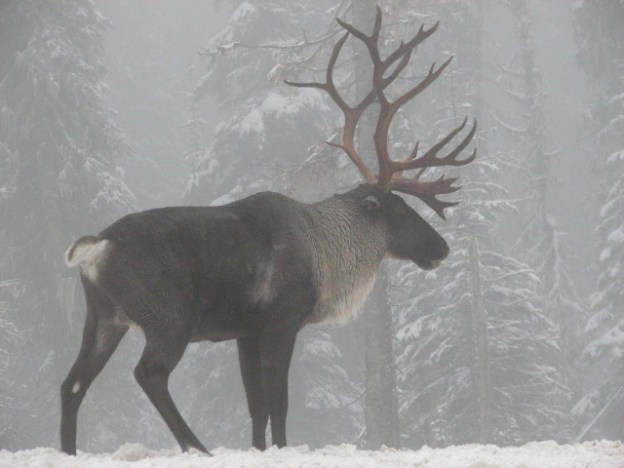
But saving th Canadian caribou might mean keeping the species on life support for decades… When Mark Hebblewhite, a caribou biologist at the University of Montana in Missoula, looks at how maps of woodland caribou habitat overlap with Alberta’s oil and gas deposits, his response is: Get real. Hebblewhite doubts the government will ever summon the will to impose the development restrictions necessary to save all herds. He points to a 2010 study indicating that such restrictions could mean forgoing extraction of oil, gas, and timber worth more than $125 billion in Alberta alone…

Instead of focusing on the most feeble herds, Canada should instead protect habitat in key areas where caribou populations still stand a good chance, he argued in a 2017 Biological Conservation paper. “We’ve prioritized the most screwed populations,” Hebblewhite says. “All I’m saying is that we prioritize the winners.”

That idea makes biologist Alana Westwood uncomfortable. A Vancouver, Canada–based scientist with the Yellowstone to Yukon Conservation Initiative,… If Canada isn’t willing to take the necessary steps, she suggests officials rename its law “the ‘recover species that are most easy to accommodate under business as usual act.’”…”It’s an easy way out for managers who don’t have the balls to make tough decisions, and therefore we lose species after species,” says Stuart Pimm, a conservation scientist at Duke University in Durham, North Carolina, who has often sparred with Possingham in public forums. One problem, he argues, is that giving up on a species also means abandoning a potent tool to rally the public and the courts. Sometimes charismatic animals such as California condors or polar bears can help build political support for saving endangered species or habitats more broadly….

And some species stand for entire ecosystems, Pimm adds. Consider the Cape Sable seaside sparrow. The innocuous songbird lives in Florida’s Everglades, where water diversions threaten its marsh habitat. The species might not rank high in a triage system—in part because other populations of related seaside sparrows exist. But because of how the U.S. Endangered Species Act is structured, efforts to protect the sparrow have required policymakers to reallocate water, benefiting the entire ecosystem. “I’m afraid we have to make more complicated decisions than the simple recipes that Hugh comes up with,” Pimm says.

Possingham concedes that triage is not suited to every situation. Europe, for example, has wealthy countries and few native endangered species, which makes saving them all realistic. And sometimes a species is so culturally important that it gets special treatment. New Zealand, for instance, has departed from its triage system to give priority to protecting 50 cherished species, including five species of kiwi birds, the nation’s mascot.

Excepts from Warren Cornwall With limited funds for conservation, researchers spar over which species to save—and which to let go, Science Magazine, Sept. 6, 2018