Tag Archives: clandestine operations Iran

How to Kill Scientists and Get Away with It

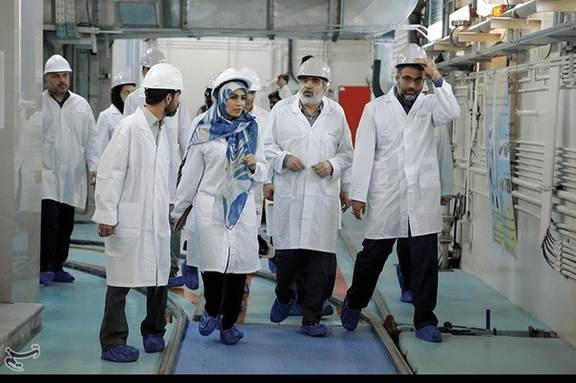
When Israel’s attacks on Iran began before dawn on June 13, 2025 explosions shattered the homes of some of Iran’s top scientists… All nine were killed in near-simultaneous attacks to prevent them from going into hiding…The attack on the scientists was considered so fantastical by even its planners that it was called “Operation Narnia,” after the fictional C.S. Lewis series…A week after the June 13 attacks, Israel used a drone to kill another scientist who was being kept in what was supposed to be a safe house in Tehran. The person hasn’t been named…The deadly airstrikes were the first to target Iran’s nuclear scientists since 2020, when Mohsen Fakhrizadeh was gunned down with a remote-controlled weapon. Israel has never denied or confirmed its role in the deaths of five Iranian scientists between 2010 and 2020.

Among the most important targets was Fereydoon Abbasi-Devani, the former head of the Atomic Agency of Iran and one of the founders of Iran’s nuclear weapons-related work…Another killed scientist was Mohammad Mehdi Teranchi, who led a unit under Fakhrizadeh focusing on high explosives, which are needed to detonate a nuclear weapon…

Iran has used universities like Shahid Beheshti, the Sharif University of Technology and Malek Ashtar University to keep alive its nuclear-weapons expertise over the past two decades….At these universities, Iran often matches up its nuclear scientists on experiments and other studies with younger students. Two of the scientists killed on June 13, Ahmadreza Zolfaghari and Abdulhamid Minouchehr, published an article in the Annals of Nuclear Energy in June 2024 that used advanced computer modeling to show how neutron sources behave in a chain reaction. That information can be used for civilian purposes, like building a nuclear reactor, or to help trigger a chain reaction in a nuclear weapon. 

Excerpt from Laurence Norman, How Israel Killed Iran’s Top Nuclear Scientists, WSJ, June 29, 2025
The Unintentional Making of a Global Power: Iran

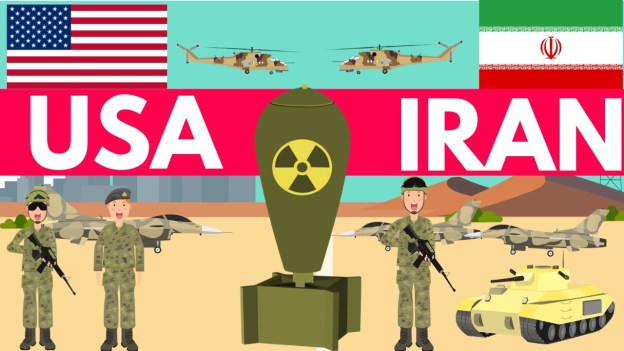
In 2024, Iran, under Supreme Leader Ali Khamenei’s leadership, thwarted decades of U.S. pressure and emerged from years of isolation largely by aligning itself with Russia and China…Iran’s economy remains battered by U.S. sanctions, but oil sales to China and weapons deals with Russia have offered financial and diplomatic lifelines…Today, Tehran poses a greater threat to American allies and interests in the Middle East than at any point since the Islamic Republic was founded in 1979. 

Iran’s military footprint reaches wider and deeper than ever. Iranian-backed armed groups have hit Saudi oil facilities with missiles and paralyzed global shipping in the Red Sea. They have dominated politics in Iraq, Lebanon, Yemen and Syria, and launched the most devastating strike on Israel in decades, when Hamas attacked in October. Iran launched its first direct military attack from its soil on Israel in April 2024. It has also orchestrated attacks on opponents in Europe and beyond, Western officials say. 

“In many respects, Iran is stronger, more influential, more dangerous, more threatening than it was 45 years ago,” said Suzanne Maloney, director of the foreign-policy program at the Brookings Institution, who advised Democratic and Republican administrations on Iran policy. 

U.S. policy has at times unintentionally contributed to Iran’s strength. The 2003 toppling of Saddam Hussein removed a sworn enemy from Iran’s borders. Washington’s failure to stabilize postwar Iraq bolstered Tehran’s influence…

Excerpts from Sune Engel Rasmussen and Laurence Norman, How Iran Defied the U.S. to Become an International Power, WSJ, July 2, 2024

The US Campaigns of Attrition: Iran, Iraq

There is another…theory, that Iran will persist in its drive to achieve a bomb—or at least a break-out capacity to get one quickly if it so desired. The Iranians say they never trusted Mr Obama’s offer of detente early in his presidency because of the heavier sanctions and the campaigns of sabotage and assassination that accompanied the offer. In the same vein,they deplore the American administration’s recent decision to drop its longstanding classification of the exiled People’s Mujahedeen of Iran as a terrorist organisation.

So Iran’s rulers will not easily trust future pledges to lift sanctions in return for nuclear concessions. In any event, Iran’s leaders may now believe that such concessions would destroy the Islamic Republic’s credibility and open it to a recurrence of the unrest that followed Mr Ahmadinejad’s disputed re-election in 2009. So it is possible that an American policy of containment, even an undeclared one, might lead to a long campaign of attrition of the kind that impoverished Iraq in the 1990s, while leaving its leader in power.

Anticipating trouble, Iran’s hardliners have been stifling the remaining repositories of dissent as fiercely as ever. The most notable of these is Akbar Hashemi Rafsanjani, an establishment heavyweight and former president who became an opposition figurehead after the contentious poll of 2009. The two most controversial of his five children—his daughter Faezeh and his son Mehdi—have recently been arrested, undoubtedly with the approval of Iran’s supreme leader, Ali Khamenei. Mr Rafsanjani had been expected to put up a fight when Mr Khamenei tries, as he probably will, to install his own nominee as president in elections that are due next spring. But with his children behind bars, the former president may favour circumspection over principle.

Excerpt, Iran: Behind the rants, uncertainty grows, Economist, Sept. 29,2012, at 54