Tag Archives: drones and civilian casualties

Israel’s Killing Machine and the Enemies Within

Israel stunned and hobbled Iran starting on June 13, 2025 when it pulled off an intelligence and military operation years in the making that struck high-level targets with precision. Guided by spies and artificial intelligence, the Israeli military unleashed a nighttime fusillade of warplanes and armed drones smuggled into Iran to quickly incapacitate many of its air defenses and missile systems. With greater freedom to fly over Iran, Israel bombarded key nuclear sites and killed top generals and scientists. By the time Iran mustered a response hours later, its ability to retaliate — already weakened by past Israeli strikes — was greatly diminished.

The Mossad and the military worked together for at least three years to lay the operational groundwork…To further diminish Iranian air defenses and missile systems, Mossad agents had smuggled precision weapons into Iran that were prepositioned to strike from close range…Those weapons included small, armed drones, which agents snuck into the country in vehicles…Mossad agents stationed weapons close to Iranian surface-to-air missile sites…To analyze information gathered from various sources, Israel used the latest artificial-intelligence…AI was used to help Israelis quickly sift through troves of data they had obtained….An investigation by The Associated Press conducted in early 2025 uncovered that the Israeli military uses U.S.-made AI models in war to sift through intelligence and intercept communications to learn the movements of its enemies. It’s been used in the wars with Hamas in Gaza and with Hezbollah in Lebanon.

In addition to AI, the Mossad relied on spies to identify top nuclear scientists and members of Iran’s Revolutionary Guard… At least eight members of the Guard, including the head of its missile program, were killed in a single Israeli strike on an underground bunker.

Another facet of the attack was to strike Iranian vehicles used to transport and launch missiles. The strategy was similar to a Ukrainian operation earlier this month in Russia. In that operation, nearly a third of Moscow’s strategic bomber fleet was destroyed or damaged with cheaply made drones snuck into Russian territory…In an interview with Iranian state-run television, the country’s police chief, Gen. Ahmadreza Radan, said “several vehicles carrying mini-drones and some tactical drones have been discovered.” ….

In the 2000s, Iranian centrifuges used for enriching uranium were destroyed by the so-called Stuxnet computer virus, believed to be an Israeli and American creation….In 2018, Israel stole an archive of Iranian nuclear research that included tens of thousands of pages of records…In July 2024, Israel killed a senior leader of Hamas, Ismail Haniyeh, with a bomb in a bedroom of a government guesthouse in Tehran.

Excerpts from JULIA FRANKEL and SAM MEDNICK, How Israel used spies, smuggled drones and AI to stun and hobble Iran, AP, June 17, 2025
The Drone Experiment of Ukraine

U.S. startups have spent billions of venture-capital dollars in hopes of developing the small drones that the Pentagon says it needs for future conflicts, but many have produced only expensive aircraft that don’t fly very well. Ukrainian drone makers, meanwhile, have mastered mass-producing drones despite limited resources and are looking for new customers and capital…

“No U.S. company is keeping up with Ukraine,” said CX2 co-founder Nathan Mintz. “You know their stuff works. They’ve got the ultimate high-stakes laboratory meant to battle-proof all this stuff.”

The U.S. has the capacity to build up to 100,000 drones a year, according to one Defense Department estimate. In 2024, Ukraine built more than two million drones. Some of the Ukraine-built drones that the Defense Department wants can fly hundreds of miles with explosives and have been used in attacks inside Russia…“Ukraine has made it pretty clear that they intend on being the drone capital of the planet once this war is over,” said Derek Whitley, co-founder of startup Vivum, which sells its AI software for autonomous systems to the Defense Department.

Ukrainian drones often sell for one-tenth the price of American options. They have proven on the battlefield that they can work when radio and satellite communication is blocked by electronic jamming…American startups are slower to build, deliver and update their drones, which also have often failed to weather severe electronic warfare. Many U.S. companies that brought their drones to Ukraine watched them fall out of the sky or fail to complete missions.

Excerpt from Heather Somerville, America Turns to Ukraine to Build Better Drones, WSJ, Mar. 11, 2025


Why Americans Love Chinese Drones

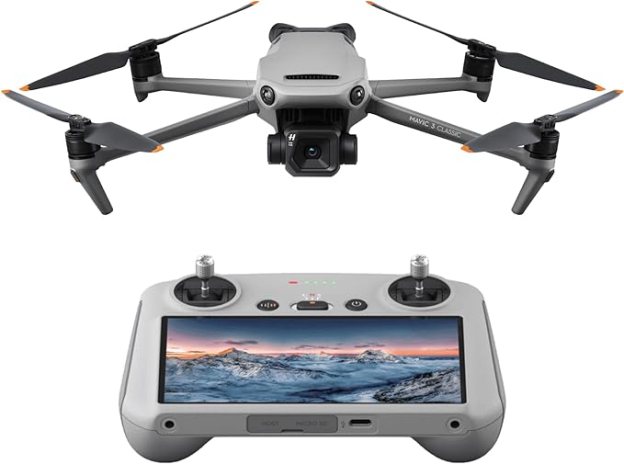
China’s DJI drones  have been labeled a national-security risk by Republicans and Democrats, military officials and federal regulators. The U.S. government has placed tariffs on the drones and largely prohibited federal agencies from using DJIs. 

Yet DJI accounts for around 70% to 90% of the American commercial, local government and hobbyist drone market. Real-estate agents, movie producers, firefighters, roof inspectors, utilities and law enforcement have all come to depend on the brand. The Secret Service bought more than 20 of them in 2022 just before restrictions were put in place, according to federal purchasing records…Small drones have become essential tools in U.S. commerce and emerged as critical weapons in modern combat, handing the world’s largest supplier—DJI—enormous power. National-security experts say reliance on Chinese drones creates a dangerous dependency that China could exploit in a conflict.  Ukrainians have relied on DJI, while American models have often failed on the front lines—although soldiers have had to contend with security vulnerabilities…

American drones are in short supply with long wait times. Drone buyers say they sometimes have to wait close to five months for a U.S. drone, while DJIs are available immediately. “Are American drone companies ready to fill the void?” said Trevor Perrott, chief executive of Florida drone maker Censys Technologies. “No, we’re not ready. But DJI may very well be a Band-Aid we need to rip off for long-term gain.” 

Excerpts from Heather Somerville, Why First Responders Don’t Want the U.S. to Ban Chinese Drones, WSJ, Aug. 8, 2024

The Future of Political Assassination

The Pentagon killed a Kataib Hezbollah leader in downtown Baghdad in February 2024 using a weapon that employs six long blades to shred its target and minimize civilian casualties, defense officials said. The modified Hellfire missile, which inside the military is referred to colloquially as “the flying Ginsu,” recalling the popular knives sold on TV infomercials in the 1970s, was used to target Abu Baqr al-Saadi, the leader of Kataib Hezbollah in Syria. The U.S. use of the Ginsu in the Baghdad strike hasn’t been previously disclosed. …The weapon, formally known as the R9X and sometimes referred to as the Ninja bomb, is an inert Hellfire missile designed by the Pentagon and the CIA to kill terrorist leaders. It was employed, in part, because of concerns that killing innocent bystanders could inflame an already tense political situation in Iraq, which hosts roughly 2,500 American troops, the officials said. 

Imagery of the strike on al-Saadi, showing the remnants of a burning but largely intact vehicle, was reminiscent of others involving the Ginsu. A weapon with an explosive warhead, like the traditional Hellfire missile, would have likely destroyed the vehicle.  The U.S. has developed a variant of the Hellfire missile that replaces an explosive warhead with a ring of blades.

Excerpts from Pentagon Used Six-Bladed ‘Ginsu’ Weapon to Kill Iraqi Militia Leader, WSJ, Feb. 14, 2024

How Does it Feel? Watching People Die from the Cold Comfort of a Computer Chair

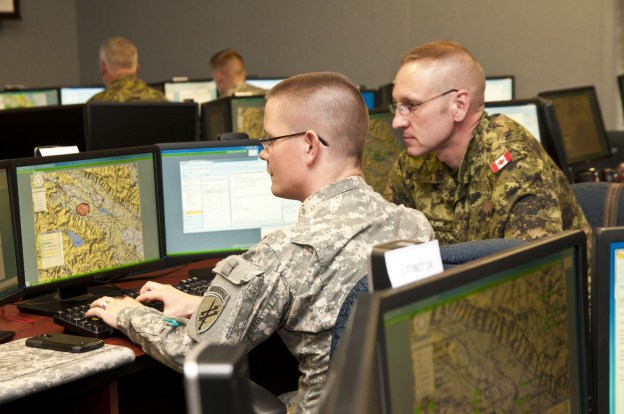
A former intelligence analyst was sentenced on July 27, 2021 to nearly four years in prison after pleading guilty to giving classified information about the U.S. drone program to a reporter. Daniel Hale, a former airman in the U.S. Air Force assigned to intelligence operations and a onetime employee of the defense contractor Leidos, was given a 45-month sentence as well as three years supervised release by a Virginia federal judge. Mr. Hale was accused of giving numerous documents marked “Secret” and “Top Secret” to a journalist in 2014…

Mr. Hale has said he leaked the material because the public needed to know the full details about the U.S. drone program, which he believed led to unjustified civilian casualties and wasn’t being described forthrightly by political leaders…In a letter filed with the court  in advance of his sentencing, Mr. Hale recalled the first drone strike he witnessed against a handful of men drinking tea in Paktika province, Afghanistan—a group that included one suspected combatant and his companions.

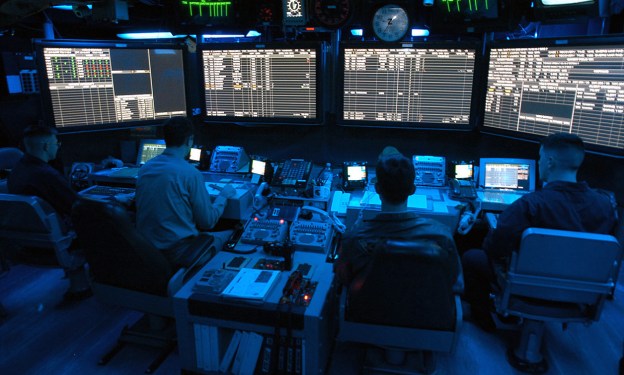
“I could only look on as I sat by and watched through a computer monitor when a sudden, terrifying flurry of Hellfire missiles came crashing down,” Mr. Hale wrote. “Since that time and to this day, I continue to recall several such scenes of graphic violence carried out from the cold comfort of a computer chair. Not a day goes by that I don’t question the justification of my actions.”

Excerpts from Ex-Military Analyst Gets 45-Month Sentence for Leaking Classified Drone Information, WSJ, July 28, 2021

The Killing Fad: Agile Drones

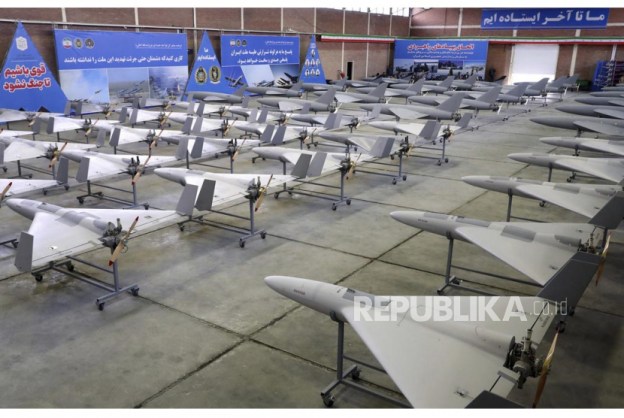
Drones built in Turkey with affordable digital technology wrecked tanks and other armored vehicles, as well as air-defense systems, of Russian protégés in battles waged in Syria, Libya and Azerbaijan. These drones point to future warfare being shaped as much by cheap but effective fighting vehicles as expensive ones with the most advanced technology. China, too, has become a leading war drone exporter to the Middle East and Africa. Iran-linked groups in Iraq and Yemen used drones to attack Saudi Arabia. At least 10 countries, from Nigeria to the United Arab Emirates, have used drones purchased from China to kill adversaries, defense analysts say.

Flying alone or in a group, these drones can surprise troops and disable poorly concealed or lightly defended armored vehicles, a job often assigned to expensive warplanes. The drones can stay quietly aloft for 24 hours, finding gaps in air-defense systems and helping target strikes by warplanes and artillery, as well as firing their own missiles. Militaries, including the U.S., are upgrading air-defense systems to catch up with the advances, seeking methods to eliminate low-budget drones without firing missiles that cost more than their targets. The U.S. Air Force Research Laboratory is also developing Skyborg and Valkyrie, lower-cost autonomous aircraft that are part of an innovation program

Israel and the U.S. have long used high-end drones in counterterrorism operations to target prominent enemies. But the countries have hesitated to sell their top models, even to allies, for fear of proliferation…Technological advances and global competitors have produced inexpensive alternatives.

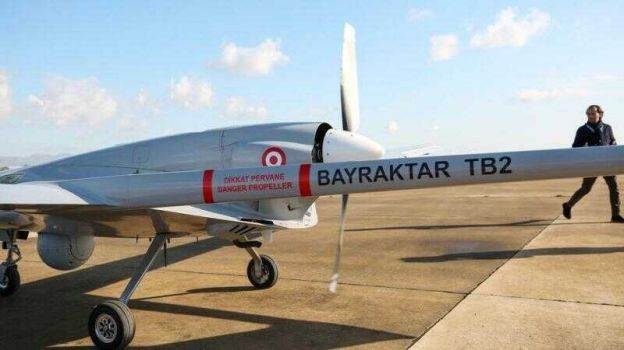
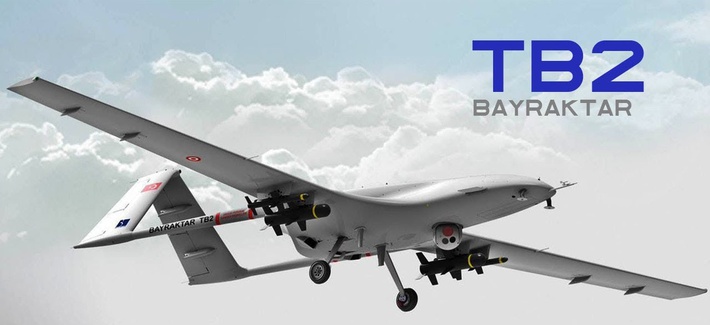
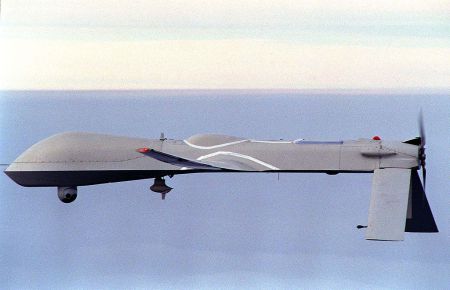
The standard-bearer of the latest armed-drone revolution emerged last year on the battlefields around Turkey, the Bayraktar TB2. Compared with the American MQ-9, the TB2 is lightly armed, with four laser-guided missiles. Its radio-controlled apparatus limits its basic range to around 200 miles, roughly a fifth of the ground the MQ-9 can cover. Yet it is utilitarian, and reliable—qualities reminiscent of the Soviet Kalashnikov AK-47 rifle that changed warfare in the 20th century. A set of six Bayraktar TB2 drones, ground units, and other essential operations equipment costs tens of millions of dollars, rather than hundreds of millions for the MQ-9…

Ukraine signed a deal in January 2019 to buy TB2 drones from Turkey, receiving at least six so far, and Kyiv is in talks for joint production. A Ukrainian company is manufacturing engines for the latest Baykar drone, a larger model with a heavier payload than the TB2. The country hopes the drones will discourage a repeat of the Kremlin’s 2014 invasions. …Turkey’s drone sales have riled Moscow. …

The TB2 was born of Turkey’s dissatisfaction with available models from the U.S. and Israel, and the country’s desire for systems under its control to fight the PKK, a Kurdish militant group….Azerbaijan, geographically and culturally close to Turkey, procured a set of TB2 drones last year. The country had lost control of the Nagorno-Karabakh region to Armenia in a war that ended in a 1994 cease-fire. Rising petroleum wealth had bolstered Azerbaijan’s military in the years since. The TB2s, as well as Israeli-made drones, helped Azerbaijan overwhelm Armenian forces. Attacks were recorded for videos and posted online by Azerbaijan’s Defense Ministry….

The Azerbaijan victory caught the attention of Turkey’s suppliers. Some companies and countries, including Canada, halted export of components used in the TB2. [Too little too late?]

Excerpt from James Marson and Brett Forrest, Armed Low-Cost Drones, Made by Turkey, Reshape Battlefields and Geopolitics, WSJ, June 4, 2021

Smart Weapons Who Make Many Mistakes: AI in War

Autonomous weapon systems rely on artificial intelligence (AI), which in turn relies on data collected from those systems’ surroundings. When these data are good—plentiful, reliable and similar to the data on which the system’s algorithm was trained—AI can excel. But in many circumstances data are incomplete, ambiguous or overwhelming. Consider the difference between radiology, in which algorithms outperform human beings in analysing x-ray images, and self-driving cars, which still struggle to make sense of a cacophonous stream of disparate inputs from the outside world. On the battlefield, that problem is multiplied.

“Conflict environments are harsh, dynamic and adversarial,” says UNDIR. Dust, smoke and vibration can obscure or damage the cameras, radars and other sensors that capture data in the first place. Even a speck of dust on a sensor might, in a particular light, mislead an algorithm into classifying a civilian object as a military one, says Arthur Holland Michel, the report’s author. Moreover, enemies constantly attempt to fool those sensors through camouflage, concealment and trickery. Pedestrians have no reason to bamboozle self-driving cars, whereas soldiers work hard to blend into foliage. And a mixture of civilian and military objects—evident on the ground in Gaza in recent weeks—could produce a flood of confusing data.

The biggest problem is that algorithms trained on limited data samples would encounter a much wider range of inputs in a war zone. In the same way that recognition software trained largely on white faces struggles to recognise black ones, an autonomous weapon fed with examples of Russian military uniforms will be less reliable against Chinese ones. 

Despite these limitations, the technology is already trickling onto the battlefield. In its war with Armenia last year, Azerbaijan unleashed Israeli-made loitering munitions theoretically capable of choosing their own targets. Ziyan, a Chinese company, boasts that its Blowfish a3, a gun-toting helicopter drone, “autonomously performs…complex combat missions” including “targeted precision strikes”. The International Committee of the Red Cross (ICRC) says that many of today’s remote-controlled weapons could be turned into autonomous ones with little more than a software upgrade or a change of doctrine….

On May 12th, 2021, the ICRD published a new and nuanced position on the matter, recommending new rules to regulate autonomous weapons, including a prohibition on those that are “unpredictable”, and also a blanket ban on any such weapon that has human beings as its targets. These things will be debated in December 2021 at the five-yearly review conference of the UN Convention on Certain Conventional Weapons, originally established in 1980 to ban landmines and other “inhumane” arms. Government experts will meet thrice over the summer and autumn, under un auspices, to lay the groundwork. 

Yet powerful states remain wary of ceding an advantage to rivals. In March, 2021 a National Security Commission on Artificial Intelligence established by America’s Congress predicted that autonomous weapons would eventually be “capable of levels of performance, speed and discrimination that exceed human capabilities”. A worldwide prohibition on their development and use would be “neither feasible nor currently in the interests of the United States,” it concluded—in part, it argued, because Russia and China would probably cheat. 

Excerpt from Autonomous weapons: The fog of war may confound weapons that think for themselves, Economist, May 29, 2021

An Affordable and Risk Free Way to Kill: Drones

Armed drones have become ubiquitous in the Middle East, say Aniseh Bassiri Tabrizi and Justin Bronk of the Royal United Services Institute, a British think-tank, in a recent report. America has jealously guarded the export of such aircraft for fear that they might fall out of government hands, be turned on protesters or used against Israel. America has also been constrained by the Missile Technology Control Regime, an arms-control agreement signed by 35 countries, including Russia, that restricts the transfer of particularly capable missiles and drones (both rely on the same underlying technology).

China…has sold missile-toting drones to Egypt, Jordan, Iraq, Saudi Arabia and the United Arab Emirates (UAE). All are American security partners…. Other countries, such as Israel, Turkey and Iran, have filled the gap with their own models.  America wants to muscle its way back into the market. In April 2018 the Trump administration began loosening export rules to let countries buy armed drones directly from defence companies rather than through official channels. Drones with “strike-enabling technology”, such as lasers to guide bombs to their targets, were reclassified as unarmed. American drones are costlier and require more paperwork than Chinese models, but are more capable. ..The flood of drones into the market is already making an impact—sometimes literally. Ms Tabrizi and Mr Bronk say some Middle Eastern customers see drones as an “affordable and risk-free” way to strike across borders… 

Drone Bayraktar made by Turkey

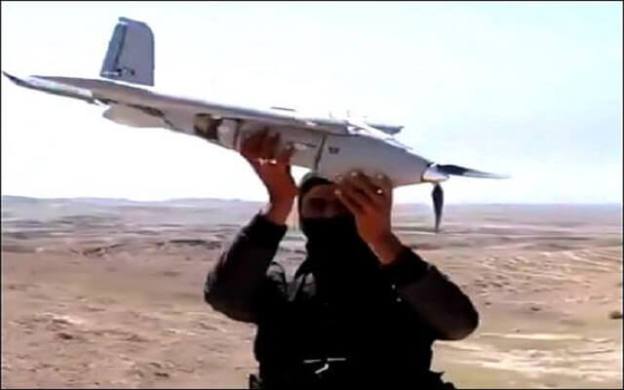
Non-state actors are unwilling to be left out of the party. The jihadists of Islamic State often used drones in Iraq and Syria. Hizbullah used drones when it hit 23 fighters linked to al-Qaeda in Syria in 2014. The Houthi drone that bombed Al-Anad looked a lot like an Iranian model. Last year the Houthis sent a similar one more than 100km (60 miles) into Saudi Arabia before it was shot down. ..

Excerpts from Predator Pricing: Weapon Sales, Economist,  Mar. 9, 2019

CIA Drone Strikes from Germany

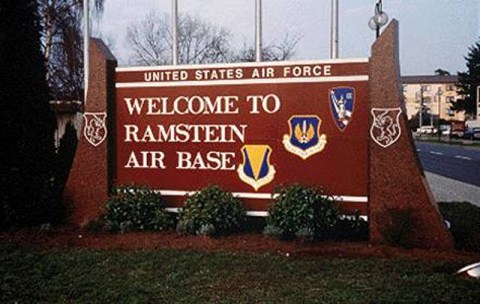
The case of three Yemenis whose relatives were killed in the attack in August 2012, will be heard on Wednesday by a court in Cologne, Germany. Lawyers for the victims say the German government shares responsibility for the death of civilians because the US military base of Ramstein, which allegedly played a key role in the attack, is on German soil. The government rejects the claim.

Faisal bin Ali Jaber, who lost his brother-in-law Salim, a preacher, and his nephew Waleed, a police officer, in the strike on the village of Khashamir on 29 August, 2012,…Bin Ali Jaber, whose extended family had travelled back to the eastern Yemeni village to celebrate a wedding, had been having supper when he felt the impact of five rockets hitting the ground. Speaking in Arabic through a translator, he recalled leaving his house with his wife. “We found scattered body parts and people picking them up. We picked them up as well. It (soon) became apparent that Salim and Walid were among the victims. The incident was a tragedy in every way, for all the residents of Khashamir and the surrounding villages.”

Ramstein, in the German state of Rheinland Pfalz, is used by the US military on condition nothing is done there that violates German law. The German government has been repeatedly accused of failing to confront Washington over Ramstein’s alleged role in the drone war.The case rests on the claim that Ramstein is central to the drone strikes because it relays crucial information via satellite that enables drone operators in Nevada to communicate with the aircraft in Yemen, Pakistan, Afghanistan and elsewhere.  The geographical location of Ramstein is said to be vital to the transmission of the information, because, due to the curvature of the earth, a relay station is needed between the US and the Middle East.

Der Spiegel and the Intercept website reported in April 2015  that Ramstein is critical to the US drone strikes, quoting experts, but the US government has so far failed to confirm or deny the claim.  The potential loss of Ramstein as a strategically located relay station would present the US with the tough challenge of finding an alternative country willing to offer it a hub, amid global controversy and growing unease over drone strikes.

Excerpts from Kate Connolly ,German court to hear case brought by relatives of Yemen drone attack victims, Guardian, May 22, 2015

The CIA Drone War: 2014 Deaths Update

US drone strikes kill 28 unknown people for every intended target, new Reprieve report reveals. US drone strikes in Yemen and Pakistan have killed as many as 1,147 unknown people in failed attempts to kill 41 named individuals, a report by human rights charity Reprieve has found.The report looks at deaths resulting from US drone strikes in Yemen and Pakistan between November 2002 and November 2014. It identifies 41 men who appeared to have been killed multiple times – drawing into question the Obama administration’s repeated claims that the covert drone programme is ‘precise.’

While the US drone programme is shrouded in secrecy, security sources regularly brief the media on the names of those suspected militants targeted or killed in the strikes. Frequently, those individuals are reported to have been targeted or killed on multiple occasions.

Reprieve’s assessment is the first to provide an estimate of the number of people – including in some cases children – who are killed each time the US apparently attempts to assassinate a ‘high value target.’ Due to the US Government’s refusal to publish any information relating to the programme, or the ‘Kill List’ said to determine its targets, the analysis is limited to existing, publicly-available data from media reports and The Bureau of Investigative Journalism.

Key findings of the report include:

In Pakistan, 24 men were reported as killed or targeted multiple times. Missed strikes on these men killed 874 people, including 142 children.
In Yemen, 17 men were reported killed or targeted multiple times. Missile strikes on these men killed 273 others and accounted for almost half of all confirmed civilian casualties and 100% of all recorded child deaths.
In targeting Ayman al Zawahiri, the CIA killed 76 children and 29 adults. They failed twice, and Ayman al Zawahiri is reportedly still alive.
It took the US six attempts to kill Qari Hussain, a Pakistani target. During these attempts, 128 people were killed, including 13 children.

Each assassination target on the US government’s so-called Kill List ‘died’ on average more than three times before their actual death.

The US government’s drone programme has come under increasing scrutiny after a number of strikes that hit large numbers of civilians by mistake. It was recently revealed – as a result of investigations by Reprieve – that the US government compensates civilian victims of drone strikes in Yemen.

Excerpt from US drone strikes kill 28 unknown people for every intended target, new Reprieve report reveals, Nov. 25, 2014

The Drone War that’s in Full Force

There were more drone strikes in Pakistan last month (July 2013) than any month since January 2013. Three missile strikes were carried out in Yemen in the last week alone. And after Secretary of State John Kerry told Pakistanis on Thursday that the United States was winding down the drone wars there, officials back in Washington quickly contradicted him.  More than two months after President Obama signaled a sharp shift in America’s targeted-killing operations, there is little public evidence of change in a strategy that has come to define the administration’s approach to combating terrorism.  Most elements of the drone program remain in place, including a base in the southern desert of Saudi Arabia that the Central Intelligence Agency continues to use to carry out drone strikes in Yemen. In late May, administration officials said that the bulk of drone operations would shift to the Pentagon from the C.I.A.

But the C.I.A. continues to run America’s secret air war in Pakistan, where Mr. Kerry’s comments underscored the administration’s haphazard approach to discussing these issues publicly. During a television interview in Pakistan on Thursday, Mr. Kerry said the United States had a “timeline” to end drone strikes in that country’s western mountains, adding, “We hope it’s going to be very, very soon.”

But the Obama administration is expected to carry out drone strikes in Pakistan well into the future. Hours after Mr. Kerry’s interview, the State Department issued a statement saying there was no definite timetable to end the targeted killing program in Pakistan, and a department spokeswoman, Marie Harf, said, “In no way would we ever deprive ourselves of a tool to fight a threat if it arises.”

Some of those operations originate from a C.I.A. drone base in the southern desert of Saudi Arabia — the continued existence of which encapsulates the hurdles to changing how the United States carries out targeted-killing operations.  The Saudi government allowed the C.I.A. to build the base on the condition that the Obama administration not acknowledge that it was in Saudi Arabia. The base was completed in 2011, and it was first used for the operation that killed Anwar al-Awlaki, a radical preacher based in Yemen who was an American citizen.

By MARK MAZZETTI and MARK LANDLER,Despite Administration Promises, Few Signs of Change in Drone War, New York Times, Aug. 2, 2013