Tag Archives: gene banks and war

Bureaucracy Against Biodiversity

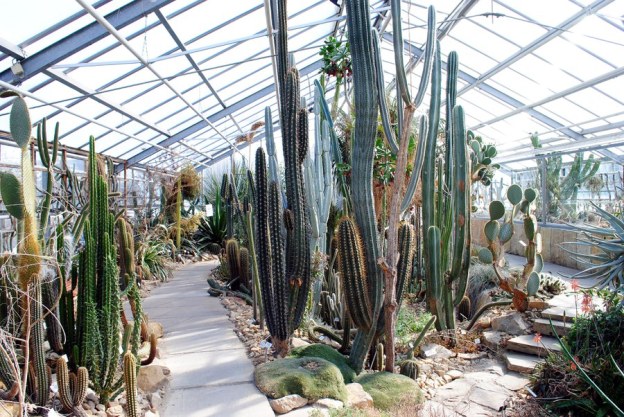
Botanic gardens around the world are struggling to find the space to conserve rare plants and save endangered species. “They can’t all fit,” said Brockington. Cambridge University Botanic Garden, for example, is home to more than 8,000 species. “That’s more than a tropical country like Vietnam, growing in a tiny little acreage of Cambridge.”…Threatened plants must compete for space in botanic gardens with beautiful, famous – but less endangered – flowers, trees and landscapes that will attract visitors and inspire people to learn about gardening and the natural world….The first botanic gardens were founded during the colonial era, and almost all are located in the west. In the past, botanists from these gardens would engage in “extractive, colonial-type practices”, visiting poorer nations to “pull out whatever plants they or their rich patrons were interested in, bring them back and cultivate them,” Brockington said.

In 1993, a United Nations Convention on Biological Diversity attempted to stop this by assigning sovereignty over biodiversity to national governments, enabling states to “own” the genetic material within their geopolitical boundaries…But this is hampering efforts of gardens to collect endangered plants in the wild, and exchange seeds and plant material to protect threatened species from extinction. To maintain diversity and preserve the world’s living collections, plants must be regularly replaced or propagated. But since the convention was introduced in 1993, the number of plants in botanic gardens collected from the wild has halved.

“Political boundaries do not help us share material and collectively steward the world’s most threatened biodiversity,” Brockington said. Brexit, for example, has been “catastrophic” for exchanges of plant material between European botanic gardens, he said. “The bureaucracy of seed exchange can be so costly now, it would be cheaper for our staff to personally fly to somewhere like Sweden, with a legal amount of seed, than send it by post.”…Brockington wants the world’s botanic gardens to collaborate to safeguard plant populations by creating one big “meta collection”, where individual specimens of an endangered wild species are extensively cultivated in multiple institutions.

Excepts from  Donna Ferguson, The risk of extinction is accelerating’: world’s botanic gardens raise alarm with space to protect endangered plants running out, Guardian, Jan. 25, 2025
Preserving Seeds that Feed the World: the Svalbard Global Seed Vault

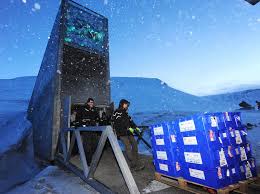
Six hundred miles from the North Pole, on an island the size of West Virginia, at the end of a tunnel bored into a mountain, lies a vault filled with more than 1 million samples of seeds harvested from 6,374 species of plants grown in 249 locations around the globe.The collection, the largest of its kind, is intended to safeguard the genetic diversity of the crops that feed the world.  If disaster wipes out a plant, seeds from the vault could be used to restore the species. If pests, disease or climate change imperil a food source, a resistant trait found among the collection could thwart the threat.

While some countries have their own seed banks—Colorado State University houses one for the U.S.—the Svalbard Global Seed Vault serves as a backup. The vault, built in 2008 at a cost of about $9 million, is owned and maintained by Norway, but its contents belong to the countries and places that provide the samples.  “It works like a safe-deposit box at the bank,” said Cary Fowler, an American agriculturalist who helped found the vault. “Norway owns the facility, but not the boxes of the seeds.”

In 2015, after the International Center for Agricultural Research in the Dry Areas was destroyed in the Syrian civil war, scientists who had fled the country withdrew seeds to regenerate the plants in Lebanon and Morocco.  “It had one of the world’s biggest and best collections of wheat, barley, lentils, chickpeas, faba beans and grass pea,” Dr. Fowler said. “It was the chief supplier of a disease-resistant wheat variety for the Middle East.”  In 2017, the group returned copies of its seeds to the vault.

The 18,540-square-foot seed vault includes three rooms with the capacity to house 4.5 million samples of 500 seeds each—a maximum of 2.25 billion seeds. The environment’s natural temperature remains below freezing year round, but the seeds are stored at a chillier -18 degrees Celsius, or around -0.4 degrees Fahrenheit. They’re expected to last for decades, centuries or perhaps even millennia….

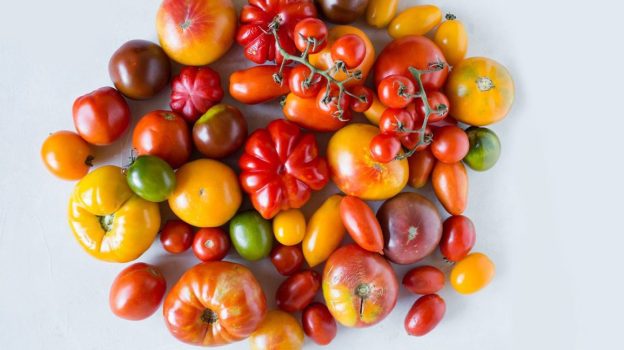
While dwindling diversity might not seem like an imminent threat, four chemical companies now control more than 60% of global proprietary seed sales…That concentration of power, some worry, could lead to less agricultural variety and more genetic uniformity…In the meantime, the seed vault (which doesn’t store genetically modified seeds) will continue to accept deposits in an effort to preserve all of the options it can.

Excerpts from Craven McGinty, Plan to Save World’s Crops Lives in Norwegian Bunker, WSJ,  May 29, 2020

A Botanical Treasure: Congo

Situated along the banks of the Congo River, the Yangambi Research Station was in its heyday a booming scientific hub, revered for its invaluable work in the Congo Basin throughout the midcentury.

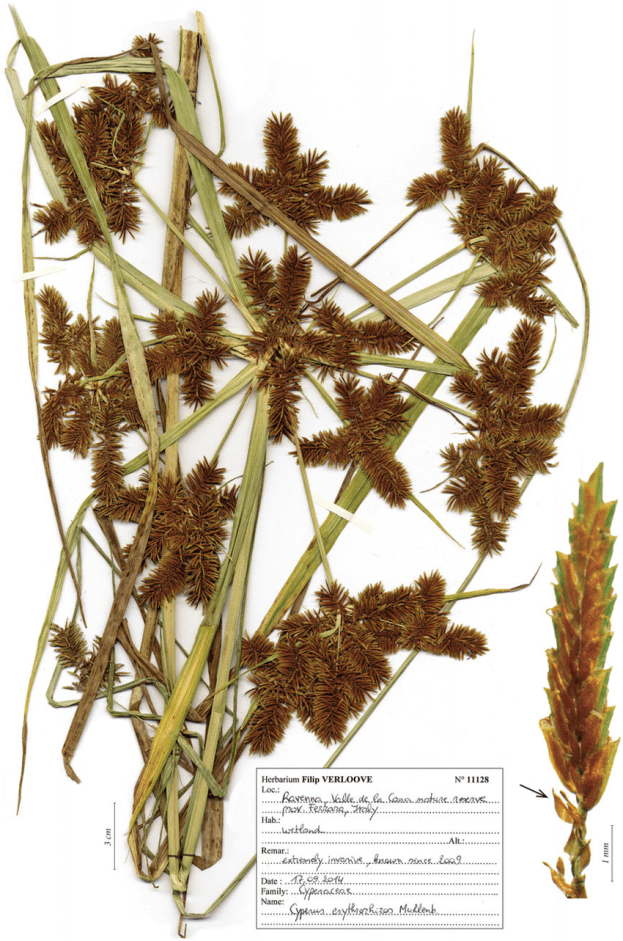
It wasn’t to last. War, political instability and budget cuts were to hamper the center’s survival after Democratic Republic of Congo (DRC) gained independence from its colonial ruler, Belgium, in 1960. The following decades would see skilled staff numbers dwindle, the jungle reclaim its buildings, and the center’s science work come to a stop.  But inside these crumbling walls lay a botanical treasure-trove. Yangambi’s herbarium holds Central Africa’s largest collection of dried plants. In fact, 15% of its 150,000 specimens are so rare, that they can only be found here….

Efforts from the Congolese Institute for Agronomy Research (INERA) could not keep the center running alone.   It was in 2017 that a ‘game changing’ opportunity arrived. INERA and the Meise Botanic Garden partnered with FORETS, a project coordinated by the Center for International Forestry Research (CIFOR)and financed by the European Union…Now, the herbarium has benefitted from a facelift – including a new roof, windows and doors, and a water cistern – soon its staff will be trained in modern preservation techniques and new technologies…Digitization of specimens will enable access to researchers around the world.

Excerpts from AHTZIRI GONZALEZ, Protecting Congo’s botanical treasures, CIFOR Press Release, Jan 11, 2019

Gene Banks: saving world’s crops

Syria’s civil war has forced scientists to request the first-ever withdrawal of seeds from a Doomsday vault built in the Arctic to safeguard the world’s food supplies…The International Center for Agricultural Research in the Dry Areas (ICARDA) said it has made a request to take back some of its samples from the Svalbard Global Seed Vault. The vault was created by the Norwegian government in 2008 to protect vital crops such as wheat against global disasters, war or disease.

It will be the first time seeds have been withdrawn from the facility, which lies more than 800 miles inside Arctic Circle — midway between Norway and the North Pole — and is the largest vault of its kind in the world. Built into the mountainside on the Svalbard archipelago, it relies on permafrost and thick rock to ensure that the seed samples will remain frozen even without power..,ICARDA has requested approximately 16,500 of its seed samples — one seventh of the total it has stored in Svalbard — and hopes to reproduce them at its other facilities in Morocco and the American University in Beirut, Lebanon. Eventually it will send new samples back to Norway…

He said some scientists were still present at the Aleppo facility but that its one-time headquarters had been occupied by armed groups.  “Fortunately it is not ISIS, they are some fundamentalist groups,” he said. “They seem to co-exist. They are using the land for their own benefit, for example to grow legumes, but we have no control of it…..The Svalbard seed bank has exactly 865,871 samples from every country in the world, Asdal said.  “In fact, we have seeds from more countries than now exist,” he explained, since some of the older seeds are from now-defunct nations such as Czechoslovakia. Syria’s civil war has killed a quarter of a million people since 2011, according to United Nations estimates, and driven 11 million more from their homes.

Excerpts from ALASTAIR JAMIESON, Syria War Forces First Withdrawal from Svalbard Global Seed Vault,NBC News, Sept. 25, 2015