Tag Archives: guerrilla tactics

How the Houthis Blindsided the U.S. Forces

Even less-sophisticated adversaries can pose a serious threat to U.S. forces. And fatigue among overworked soldiers, sailors, aircrews and Marines can lead to costly mistakes. Trump launched Operation Rough Rider in March 2025 threatening the Houthis would be “annihilated” if they didn’t halt attacks on shipping in the vital Red Sea trade route. He poured forces into the region including two aircraft carriers, half a dozen B-2 bombers, a squadron of advanced F-35 fighters, and destroyers armed with guided missiles.

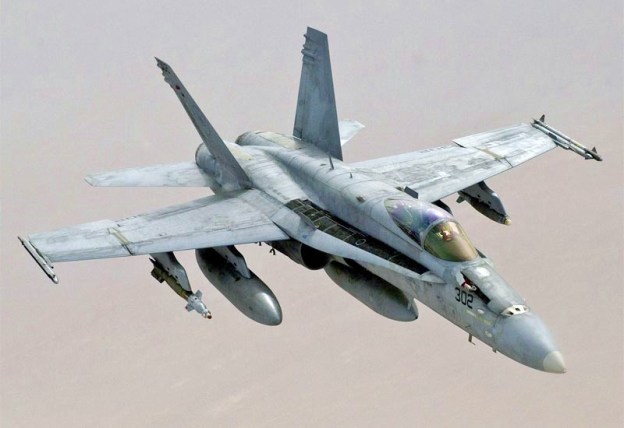
The Houthis proved resilient. In addition to nearly shooting down the two F-16s, they knocked more than a half-dozen Reaper drones out of the sky. A missile attack on the USS Harry S. Truman in April 2025 forced the carrier to make a hard turn that sent an F/A-18 rolling into the Red Sea. Another plane slid off the deck in May 2025 when its landing cable snapped, because sailors exhausted by weeks of combat likely left off a washer that held it in place.

The U.S. force had a huge edge over the Houthis. Part of that was the “Wild Weasels,” the name for F-16 units…charged with suppressing enemy air defenses. They were equipped with HARM missiles that lock on to the signal from enemy radars to knock them out…But the Houthis had developed a network to track American warplanes with observers, optics and infrared sensors whose intricacy U.S. officials didn’t entirely understand. That enabled them to flick on their air-defense radars at the last moment, so U.S. pilots would have little time to react—a tactic pilots came to call a “SAMbush.”…

The Pentagon touted the accomplishments of its 53-day fight against the Houthis. The U.S. had hit more than 1,000 targets…but never decapitated the top Houthi leadership. The US operation didn’t defeat the Houthis or degrade them to the point where they are unable to carry out future attacks in the Red Sea.

Excerpt from Michael Gordon et al., F-16 Pilot’s Narrow Escape in Missile Attack Shows Risks of a New Mideast War, WSJ, Feb. 26, 2026
Kamikaze Drones: Shortening the Kill Chain

The 2-foot-long Switchblade drone [unmanned aerial vehicle (UAV)] is so named because its wings fold into the fuselage for transport and spring out after launch. It is designed to fit into a soldier’s rucksack and is fired from a mortar-like tube. Once airborne, it begins sending back live video and GPS coordinates to a hand-held control set clutched by the soldier who launched it.  When soldiers identify and lock on a target, they send a command for the drone to nose-dive into it and detonate on impact. Because of the way it operates, the Switchblade has been dubbed the “kamikaze drone.”

The Obama administration, notably the CIA, has long been lambasted by critics for its use of combat drones and carelessly killing civilians in targeted strikes in Pakistan, Afghanistan, Iraq, Yemen and Somalia. In 2010, a United Nations official said the CIA in Pakistan had made the United States “the most prolific user of targeted killings” in the world.

The Switchblade drone appears to be an improvement as an alternative to traditional drone strikes, in terms of minimizing civilian harm, but it also raises new concerns, said Naureen Shah, associate director of the Counterterrorism and Human Rights Project at Columbia Law School.  She pointed out that when a drone strike is being considered there are teams of lawyers, analysts and military personnel looking at the data to determine whether lethal force is necessary. But the Switchblade could shorten that “kill chain.”  “It delegates full responsibility to a lower-level soldier on the ground,” she said. “That delegation is worrisome. It’s a situation that could end up in more mistakes being made.”  Arms-control advocates also have concerns. As these small robotic weapons proliferate, they worry about what could happen if the drones end up in the hands of terrorists or other hostile forces.

The Switchblade “is symptomatic of a larger problem that U.S. military and aerospace companies are generating, which is producing various more exotic designs,” said Daryl Kimball, executive director of the Arms Control Assn. “This technology is not always going to be in the sole possession of the U.S. and its allies. We need to think about the rules of the road for when and how these should be used so we can mitigate against unintended consequences.”

The Switchblade is assembled in Simi Valley by AeroVironment Inc., the Pentagon’s top supplier of small drones, which include the Raven, Wasp and Puma. More than 50 Switchblades will be sent to the war zone in Afghanistan this summer under a $10.1-million contract, which also includes the cost of repairs, spare parts, training and other expenses. Officials would not provide details about where the weapons would be used, how many were ordered and precisely when they would be deployed.  AeroVironment, based in Monrovia, developed the weapon on its own, thinking the military could use a lethal drone that could be made cheaply and deployed quickly by soldiers in the field, said company spokesman Steven Gitlin.

“It’s not inexpensive to task an Apache helicopter or F-16 fighter jet from a base to take out an [improvised explosive device] team when you consider fuel, people, logistics support, etc.,” he said.

About a dozen Switchblades were tested last year by special operations units in Afghanistan, according to Army officials, who said the drone proved effective.  The Army is considering buying $100 million worth of the drones in a few years under a program called the Lethal Miniature Aerial Munition System, Nichols said. The Air Force and the Marine Corps have also expressed interest in the technology.

AeroVironment is not the only company pursuing small, lethal drones. Textron Defense Systems is also working on a small kamikaze-style drone. Named the BattleHawk Squad-Level Loitering Munition, the drone is being tested at an Army facility in New Mexico.

Excerpts, W.J. Hennigan, Pentagon to soon deploy pint-sized but lethal Switchblade drones, LA Times, June 11, 2012