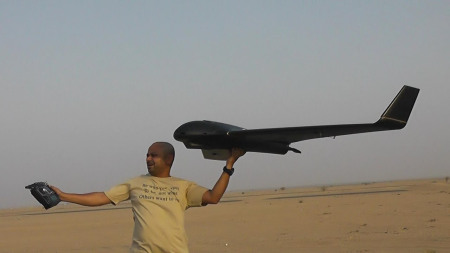
An attack on Russian forces in Syria on January 5th, 2018 by 13 home-made drones is a good example of “asymmetric” warfare..The craft involved in these attacks resembled hobbyists’ model aircraft. They had three-metre wingspans, were built crudely of wood and plastic, and were powered by lawnmower engines. Each carried ten home-made shrapnel grenades under its wings. The drones were guided by GPS and had a range of 100km. The electronics involved were off-the-shelf components, and the total cost of each drone was perhaps a couple of thousand dollars. The airframes bore a resemblance to those of Russian Orlan-10 drones, several of which have been shot down by rebel forces in Syria. The craft may thus have been a cheap, garage-built copy of captured kit.
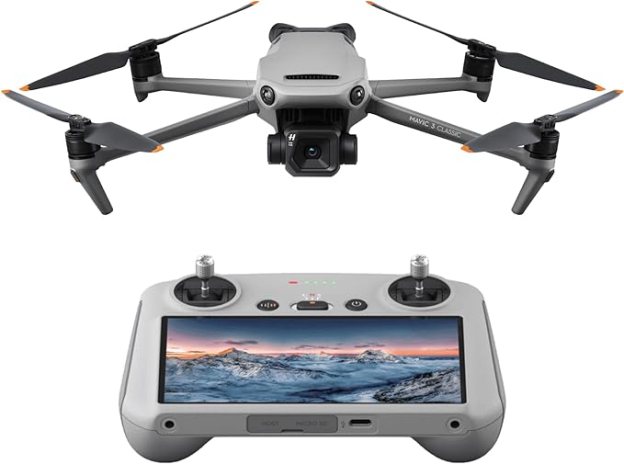
Guerrillas have been using commercial drones since 2015. Islamic State (IS), one of the groups active in Syria, makes extensive use of quadcopters to drop grenades. In 2017 alone the group posted videos of over 200 attacks. IS has also deployed fixed-wing aircraft based on the popular Skywalker X8 hobby drone. These have longer ranges than quadcopters and can carry bigger payloads. Other groups in Syria, and in Iraq as well, employ similar devices. Their use has spread, too, to non-politically-motivated criminals. In October, four Mexicans allegedly linked to a drug cartel were arrested with a bomb-carrying drone…
Existing defences are not geared up to cope with small drones, which are difficult to spot, identify and track, and which may be too numerous to stop. Jamming might be thought an obvious solution….Many jammers, with names like Dedrone, DroneDefender and DroneShield, have already been employed by various countries. …Drones are, however, becoming increasingly autonomous. This means there is no operator link to jam…But new technologies such as optical navigation (which permits a drone to compare its surroundings with an on-board electronic map, and thus to know where it is) will make even GPS jammers useless. Hence the need for “kinetic solutions”, to shoot drones down.
Small drones are surprisingly hard targets, however. Iraqi forces in Mosul used to joke that trying to deal with an IS drone attack was like being at a wedding celebration: everyone fired their Kalashnikovs into the air with no effect. A recent American army manual …suggests that rather than aiming directly at a drone, the entire squad should fire their weapons at a fixed point ahead of it, hoping to bring the small drones down with a curtain of fire. The manual also advises commanders that the best course of action may be “immediate relocation of the unit to a safer location”….
A similar problem applies at sea, where billion-dollar ships might have their defences overwhelmed by squadrons of cheap, jerry-built drones. The mainstay of American naval air defence is Aegis, an orchestrated arrangement of radars, computers, missiles and cannons. The short-range element of Aegis is a Dalek-like, rapid-fire cannon called Phalanx, which spits out 75 rounds a second and can shoot down incoming cruise missiles. This will not cope well with lots of small drones, though. The navy is now upgrading Aegis’s software to handle multiple simultaneous incoming targets by scheduling bursts of fire to destroy as many members of a swarm as possible. It is doubtful, however, whether one gun could account for more than a handful of attackers coming in from all directions at once. An unclassified study suggests that it could be overwhelmed by as few as eight [handcrafted drones].
Developers of drone-countering measures hope to overcome that by using laser weapons…An American army document from 2016 thus emphasises the importance of stopping drones “left of launch”—that is, before they can take off. IS drone workshops and operators have been attacked to stop the drone threat… Until adequate defences are in place, then, guerrilla drone swarms will be a real danger.
Excerpt from Buzz, buzz, you’re dead, Economist, Feb. 10, at 70
 Law-In-Action