Tag Archives: illegal waste exports

The Malicious Misuse of Nuclear Materials

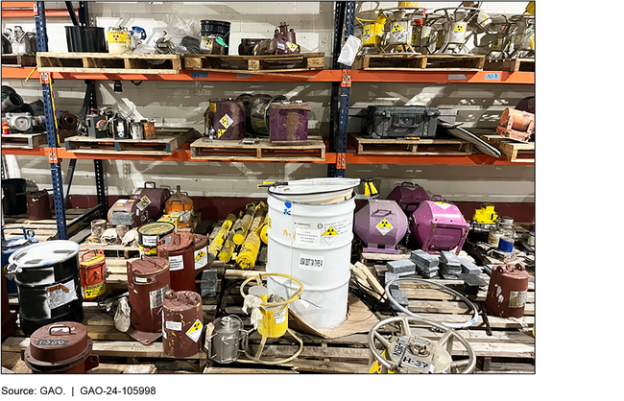
According to IAEA (International Atomic Energy Agency) report, in 2024, 147 incidents of illegal or unauthorized activities involving nuclear and other radioactive material were reported to the Incident and Trafficking Database (ITDB), a number aligned with the historical average…Out of 147, three incidents reported in 2024 were likely related to trafficking or malicious use, and there was insufficient information to determine the intent of 21 other incidents. Furthermore, 123 incidents were not connected to trafficking or malicious use but most likely resulted from unauthorized disposal, unauthorized shipment or the discovery of radioactive material. The ITDB receives information on incidents involving illegal possession, attempted sale and smuggling of nuclear and other radioactive material, as well as unauthorized disposal and the discovery of lost radioactive sources. A total of 4390 incidents have been reported since 1993. 

Excerpt More than 145 Reports Added to IAEA Incident and Trafficking Database in 2024, IAEA, Feb. 28, 2025

The Global Flows of Dirty Recyclables

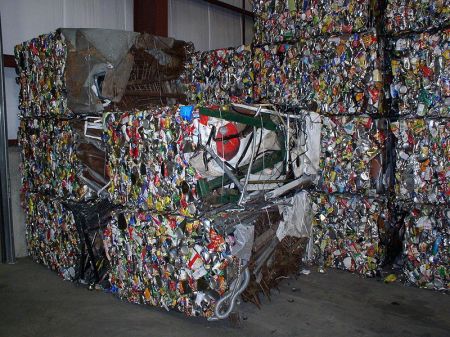
For decades, America and much of the developed world threw their used plastic bottles, soda cans and junk mail in one bin. The trash industry then shipped much of that thousands of miles to China, the world’s biggest consumer of scrap material, to be sorted and turned into new products.  That changed last year when China banned imports of mixed paper and plastic and heavily restricted other scrap. Beijing said it wants to stimulate domestic garbage collection and end the flow of foreign trash it sees as an environmental and health hazard. Since then, India, Malaysia, Vietnam, Thailand and Indonesia—other popular markets for the West’s trash—have implemented their own restrictions…China’s 2018 restrictions on a variety of waste imports radically changed global flows of plastics, including polyethylene, a popular type used in shopping bags and shampoo bottles.

 
For years, the world’s bottles and boxes made their way to China on ships that offered deep discounts to avoid returning empty after dropping off cargo in the U.S. and other countries. Since 1992, China has imported 45% of the world’s plastic waste, according to data published in 2019 in the journal Science Advances. “It was a great relationship, where we bought their goods and sent them back the empty boxes,” says Brent Bell, vice president of recycling for Houston-based Waste Management, the largest waste management company in the U.S. In 2018, China instituted a ban on 24 categories of waste—including, for example, plastic clamshell containers, soda and shampoo bottles, and junk mail. It said foreign garbage was “provoking a public outcry.”

China accepted dirty and mixed recyclables because it had low-wage workers to sort out unwanted material, often by hand. That gave American contractors little incentive to weed out food scraps, plastic bags and nonrecyclable junk stateside. After China rejected imports, a flood of trash was rerouted to countries such as India, Indonesia and Malaysia. Many of those places now say they are overwhelmed and have imposed their own restrictions on paper or plastic imports. The countries also want to focus on developing their own waste collection industries.

Malaysia in May 2019 began sending back 60 containers of imported trash to the U.S. and other countries, complaining it had become a dumping ground for rich countries. The containers were meant to contain plastic scrap but were contaminated with other items such as cables and electronic waste. A government spokeswoman said more containers will be returned as Malaysia ramps up inspections.

Japan, which historically sent most of its plastic exports to China, had been redirecting trash to Malaysia, Thailand and Vietnam after China’s ban. But when those countries began turning dirty recycling away, Japanese collectors started stockpiling, in hopes a new market would arise. Over the past year, Japan has amassed 500,000 tons of plastic waste, according to Hiroaki Kaneko, deputy director of recycling at the environment ministry. Japan, the second-biggest exporter of plastic waste behind the U.S., is trying to stimulate domestic processing by earmarking billions of yen to subsidize plastic recycling machinery for private companies.

The U.K. is burning more of its trash, including dirty or low-value recycling. Attitudes toward incineration vary greatly by country. In the U.S., where space is plentiful, it has long been cheaper to send materials to landfills, and incineration has remained unpopular. Across much of Europe, by contrast, trash burned for energy has been popular for years. ….“The China ban has highlighted that we can no longer export our problem,” said managing director Bill Swan. Paper Round’s buyers have much higher standards now, he said, such as checking moisture levels, which can decrease the quality of paper.

Excerpts from Saabira Chaudhuri, Recycling Rethink: What to Do With Trash Now That China Won’t Take It, WSJ, Dec. 21, 2019
How to Spend $18 billion on Foreign Garbage

China sucked in more than half the world’s exports of scrap copper and waste paper in 2016, and half of its used plastic. All in all, China spent over $18bn on imports of rubbish in 2016. America, meanwhile, is an eager supplier. In 2016 nearly a quarter of America’s biggest exporters by volume were recyclers of paper, plastic or metal. Topping the list was America Chung Nam, a California-based supplier of waste paper which last year exported a whopping 333,900 containers, almost all of them to China.

This may soon change. On July 18, 2017 China told the World Trade Organisation that by the end of the year, it will no longer accept imports of 24 categories of solid waste as part of a government campaign against yang laji or “foreign garbage”. The Ministry of Environmental Protection says restricting such imports will protect the environment and improve public health. But the proposed import ban will disrupt billions of dollars in trade. Recyclers worry that other categories of waste may soon receive the same treatment.

It is often cheaper to recycle scrap copper, iron and steel, as well as waste paper and plastic, than to make such materials from scratch, especially when commodity prices are high. So as commodity prices rose during the 2000s, the burgeoning trade in waste benefited both exporters, who made money from previously worthless trash, and importers, who gained access to a reliable stream of precious feedstock. Between 1995 and 2016 Chinese imports of waste grew tenfold, from 4.5m to 45m tonnes.

But imports of recyclable waste are often dirty, poorly sorted or contaminated with hazardous substances such as lead or mercury. In 1996 factories in Xinjiang inadvertently imported more than 100 tonnes of radioactive metal from Kazakhstan. The following year an American businessman was convicted of smuggling over 200 tonnes of unsorted rubbish labelled as waste paper. Even when the intended material is imported, it is often recycled improperly. In 2002 the authorities faced widespread criticism after a documentary showed workers in Guangdong province crudely dismantling discarded electronic devices and dumping the toxic remains into a river. Officials may have been spurred into the latest restrictions by the release of Plastic China, an unflattering documentary about the plastic-recycling industry which was screened at Sundance, a grand American film festival, in January 2017,

The government had already been campaigning to block imports of illegal and low-quality waste under a crackdown called Operation Green Fence launched in 2013….Whereas Green Fence was aimed at improving the quality of imported waste, the government’s latest move bans several types of waste outright, threatening some $5bn in trade. But…. recyclers who rely on imports may now switch to grubbier domestic stock.

Excerpts from Waste Management: Anti-Dumping, Economist, Aug. 5, 2017, at 32