Tag Archives: Maduro capture Venezuela

Oilmen. Is There Anything They Can’t Do?

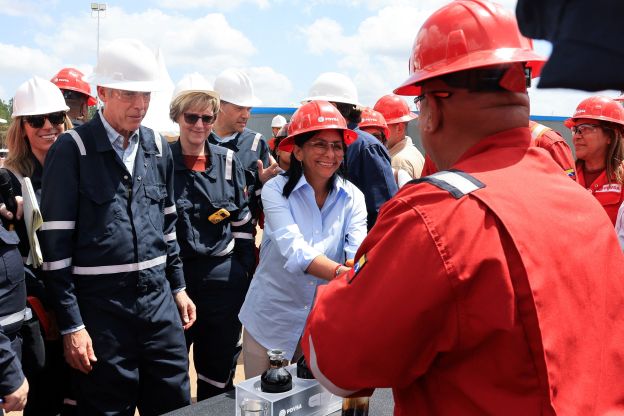
In the months before President Trump moved to capture Venezuelan President Nicolás Maduro in January 2026, the Central Intelligence Agency (CIA) turned to an old friend for advice on who should replace the autocratic leftist.  Former Chevron executive Ali Moshiri told the agency that if the U.S. government tried to oust the entire Maduro regime and install the democratic opposition led by María Corina Machado it would have another quagmire like Iraq on its hands, according to people familiar with the matter. She didn’t have the support of the country’s security services or control of its oil infrastructure, Moshiri argued. His recommendation: Stick for now with another autocratic leftist, Maduro’s longtime deputy and economic manager Delcy Rodríguez. The option was later presented to Trump in a secret CIA assessment.  Moshiri’s hidden hand in Washington spycraft, by the WSJ in March 2026, offers a window into how Trump embraced the energy industry’s unsentimental playbook for dealing with autocratic regimes. And it marks a dramatic turnaround for Chevron’s prospects in Venezuela, where the company’s decision to stay invested during decades of political upheaval now leaves it with a strategic advantage as the oil begins to gush again

Excerpt from Joel Schectman et al., He Was Chevron’s Man in Venezuela—and a CIA Informant, WSJ, Mar. 15, 2026

If You Play with Fire, You ‘Il Get Burnt: Lessons from Anthropic

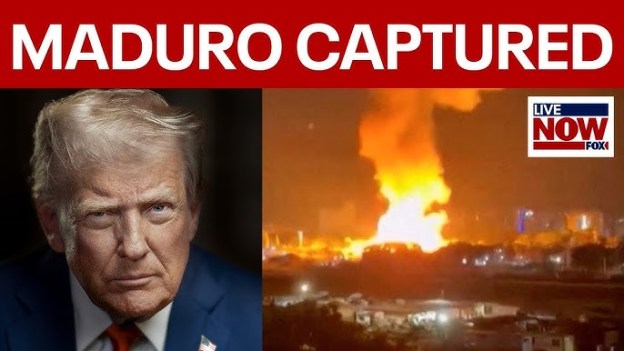
Anthropic’s artificial-intelligence tool Claude was used in the U.S. military’s operation to capture former Venezuelan President Nicolás Maduro on January 3, 2026, highlighting how AI models are gaining traction in the Pentagon. The mission to capture Maduro and his wife included bombing several sites in Caracas in January 2026. Anthropic’s usage guidelines prohibit Claude from being used to facilitate violence, develop weapons or conduct surveillance. The deployment of Claude occurred through Anthropic’s partnership with data company Palantir, whose tools are commonly used by the Defense Department and federal law enforcement

Excerpt from Pentagon Used Anthropic’s Claude in Maduro Venezuela Raid, WSJ, Feb. 15, 2025

See also Trump orders government to stop using Anthropic in battle over AI use, WSJ Feb. 27, 2026

Vultures and Venezuela Debt after the 2026 US Invasion

After the brazen capture of Venezuelan strongman Nicolás Maduro on January 3, 2026, investors are racing to capitalize on President Trump’s ambitions to dominate the Western Hemisphere. Hedge funds and other investment firms, already boosted by a sharp rally in Venezuelan debt, are mapping out trips to Caracas to scope out on-the-ground opportunities. Some are investigating niche instruments, like arbitration claims and unpaid state debts. Others are eyeing debt in Colombia and Cuba, while shares of a tiny bank in Greenland—another territory in Trump’s sights—have surged recently as the U.S. president pursues his own spin on the Monroe Doctrine that saw 19th-century America claim half of the globe as its sphere of influence…

For years, most money managers deemed Venezuela off-limits, due to a thicket of U.S. sanctions, political repression and economic mismanagement. The country’s bonds, languishing at rock-bottom prices since a 2017 default, were mostly a playground for specialists in emerging markets or distressed-debt contrarians.

Now, investors reckon a combination of political change, U.S. intervention and American investment into Venezuela’s vast oil resources could put a debt restructuring within reach. Some hope investment opportunities could emerge in other industries that languished under Maduro…

Some hedge funds and investment firms are venturing into more-obscure assets, such as arbitration claims from corporations owed money by Venezuela. A range of Western companies whose assets were nationalized by Maduro’s predecessor Hugo Chávez have won settlements from the World Bank’s International Centre for Settlement of Investment Disputes.
With Trump in recent days signaling potential intervention in countries like Colombia, Cuba and Mexico, some investors are considering opportunities in those markets. In one sign of speculative fervor, shares of the tiny Bank of Greenland have surged as much as 42% this year, suggesting market participants anticipate an investment boom in Greenland.

Many emerging-market hedge funds “see the current backdrop less as a single trade and more as the start of a new opportunity set: more regime changes, more policy shocks, more forced sellers and more capital controls or realignments,” said Bruno Schneller, managing partner at the Swiss asset manager Erlen Capital Management.

Excerpt from Caitlin McCabe, Hedge Funds Get Ready for the ‘Donroe Doctrine’ Trade, WSH, Jan. 10, 2026