Tag Archives: microchips

The End of Taiwan? The End of U.S. and Europe Combined

Prosecutors in Taiwan indicted  in August 2025 three people in a case about sensitive chip technology, alleging they stole information from Taiwan Semiconductor Manufacturing (TSMC) to help one of TSMC’s top equipment suppliers, Tokyo Electron, win more orders…Taiwanese officials say the theft of trade secrets has grown over the past decade and point most of the blame at China. Over the past couple of years, Taiwan’s investigation bureau has probed more than 120 cases involving trade-secret theft. “If Taiwan’s technology hub falls or its technologies are lost, the impact will extend beyond Taiwan to the U.S., Europe and the rest of the world,” Sun Chen-yi, deputy director general of the investigation bureau at Taiwan’s Ministry of Justice, said in an interview before his retirement in July 2025.

Excerpt from Yang Jie et al., Three Accused of Stealing TSMC Chip Secrets to Aid Japanese Supplier, WSJ, Aug. 28, 2025

The Cat-and-Mouse Game: US-China, Chip Giants

The U.S. on March 28 2025 added dozens of Chinese companies to a trade blacklist over national security concerns. American businesses seeking to sell technology to these companies will need approval from the government. Among those added were subsidiaries of Inspur Group, China’s largest server maker and a major customer for U.S. chip makers such as Nvidia, Intel and Advanced Micro Devices. Companies linked to China’s largest supercomputer maker, Sugon, were also added…

Nearly 80 companies were put on the Commerce Department’s blacklist, known as the entity list…including the U.S. server maker Aivres Systems that is wholly owned by Inspur Electronic. The latter is one-third owned by Inspur Group, according to corporate records. Aivres has been assembling high-end artificial-intelligence equipment for Nvidia. The AI-chip giant has said that Aivres will make servers using chips in the Blackwell family, Nvidia’s newest and most powerful processors.  Aivres advertises on its website that it sells servers and infrastructure powered by Blackwell chips, which are banned from sale into China…About two months after Inspur Group was added to the trade blacklist in March 2023, California-based Inspur Systems changed its name to Aivres Systems.

Excerpts from Liza Lin, Trump Takes Tough Approach to Choking Off China’s Access to U.S. Tech, WSJ, Mar. 26, 2025

The US-China Supercomputer Rivalry

For decades, American and Chinese scientists collaborated on supercomputers, tennis-court-size machines essential to improving artificial intelligence, developing vaccines and predicting hurricanes. But Chinese scientists have become more secretive as the U.S. has tried to hinder China’s technological progress, and they have stopped participating altogether in a prominent international supercomputing forum.

The new secrecy also makes it harder for the U.S. government to answer a question it deems essential to national security: Does the U.S. or China have faster supercomputers? Some academics have taken it upon themselves to hunt for clues about China’s supercomputing progress, scrutinizing research papers and cornering Chinese peers at conferences.

Supercomputers have become central to the U.S.-China technological Cold War because the country with the faster supercomputers can also hold an advantage in developing nuclear weapons and other military technology. “If the other guy can use a supercomputer to simulate and develop a fighter jet or weapon 20% or even 1% better than yours in terms of range, speed and accuracy, it’s going to target you first, and then it’s checkmate,” said Jimmy Goodrich, a senior adviser for technology analysis to Rand Corp., a think tank.

The forum that China recently stopped participating in is called the Top500, which ranks the world’s 500 fastest supercomputers. While the latest ranking, released in June 2024, says the world’s three fastest computers are in the U.S., the reality is probably different. Officially, the fastest computer on the Top500 sits at the Energy Department-sponsored Oak Ridge National Laboratory, in Tennessee. Called Frontier, it is about the size of two tennis courts, cost $600 million to construct and has an electricity bill of about $20 million a year, said Dongarra, who also works at Oak Ridge. It uses tens of thousands of computer chips.

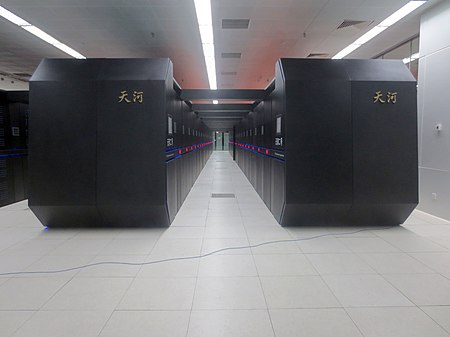
Dongarra doesn’t think Frontier is actually the world’s fastest supercomputer. Scientific papers suggest that certain Chinese machines are better. One has been referred to in state media as a prototype Tianhe-3, after a Chinese term for the Milky Way galaxy, while the other is a model in the Sunway series of supercomputers.

Excerpts from Stu Woo ,US China Rift Hits Supercomputer Ties, WSJ, July 24, 2024

How to Exclude China from the Global Technology Base: the Role of IMEC

The Interuniversity Microelectronics Centre (IMEC) located in Leuven, Belgium, does not design chips (like America’s Intel), manufacture them (like TSMC of Taiwan) or make any of the complicated gear (like ASML, a Dutch firm). Instead, it creates knowledge used by everyone in the $550bn chip business. Given chips’ centrality to the modern economy and increasingly to modern geopolitics, too, that makes it one of the most essential industrial research-and-development (R&D) center on the planet. Luc Van den hove, IMEC’s boss, calls it the “Switzerland of semiconductors”.

IMEC was founded in 1984 by a group of electronics engineers from the Catholic University of Leuven who wanted to focus on microprocessor research. In the early days it was bankrolled by the local Flemish government. Today IMEC maintains its neutrality thanks to a financial model in which no single firm or state controls a big share of its budget. The largest chunk comes from the Belgian government, which chips in some 16%. The top corporate contributors provide no more than 4% each. Keeping revenue sources diverse (partners span the length and breadth of the chip industry) and finite (its standard research contracts last three to five years) gives IMEC the incentive to focus on ideas that help advance chipmaking as a whole rather than any firm in particular.

A case in point is the development of extreme ultraviolet lithography (EUV)…It took 20 years of R&D to turn the idea into manufacturing reality. IMEC acted as a conduit in that process… Advanced toolmakers want a way to circulate their intellectual property (IP) without the large companies gaining sway over it. The large companies, meanwhile, do not want to place all their bets on any one experimental idea that is expensive (as chipmaking processes are) and could become obsolete.

IMEC’s neutrality allows both sides to get around this problem. It collects all the necessary gear in one place, allowing producers to develop their technology in tandem with others. And everyone gets rights to the IP the institute generates. Mr Van den hove says that progress in the chip industry has been driven by the free exchange of knowledge, with IMEC acting as a “funnel” for ideas from all over the world…IMEC’s revenues, which come from the research contracts and from prototyping and design services, doubled between 2010 and 2020, to €678m ($773m).

The deepening rift between America, home to some of the industry’s biggest firms, and China, which imported $378bn-worth of chips last year, threatens IMEC’s spirit of global comity. China’s chip industry is increasingly shielded by an overbearing Communist Party striving for self-sufficiency, and ever more ostracized by outsiders as a result of American and European export controls. All this limits the extent to which IMEC can work with Chinese semiconductor companies…IMEC would not comment on individual partnerships but says it has “a few engagements with Chinese companies, however not on the most sensitive technologies, and always fully compliant with current European and US export regulations and directives”.

Excerpts from Neutral but not idle: IMEC offers neutral ground amid chip rivalries, Economist, Sept. 25, 2021
Designers Not Doers: Who’s Gonna Save the Chip Industry?

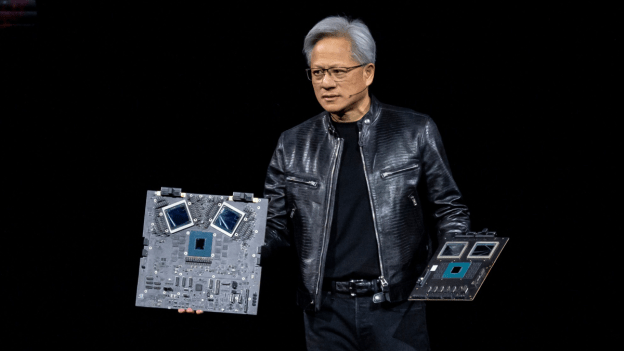
Although designing chips for electronic devices is now easier than ever, making them has never been harder requiring spending vast—and growing—sums on factories (called fabs) stuffed with ultra-advanced equipment.

At the turn of the millennium, a cutting-edge factory might have cost $1bn… More recently, a TSMC factory that produces 3 nm (nanometer) chips, completed in 2020, in southern Taiwan, cost $19.5bn. The firm is already pondering another for factory for 2nm chips, which will almost certainly be more. ..Asia’s nanoscale manufacturing duopoly remains fiercely competitive, as Samsung and TSMC keep each other on their toes… At some point, one company, in all likelihood TSMC, could be the last advanced fab standing. For years, says an industry veteran, tech bosses mostly ignored the problem in the hope it would go away. It has not…

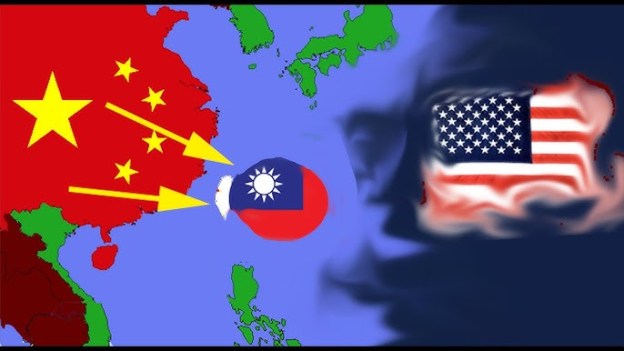
The other big industry rupture is taking place in China. As America has lost ground in making chips, it has sought to ensure that China lags behind, too. The American tech embargo began as a narrow effort against Huawei over national security, but bans and restrictions now affect at least 60 firms, including many involved in chips. SMIC, China’s chip champion, has just been put on a blacklist, as has Xiaomi, a smartphone firm.

Excerpts from Betting All Chips, Economist, Jan. 23, 2021 and Semiconductors: A New Architecture, Economist, Jan. 23, 2021