
Nearly a decade after two catastrophic oil spills in the Niger Delta, a comprehensive clean-up has been launched in 2017 in the southern Nigerian region.
Earlier this month, crews of young men equipped with high pressure hoses began to attack the crude oil blighting the creeks and mangrove swamps where they live. Workers from Bodo in Rivers State are beginning a three-year project that claims to mark a new approach to cleaning up the delta, the vast polluted swampland pumping the oil vital to Africa’s largest economy.
Four hundred workers will clear dead foliage and spilled oil before planting new mangroves. Where they are working is small but organisers hope the anti-pollution drive can be repeated elsewhere in the delta.
Unlike clean-up operations run routinely by oil giant Royal Dutch Shell, this one is backed by local communities and teams of scientists who will take samples of water, mud and soil in each area to measure progress and determine the best cleaning method. Funded by Shell and its joint venture partners, the clean-up is the culmination of years of legal wrangling and international pressure to overcome animosity and mutual suspicion that have divided locals, government and oil companies.
Shell declined to say how much it was spending, while leaders see it as a glimmer of hope in a benighted land where many wells are not safe to drink from and fishing and farming are devastated.
“The Niger Delta is at a crossroads,” said Inemo Samiama, chairman of the Bodo Mediation Initiative (BMI), managing the clean-up. “We have a lot of polluted sites. We need something we can refer to, some shining example.”
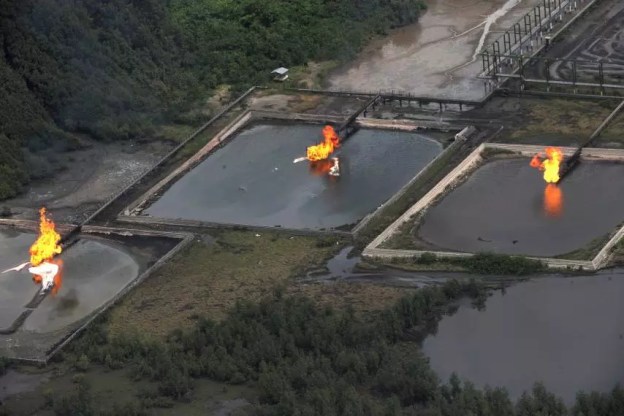
The work of BMI covers 10 sq km, a fraction of the 70,000 sq km Delta. As workers walk through gnarled, dead mangrove roots in protective gear and masks, oil seeps into their footprints – remnants of spills for which Royal Dutch Shell admitted responsibility. Despite the optimism, environmentalists point out at BMI’s work rate, it will take 21,000 years to clean the entire delta and that’s not including the 10 years of legal battles it took to make it happen. Communities in eight other Delta states are unhappy they have no clean-up plan, fuelling the resentment underpinning militant movements that hit production last year and helped tip Nigeria into its first recession in 25 years. One group, the Niger Delta Avengers, has threatened a return to violence. They say government is not keeping its promises to clean up the delta and provide more jobs, money and infrastructure.
Bodo received support from British law firm Leigh Day, which negotiated a 55 million pound pollution settlement with Shell in 2015. Leigh Day said it agreed to freeze a separate case to force a clean-up via British courts in order to give the BMI a chance. Ogoni, the wider area in which Bodo sits, was the subject of a 2011 UN Environment Programme report warning of catastrophic pollution in the soil and water.
King Emere Godwin Bebe Okpabi of the Ogale community is on the board of a wider Ogoni clean-up effort and is optimistic its own clean-up, due to start next year, will work. But he fears it will not be replicated elsewhere without another marathon battle in the London courts.“The only place you get legal success is the international courts,” he said.
Under Nigerian law, oil companies must begin cleaning up any spill within 24 hours. But the remoteness of spills and lax enforcement mean this rarely happens. Ferdinand Giadom, a lecturer at the University of Port Harcourt and technical advisor to the Bodo cleanup, said communities often block clean-ups in the hopes of cash settlements. Even in Bodo, works were delayed by two years due to local infighting.
Shell said most oil spilled last year was due to sabotage or theft for illegal refining. It also said communities block access to sites, making cleaning more difficult.
Excerpts from Anger on the margins of historic clean-up in Nigeria’s Delta, Reuters, Nov. 9, 2017
 Law-In-Action