Tag Archives: nuclear waste silos

Back from the Dead but Wobbling: Nuclear Deterrence

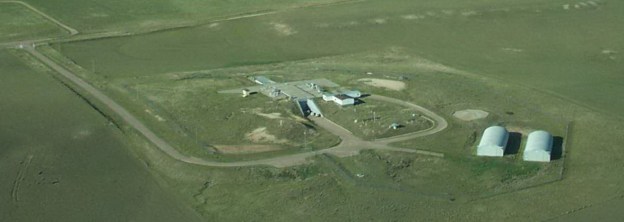
The Pentagon has revised the projected cost of refurbishing hundreds of nuclear missile silos to $141 billion, a $30 billion increase from an estimate provided in January. The U.S. Air Force project, known as Sentinel, includes replacing the Cold War-era intercontinental ballistic missiles inside the silos with newer models…Sentinel is part of a long-delayed nuclear-arms refresh that the Congressional Budget Office estimates will cost at least $1.5 trillion over the next 30 years…The missiles sitting inside some 450 silos are decades past their projected lifespan of 10 years. The underground silos require thousands of miles of new fiber-optic cabling. Underground command centers that control the missiles need to be rebuilt. Maintenance jobs that used to take two or three hours now take twice as long, and parts are more difficult to obtain, Air Force officials said.

“Its scale, scope and complexity are something we haven’t attempted as a nation for over 60 years,” Bill LaPlante, the Pentagon’s chief weapons buyer, told reporters in July 2024 as he cleared Sentinel to continue as a must-do program despite the surging costs. The Pentagon hired Northrop Grumman in 2020 to oversee the Sentinel program and do the initial engineering and design work. Northrop, aided by construction giant Bechtel, was the only bidder for the initial $13.3 billion contract after Boeing dropped out

Most of the people who did it the last time aren’t even around anymore. So re-creating all of this has turned out to be a huge problem,” said Madelyn Creedon, a former senior Energy Department and Pentagon official who chaired a congressionally mandated panel on future U.S. nuclear and conventional forces…

Excerpt from Doug Cameron U.S. Nuclear Missile Silos Need Modernizing, but Fixes Aren’t Coming Soon, WSJ, Aug. 26, 2024
The Nuclear Complex of Sellafield

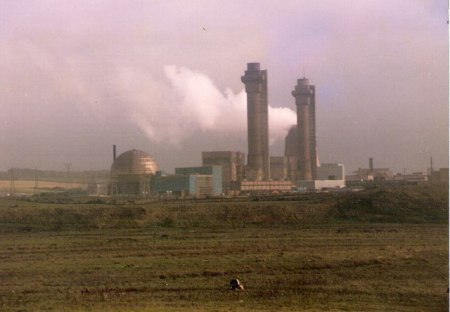
There is no other site like Sellafield in the world. It is where many major developments in the 20th century nuclear industry were pioneered.

It is home to:

–the Windscale Piles, which were used to create material for weapons

–the world’s first commercial-scale nuclear power station – Calder Hall, opened in 1956

–the world’s first large-scale advanced gas-cooled reactor, opened in 1963

–nuclear fuel storage ponds and waste silos, built in the 1940s and 50s

–nuclear fuel fabrication plants

–nuclear fuel reprocessing plants

–a fleet of nuclear waste storage facilities

Sellafield is a densely packed site of just 6sq km housing thousands of buildings. Many of them store highly hazardous waste. Its oldest facilities were built in great haste during the early years of the Cold War with no plans for how they would be decommissioned.  Record-keeping in the early days was poor by modern standards, meaning much work has had to be carried out to confirm the nature and state of the material kept in these facilities. There is no blueprint for decommissioning Sellafield’s oldest facilities. Staff and contractors had to come up with ground-breaking engineering projects in order to decommission these one-of-a-kind facilities.  And these highly complex projects have to be done on small parcels of land, often just feet away from buildings containing highly hazardous material, with all of the safety constraints this presents.

When an uncertain challenge is combined with highly constrained working conditions and a series of never-done-before projects, the result is a long, complex and costly decommissioning programme.  Huge strides have already been made at Sellafield, but it is fair to say the site will continue to test ingenuity in construction, engineering, nuclear science and project management for decades to come.

-Commissioned for use in 1952, the Pile Fuel Cladding Silo received and safely stored radioactive cladding―pieces of metal tubes—used for uranium fuel rods in some of the UK’s earliest nuclear reactors―first from military projects and later power plants. Other debris was added, and by 1964 the silo was full.  The Pile Fuel Cladding Silo is 69 feet (21 meters) tall and houses six compartments that hold some 4,200 cubic yards (more than 3,200 cubic meters) of intermediate-level waste. The job at hand is safely retrieving the waste and storing it in highly secure concrete containers.

The first of six holes on the silo were cut (August 2017). To remove the waste, a crane will extend through the cut holes, and a grabber will drop down to scoop the waste up.It will be lifted out of the container and into a specially-designed metal box.

Excerpts from  Nuclear Provision: the cost of cleaning up Britain’s historic nuclear sites updated 19 July 2017 

Sellafield decommissioning: Nuclear waste silo opened, BBC, Sept. 5, 2017

SELLAFIELD PILE FUEL CLADDING SILO RETRIEVAL, Bechtel