Tag Archives: plant diversity

Bureaucracy Against Biodiversity

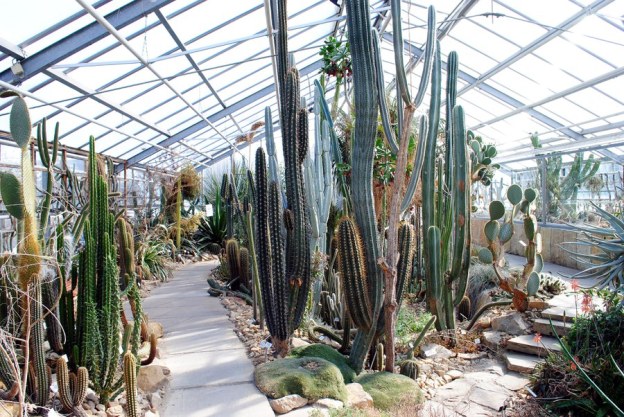
Botanic gardens around the world are struggling to find the space to conserve rare plants and save endangered species. “They can’t all fit,” said Brockington. Cambridge University Botanic Garden, for example, is home to more than 8,000 species. “That’s more than a tropical country like Vietnam, growing in a tiny little acreage of Cambridge.”…Threatened plants must compete for space in botanic gardens with beautiful, famous – but less endangered – flowers, trees and landscapes that will attract visitors and inspire people to learn about gardening and the natural world….The first botanic gardens were founded during the colonial era, and almost all are located in the west. In the past, botanists from these gardens would engage in “extractive, colonial-type practices”, visiting poorer nations to “pull out whatever plants they or their rich patrons were interested in, bring them back and cultivate them,” Brockington said.

In 1993, a United Nations Convention on Biological Diversity attempted to stop this by assigning sovereignty over biodiversity to national governments, enabling states to “own” the genetic material within their geopolitical boundaries…But this is hampering efforts of gardens to collect endangered plants in the wild, and exchange seeds and plant material to protect threatened species from extinction. To maintain diversity and preserve the world’s living collections, plants must be regularly replaced or propagated. But since the convention was introduced in 1993, the number of plants in botanic gardens collected from the wild has halved.

“Political boundaries do not help us share material and collectively steward the world’s most threatened biodiversity,” Brockington said. Brexit, for example, has been “catastrophic” for exchanges of plant material between European botanic gardens, he said. “The bureaucracy of seed exchange can be so costly now, it would be cheaper for our staff to personally fly to somewhere like Sweden, with a legal amount of seed, than send it by post.”…Brockington wants the world’s botanic gardens to collaborate to safeguard plant populations by creating one big “meta collection”, where individual specimens of an endangered wild species are extensively cultivated in multiple institutions.

Excepts from  Donna Ferguson, The risk of extinction is accelerating’: world’s botanic gardens raise alarm with space to protect endangered plants running out, Guardian, Jan. 25, 2025
Unjustifiable Extinctions

The world’s botanic gardens contain at least 30% of all known plant species, including 41% of all those classed as ‘threatened’, according to the most comprehensive analysis to date of diversity in ‘ex situ’ collections: those plants conserved outside natural habitats.

The study, in September 2017 in the journal Nature Plants, found that the global network of botanic gardens conserves living plants representing almost two-thirds of plant genera and over 90% of plant families.  However, researchers from the University of Cambridge discovered a significant imbalance between temperate and tropical regions. The vast majority of all plants species grown ex situ are held in the northern hemisphere. Consequently, some 60% of temperate plant species were represented in botanic gardens but only 25% of tropical species, despite the fact that the majority of plant species are tropical.

For the study, researchers analysed datasets compiled by the Botanic Gardens Conservation International (BGCI)….

“The global network of botanic gardens is our best hope for saving some of the world’s most endangered plants,” said senior author Dr Samuel Brockington, a researcher at Cambridge’s Department of Plant Sciences as well as a curator at the University’s own Botanic Garden….“Currently, an estimated one fifth of plant diversity is under threat, yet there is no technical reason why any plant species should become extinct.   “If we do not conserve our plant diversity, humanity will struggle to solve the global challenges of food and fuel security, environmental degradation, and climate change.”

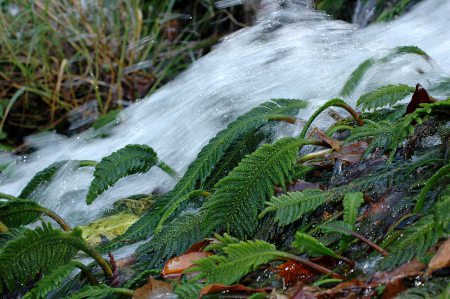
The plants not currently grown in botanic gardens are often more interesting than those that are, say the researchers. Hydrostachys polymorpha, for example, an African aquatic plant that only grows in fast flowing streams and waterfalls, or the tiny parasitic plant Pilostyles thurberi – only a few millimetres long, it lives completely within the stem tissue of desert shrubs.  Species from the most ancient plant lineages, termed ‘non-vascular’ plants, are currently almost undocumented in botanic gardens – with as few as 5% of all species stored in the global network. These include plants such as the liverworts and mosses.

“Non-vascular species are the living representatives of the first plants to colonise the land,” said Brockington. “Within these plants are captured key moments in the early evolutionary history of life on Earth, and they are essential for understanding the evolution of plants”

Excerpts from World’s botanic gardens contain a third of all known plant species, and help protect the most threatened, Press Release of Botanic Gardens Conservation International, Sept. 25, 2016