Tag Archives: recycling e-waste

What is the Difference between Recycling and Fake Recycling?

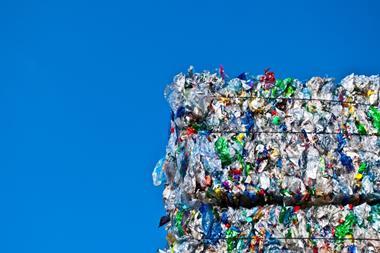
Chemical companies, oil-and-gas incumbents and startups around the world are touting plans for new recycling facilities, promising to turn old bottles and bags into usable material. But policymakers are questioning whether some of these methods, broadly termed chemical or advanced recycling, should be considered recycling at all.

In 2024, Eastman Chemical began processing plastic at a new plant in Kingsport, Tenn., that it calls the largest material-to-material molecular recycling facility in the world. The company uses a chemical procedure called methanolysis to break down hard-to-recycle plastics and turn them into “virgin quality” polyesters. When operating at capacity, the facility will process 110,000 tons of plastic waste a year, the equivalent of 11 billion water bottles a year, said Mark Costa, Eastman’s chief executive. 
In July 2024, Australian company Samsara Eco announced a $65 million funding round that attracted investment from Singapore’s state-investment company Temasek and apparel company Lululemon, among others. Using a process it calls enzymatic recycling, it aims to recycle 1.5 million tons of plastic a year by 2030. 

Yet in June 2024, during last-minute negotiations on a New York state packaging bill that would have forced companies to meet ambitious recycling standards and reduce their packaging waste by 30%, state legislators agreed that technologies like Eastman’s or Samsara Eco’s would not initially be considered “recycling.”   “We had a serious concern about the pseudo solution pushed by the industry called chemical recycling,” said Judith Enck, a former Environmental Protection Agency official and founder of Beyond Plastics, an advocacy group that supported the bill. In a report published last October, Beyond Plastics raised doubts about advanced recycling plants’ yield, emissions, byproducts and energy use. The group has argued that advanced recycling amounts to little more than a marketing tactic deployed to distract decision makers from proven waste-reduction methods, like using less packaging… 

A recent ProPublica investigation found that the dominant advanced recycling technique, pyrolysis, yields 15% to 20% usable plastic materials. The rest turns into fuel and other chemicals. Traditional mechanical recycling yields 55% to 85% new plastic…

Excerpts from Claire Brown, A Fight Over the Future of Recycling Brews as Plastics Legislation Gains Traction, WSJ, July 2, 2024
Resurrecting Used Materials: the Battle against E-Waste

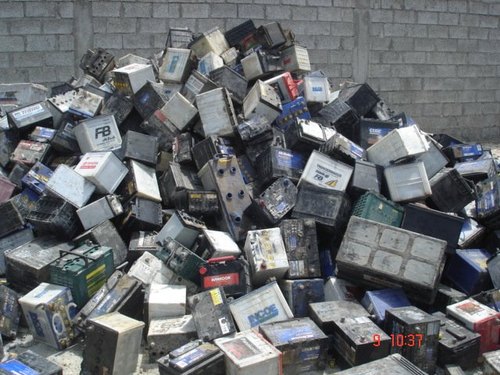
Electric vehicles (EVs) continue to grow in popularity. According to IHS Markit, a research firm, almost 2.5m battery-electric and plug-in-hybrid cars were sold around the world in 2020—and the company expects that number to grow by 70% in 2021…. And, when all of these machines come to the ends of their useful lives, they will need to be recycled.

This coming avalanche of e-waste will be hard to deal with. When a petrol or diesel car is dismantled and crushed, as much as 95% of it is likely to be used again. Ways to do that are well-developed, straightforward and helped by the fact that, on average, almost 70% of such a vehicle consists of readily recyclable ferrous metals. EVs, by contrast, contain a far greater variety of materials. Separating and sorting these is tricky, especially as many of them are locked up inside complex electrical components.

For those who can manage to do so, though, there is good business to be had here. EVs contain lots of valuable stuff. The magnets in their motors are full of rare-earth metals, and their batteries of lithium and cobalt…Li-Cycle, a Canadian company founded in 2016 that is already the biggest recycler of lithium-ion batteries in North America, is one outfit betting on hydrometallurgy. Li-Cycle is not alone, though, in its hydrometallurgical ambitions. One rival is Redwood Materials of Carson City, Nevada…Northvolt… makes lithium-ion batteries for European carmakers. It is adding a recycling plant to its factory in Sweden, to process the batteries it produces there when they reach the ends of their lives. led. Similar “closed-loop” systems are being developed in other parts of the battery supply chain. For example, American Battery Technology, a firm in Nevada that mines and processes lithium, is adding a recycling plant intended to recover lithium and other metals from expired batteries. It will use the lithium in its own production processes and sell the other materials on.

The biggest battery-recycling operations of all, though, are not Western, but Chinese—not surprising, perhaps, given that China is the world’s largest market for EVs, and the country’s government has been promoting the recycling of lithium-ion batteries for some time. Brunp Reycling , a subsidiary of CATL, the world’s biggest EV-battery-maker, has half-a-dozen hydrometallurgical recycling operations around the country. Brunp says it can recycle 120,000 tonnes of old batteries a year, which it claims represents about half of China’s current annual battery-recycling capacity. …

Tesla itself also has trans-Pacific ambitions. It is setting up a battery-recycling facility at its  EV factory in Shanghai, to complement one it is developing at its battery factory in Nevada. Nor is Tesla the only vehicle-maker involving itself in the industry. In January, Volkswagen opened a pilot battery-recycling plant in Salzgitter. Salzgitter is close to the company’s battery factory in Braunschweig, which is being expanded to produce more than 600,000 EV battery packs a year. The idea is the firm’s battery experts will work with its recyclers to make battery packs easier to dismantle.

Designing recyclability in from the beginning will, in the long run, be crucial to the effective recycling of electric vehicles—and especially their batteries. Shredding lots of different types of e-waste at the same time inevitably results in contamination. Separating components before doing so would yield greater levels of purity.

Excerpts from Old electric cars are a raw material of the future, Economist, May 15, 2021