Tag Archives: rhinos South Africa

How to Save Rhinos? Make them Radioactive

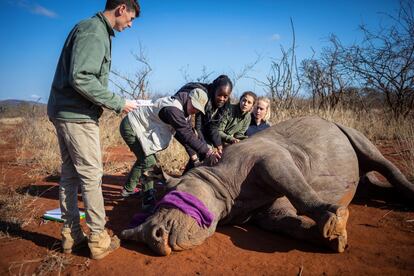
In a pioneering effort to combat wildlife trafficking of the threatened rhinoceros, a South African University began implementing a project supported by the International Atomic Energy Agency (IAEA). The project combines the safe insertion of radioactive isotopes into rhino horns… to deter and detect illegal poaching.

With over 10,000 rhinos lost to poaching in the past decade, South Africa – home to the world’s largest population of rhinos – remains a target for criminals driven by the illegal trade of rhino horn. In the first quarter of 2025 alone, the South African Ministry of Forestry, Fisheries and the Environment reported 103 rhinos poached. In response, this project run by the University of the Witwatersrand is using radiation to support conservation and enforcement efforts.

The Rhisotope Project was created in 2021 with the idea to tag rhino horns with radioactive material. This makes the horns detectable by radiation portal monitors (RPMs) already deployed at borders, ports and airports worldwide. These RPMs, commonly used to detect nuclear and other radioactive material, can now be harnessed against wildlife crime.

Excerpt from Nuclear Science and Nuclear Security Infrastructure to Protect Rare Rhinos: IAEA-Supported Project Marks a Milestone, IAEA News, July 2025

Colossal Efforts to Bring Back Species on the Brink of Extinction

Colossal Biosciences, the world’s first de-extinction company, announced on October 1, 2024 the formation of The Colossal Foundation…The Foundation is launching with three core programmatic focuses.

Saving today’s at-risk species: Colossal Foundation plans to build a model for integrating cutting-edge biotechnology with conservation efforts to bring back species that have been driven to the brink of extinction. The long term goal is to create a toolkit approach to simplify genetic rescue for conservationists. Initial projects include efforts focused on the Vaquita, Northern White and Sumatran Rhinos, Red Wolf, Northern Quoll, Ivory Billed Woodpecker, and Pink Pigeon.

R&D for Conservation: Colossal will partner to fund and deploy technologies that leverage artificial intelligence…Current projects include the Colossal drone-based anomaly detection system used by Save the Elephants, a vaquita acoustic monitoring program, and an AI-enabled orphaned elephant monitoring system leveraged by Elephant Havens in Botswana.

Ensuring Tomorrow’s Biodiversity: Developing a distributed genetic repository of species (a biobank) which can act as an insurance policy against unforeseen threats to biodiversity and provide a safety net for species facing extinction. The focus will be on those species closest to extinction to ensure their genetic diversity is not lost and the potential to bring them back, should the worst happen, remains. 

Vaquitas, a porpoise endemic to the Sea of Cortez/Gulf of California in Baja California, Mexico and the smallest of all living cetaceans, is on the brink of extinction. As of May 2023, only between 10 and 13 vaquitas remain. The loss of the vaquita could be a harbinger of further declines in the Gulf’s marine ecosystems, and the extinction of the vaquita would represent a cultural and symbolic loss. Colossal, in partnership with the Vaquita Monitoring Group and in support of the Mexican government’s La Comisión Nacional de Áreas Naturales Protegidas (CONANP) believes that there are low-impact technical solutions that can be used to safely biobank the existing animals while also helping to grow the vaquita population. …

Fewer than 80 Sumatran rhinos survive in tiny fragmented populations across the Indonesian islands of Sumatra and Borneo…Colossal Foundation will  supporting the Indonesian government’s work to breed Sumatran rhinos under their national conservation breeding program…in collaboration with Global Experts on the advance Assisted Reproductive Technology (a-ART) and Biobank program for the species…

The Colossal BioVault is an initiative, in partnership with Re:wild and others, to collect the primary materials needed to prevent extinction. By collecting tissue samples of the world’s most imperiled species in the Colossal BioVault, the Foundation intends to preserve and store biodiversity. 

Excerpts from Colossal Launches The Colossal Foundation, Business Wire, Oct. 1, 2024

How to Save the Rhino: Fake Rhino Horns Flood the Market

Rhinoceros horns are big business. Traditional Chinese medicine uses them to treat rheumatism and gout… And Yemeni craftsmen carve them into dagger handles. A kilogram can thus command as much as $60,000, so there is tremendous incentive for poachers to hunt the animals. Since almost all rhinoceros populations are endangered, several critically, this is a serious problem. Some conservationists therefore suggest that a way to reduce pressure on the animals might be to flood the market with fakes. This, they hope, would reduce the value of real horns and consequently the incentive to hunt rhinos.

That would require the fakes to be good. But Fritz Vollrath, a zoologist at Oxford University, reckons his skills as a forger are up to the challenge. As he writes in Scientific Reports, he and his colleagues from Fudan University, in Shanghai, have come up with a cheap and easy-to-make knock-off that is strikingly similar to the real thing.  The main ingredient of Dr Vollrath’s forged horns is horsehair. Despite their differing appearances, horses and rhinos are reasonably closely related. Horses do not have horns, of course. But, technically, neither do rhinos. Unlike the structures that adorn cattle and bison, which have cores made of bone, the “horns” of rhinoceros are composed of hairs bound tightly together by a mixture of dead cells.  Examination under a microscope showed that hairs collected from horses’ tails had similar dimensions and symmetry to those found in the horns of rhinos. 

The next task they tackled was making a suitable glue. This is made from a fibrous protein-rich glue of the sort produced naturally by spiders and silkworms. They bundled the treated horse hairs as tightly as they could in a matrix of this glue, and then left the bundles in an oven to dry.  The result was a material that, with some polishing, looked like rhino horn….DNA analysis would certainly reveal fakes, but such analysis is complicated and therefore hard to do in the sorts of back rooms in which rhino-horn sales tend to take place. The forgeries passed other tests with flying colors, though…

Excerpts from How to forge rhinoceros horn, Economist, Nov. 16, 2019

For more details see Creating artificial Rhino Horns from Horse Hair

Mad Killing Spree: Rhinos in South Africa 2017

According to news reports,  there appeared to be no letting up in the “relentless rhino poaching onslaught” in South Africa… The country…was on track to lose more than a thousand rhinos for the fifth straight year.  Unofficial kill figures show the country has lost 483 rhinos to poachers in the first five and a half months of 2017.

Excerpts from Poachers kill six rhino in one night in Hluhluwe-Imfolozi, DefenceWeb, July 5, 2017

Rhino Parks and the US Military

A group of American military veterans plans to train rangers at private wildlife farms and reserves in South Africa where rhino poachers have been active.The US military publication, Stars and Stripes, reports that the “small conservation group Vetpaw had previously operated in Tanzania but was ordered to leave, partly because of a video in which a member spoke about killing poachers”.Former US Marine and head of Vetpaw, Ryan Tate, said the member did not speak for the organisation and since the incident he has sought to rebrand Vetpaw.

The name is an acronym of “Veterans Empowered to Protect African Wildlife” and the organisation has as its aim employment for skilled post 9/11 US military veterans….The majority of Vetpaw members have been deployed in Afghanistan and Iraq...They plan to offer training including marksmanship, field medicine and manoeuvring at night. “People are desperate and want to try any and everything they can,” Peaton told the publication in reference of owners and operators of “private wildlife parks” that lack the resources State-run parks receive.

Earlier this month Environmental Affairs Minister Edna Molewa met with the Private Rhino owners Association (PROA) to discuss rhino conservation in South Africa.PROA said rhino poaching had had “a detrimental effect” on private reserves which held more than a third of South Africa’s total rhino population.

Last week suspected poachers shot and killed a ranger at a private reserve in Bel-Bela before killing a rhino for its horn.Earlier this week two Kruger National Park field rangers were arrested on suspicion of involvement in rhino poaching activities.

US military veterans coming to help in the fight against rhino poaching,  defenceWeb, June  22, 2016

Killing Spree of Endangered Species

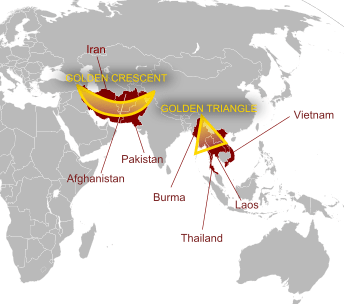
Laos’s biggest breeding facility, near Thakhek, reportedly holds around 400 tigers. Many are bred solely for their parts. The skins are prized as decorations. Farmed-tiger parts mostly move to China through the unruly Golden Triangle where Myanmar, Thailand and Laos converge. The region is a hotspot for trade in protected species: the Environmental Investigation Agency (EIA), an NGO based in UK  visited the Golden Triangle Special Economic Zone in Laos, popular with Chinese tourists. [It] found tiger-bone wine, bear-bile pills, pangolin scales and carvings from the beaks of helmeted hornbills openly on sale. Outside the God of Fortune restaurant was a caged bear-cub that could be killed and cooked to order.

Laos also offers a link to the most lucrative of all illegal wildlife enterprises: the trade in rhinoceros horn, which the UN Office on Drugs and Crime (UNODC) estimated six years ago was worth $8m a year. Since then the number of rhinos slaughtered annually by poachers in Africa has more than tripled (the poaching of Asia’s depleted stock of rhinos is modest). Poachers are sometimes caught; those higher up the chain rarely are. The only high-level trafficker in jail is a Thai, Chumlong Lemtongthai, who is serving a 13-year sentence in South Africa. He was charged in 2011 with bringing Thai prostitutes to South Africa so they could claim they had shot rhinos on legal hunts and were thus entitled under South African law to export horns as trophies. It was the most bizarre of several methods used to get hold of a substance that can fetch up to $70,000 a kilo—almost twice the price of gold.

Mr Chumlong has been linked to a man who has been described as the Pablo Escobar of wildlife-trafficking, Vixay Keosavang, a former soldier in the Lao People’s Army who operates from a walled compound far off the beaten track in the central province of Bolikhamxay. In 2013 the American government offered $1m for information that would help dismantle the network it believes that Mr Vixay heads, which it suspects of trading wild-animal parts across several countries. Mr Vixay has denied wrongdoing.

Some experts believe that the surge in rhino-poaching, which has cut the world’s population by a fifth since 2008, has been driven by a surge in demand in Vietnam. There, rhino-horn shavings are a supposed cure for hangovers; entire horns are given as gifts and displayed as ornaments. Others believe that much of the rhino-horn taken to Vietnam ends up in China.

As their country opened up in recent decades, “some enterprising Vietnamese citizens got residential status in South Africa and very quietly began trading,” says Tom Milliken of Traffic, an NGO. In at least two cases, professional South African hunters have been caught shooting rhino for Vietnamese clients and, in two others, Vietnamese nationals have been arrested trying to smuggle rhino-horns out of South Africa by air. Hunts have been arranged for citizens of the Czech Republic, which has had a large Vietnamese community since the cold war. Since that ruse was discovered, Slovaks, Poles, Ukrainians and Russians have been enlisted as bogus trophy-hunters. “Some Vietnamese residents have bought their own game ranches, so they are now able to buy rhinos at auction and organise sports hunts,” says Mr Milliken.

The international nature of the trade poses big problems for law-enforcement. Documents that would prove decisive in a prosecution for rhino-horn trafficking can sit in a South African office for months awaiting translation, says Mr Milliken; the situation is no better for other animal parts. “None of what we do for drugs do we do for wildlife trafficking,” an international official involved in the fight against organised crime laments. “Extraditions are rare. There are no controlled deliveries. Sophisticated investigative techniques are seldom deployed. We’re not doing any of the things we could be doing to stop it.”

Excerpts from The Trade in Wild Animals: Last Chance to See?, Economist, Apr. 18, 2016, at 49
Rhino Poachers Hide in Villages

Lieutenant General Berning Ntlemeza, head of the Directorate for Priority Crime Investigation (better known as the Hawks), of South Africa wants community involvement with poachers stopped.He told the Police Parliamentary Portfolio Committee that impoverished communities on the borders of the Kruger National Park were  “Heavily armed, wealthy poachers avoid hotels and hide in villages, waiting for night to fall before they sneak into the park to kill rhino and harvest horn,…. If communities don’t own or benefit from the park we are not going to win the fight against poaching,” he said.

Excerpts Communities supporting poachers must be targeted – Hawks boss, defenceWeb.com, Feb. 1, 2016