Tag Archives: sanctions North Korea

North Korea: Hacking Superpower — Crypto Billionaire

At 11:49 a.m. on July 18, 2024, North Korean hackers pounced on a major cryptocurrency exchange handling hundreds of millions of dollars. The hackers slipped into the exchange’s virtual vault, took control and then started pilfering cryptocurrency tokens. Within a little more than an hour, the hackers had disappeared—and with them, more than $200 million for the Kim Jong Un regime. 

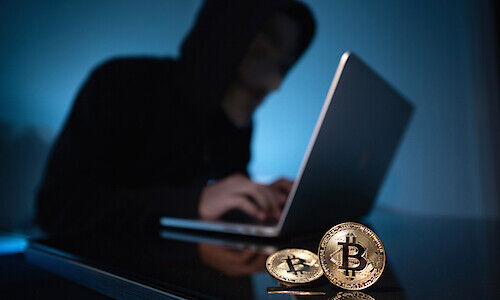
The shocking theft at WazirX, India’s largest cryptocurrency exchange, along with several other major recent heists, has made it clear: North Korea is now the world’s most dangerous crypto thief. It has swiped more than $6 billion in cryptocurrency over the past decade—a sum so large that no one else compares. The country’s hackers are both patient and brazen, according to investigators. To get into companies’ computers, they comb through employees’ Facebook and Instagram pages and invent tailor-made stories to trick them into clicking on links with viruses. Some North Korean hackers have even become employees themselves, fooling U.S. companies into hiring them as remote IT workers and gaining access to their networks.

After grabbing their bounty, North Korean hackers are masters at escaping. At WazirX, investigators believe they used algorithms to spread funds through global crypto networks faster than any human could, making it almost impossible for authorities to catch up. Once the crypto is dispersed, North Koreans often lie low until investigators lose interest and move on, waiting months or years to convert their haul into traditional money that can be spent….Pyongyang’s crowning achievement came in February with a $1.5 billion raid of Bybit, one of the world’s biggest cryptocurrency exchanges, in the largest-ever such heist. That followed several hackings in 2024, when North Korea stole more than $6 out of every $10 lost by the cryptocurrency industry, according to Chainalysis, which tracks crypto theft.

North Korea’s success reflects the major resources dedicated to the task. The regime commands more than 8,000 hackers as though they were in a military unit, with the country’s brightest minds. State support means its hackers can wait months or years to exploit a single slip in a company’s digital security. Pyongyang’s desperation for cash, and its lack of concern for diplomatic blowback, have fueled its drive to be better than anyone else. 

Excerpts from How North Korea Cheated Its Way to Crypto Billions, WSJ, Apr. 3, 2025
Who Terrifies an American President?

Though tensions between Iran and the U.S. have ratcheted up since the Oct. 7, 2024 attacks on Israel by Tehran-backed Hamas, exports from Iran surpassed 1.5 million barrels a day in 2024 starting in February, substantially more than at the start of the Biden presidency. Most of that oil is bought by small Chinese refineries at discounted prices. The U.S. and its allies have been “very, very careful not to go too far and damage the ability of Western economies to function,” when it comes to sanctions, said John Smith, partner at Morrison Foerster and former head of the U.S. Treasury Department’s Office of Foreign Assets Control.

U.S. diplomats and energy officials have for decades worked around the globe to keep oil flowing, often involving uncomfortable alliances and accommodations. When the Treasury department hit Moscow with a wave of sanctions on June 12, 2024 over the Ukraine war, it targeted banks but left the country’s oil industry largely untouched. There is frustration among some staffers in the U.S. Treasury Department over the lack of action against oil-trading networks that ferry Russian and Iranian oil, including one that officials are currently investigating, according to U.S. diplomats and some of the energy-industry players briefed by current officials. The network is operated by a little-known trader from Azerbaijan who emerged as the premier middleman for Russia’s Rosneft Oil, The Wall Street Journal reported.

When the Treasury imposed sanctions on Russia’s state tanker owner, Sovcomflot, it also issued licenses exempting all but 14 of the company’s fleet, which data provider Kpler estimates totals 91 ships. Industry players said the exemption licenses were a green light to oil traders to do business with those ships, minimizing the risk that they would be targeted by future sanctions. The National Economic Council, led by Lael Brainard, and others within the administration worried that broader measures would lead to logistical problems in the oil market and boost inflation, said people familiar with the matter. Rising oil output from sanctioned countries is one reason crude prices have fallen from their highs earlier this year, analysts said…

In another example of the collision of foreign and energy policies, earlier this year, Washington asked Ukraine to stop attacking some Russian refineries with drones after the damage rattled global diesel and gasoline markets….

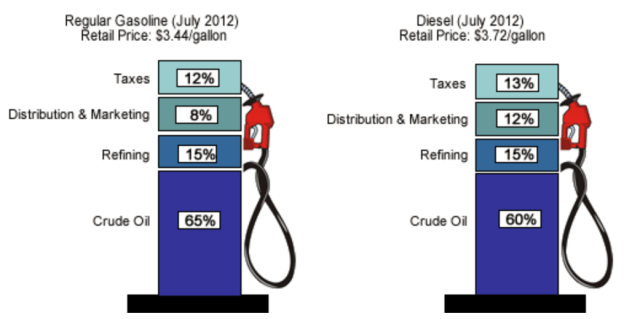
“Nothing terrifies an American president more than a gasoline-pump price spike,” said Bob McNally, president of consulting firm Rapidan Energy Group and former White House policy official under George W. Bush. “They will go to great lengths to prevent this, especially in an election year.”

Excerpts from Anna Hirtenstein et al., Biden Wants to Be Tough With Russia and Iran—but Wants Low Gas Prices Too, WSJ, June 26, 2024


Strangling China with Hong Kong: the Politics of Fear

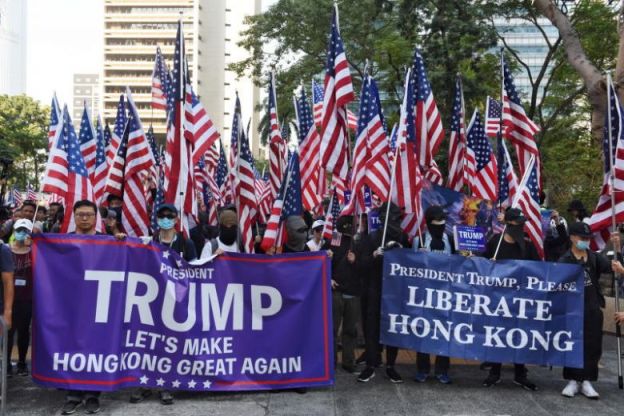
The U.S. determination  that Hong Kong is no longer autonomous from mainland China, under the Hong Kong Policy Act of 1992, will have significant implications for the city’s exporters and businesses.  Sensitive U.S. technologies could no longer be imported into Hong Kong, and the city’s exports might be hit with the same tariffs levied on Chinese trade.

But the act doesn’t cover the far more extensive role Hong Kong plays as China’s main point of access to global finance.  As of 2019, mainland Chinese banks held 8,816 trillion Hong Kong dollars ($1.137 trillion) in assets in the semiautonomous city, an amount that has risen 373% in the last decade…. China’s banks do much of their international business, mostly conducted in U.S. dollars, from Hong Kong. With Shanghai inside China’s walled garden of capital controls, there is no obvious replacement.

While the U.S. doesn’t directly control Hong Kong’s status as a financial center, Washington has demonstrated its extensive reach over the dollar system, with penalties against Korean, French and Lebanese financiers for dealing with sanctioned parties. The U.S. recently threatened Iraq’s access to the New York Federal Reserve, demonstrating a growing willingness to use financial infrastructure as a tool of foreign policy.  Even though the U.S. can’t legislate Hong Kong’s ability to support Chinese banks out of existence, the role of an international funding hub is greatly reduced if your counterparties are too fearful to do business with you.

Putting the ability of Chinese banks to conduct dollar-denominated activities at risk would be deleterious to China’s ability to operate financially overseas, posing a challenge for the largely dollar-denominated Belt and Road global infrastructure initiative. It would also put the more financially fragile parts of the country, like its debt-laden property developers, under strain.  China’s hope to develop yuan into an influential currency also centers on Hong Kong’s remaining a viable global financial center—more than 70% of international trade in the yuan is done in the city.

Excerpts from Mike Bird, How the US Could Really Hurt China, WSJ, May 290, 2020

Who is Afraid of the United States?

In 2018 America imposed sanctions on about 1,500 people, firms, vessels and other entities, nearly triple the number in 2016. The past six months of 2019 have been particularly eventful. America began imposing sanctions on Iran in November, and in January on Venezuela, another big oil exporter. On May 9th 2019, for the first time, it seized a ship accused of transporting banned North Korean coal.

Second, blackballed countries and unscrupulous middlemen are getting better at evasion. In March 2019advisers to the un, relying in part on Windward data, and American Treasury officials published separate reports that described common ways of doing it. Boats turn off their transmissions systems to avoid detection. Oil is transferred from one ship to another in the middle of the ocean—ships trading on behalf of North Korea find each other in the East China Sea using WeChat, a popular Chinese messaging service. Captains disguise a ship’s identity by manipulating transponder data to transmit false locations and identity numbers of different vessels.

Such methods have helped Iran and Russia transport oil to Syria, American officials say. In 2018 North Korea managed to import refined petroleum far in excess of the level allowed by multilateral sanctions. The situation in Venezuela is different—technically, America’s sanctions still allow foreigners to do business with the country. But fear that sanctions will expand mean that traditional trading partners are scarce. Nicolás Maduro’s regime this month found a shipowner to transport crude to India, according to a shipbroker familiar with the deal, but Venezuela had to pay twice the going rate.

Businesses keen to understand such shenanigans can be roughly divided into two categories. The first includes those who can profit from grasping sanctions’ impact on energy markets, such as hedge funds, analysts and traders. A squadron of firms is ready to assist them, combing through ship transmission data, commercial satellite imagery and other public and semi-public information. They do not specialise in sanctions, but sanctions are boosting demand for their tracking and data-crunching expertise.

A main determinant of Venezuela’s output, for instance, is access to the diluent it needs to blend with its heavy crude. A firm called Clipper Data has noted Russian ships delivering diluent to vessels near Malta, which then transport it to Venezuela. Kpler, a French rival, uses satellite images of shadows on lids of storage tanks to help estimate the volume of oil inside. Using transmissions data, images, port records and more, Kpler produces estimates of Iran’s exports for customers such as the International Energy Agency and Bernstein, a research firm—including a recent uptick in Iranian exports without a specific destination (see chart).

The second category of companies are wary of violating sanctions themselves. They need assistance of a different sort. Latham & Watkins, a firm that advised the chairman of EN+, which controls a Russian aluminium giant, as he successfully removed the company from America’s sanctions list this year, has seen a surge in sanctions-related business. Refinitiv, a data company, offers software which permits clients to screen partners and customers against lists of embargoed entities. Windward uses machine learning to pore over data such as ships’ travel patterns, transmissions gaps (some of which may be legitimate) and name changes to help firms identify suspicious activity. Kharon, founded last year by former United States Treasury officials, offers detailed analysis of anyone or anything on sanctions lists.

HIde and Seek: Sanctions Inc, Economist, May 18, 2019