Tag Archives: seeds

Bureaucracy Against Biodiversity

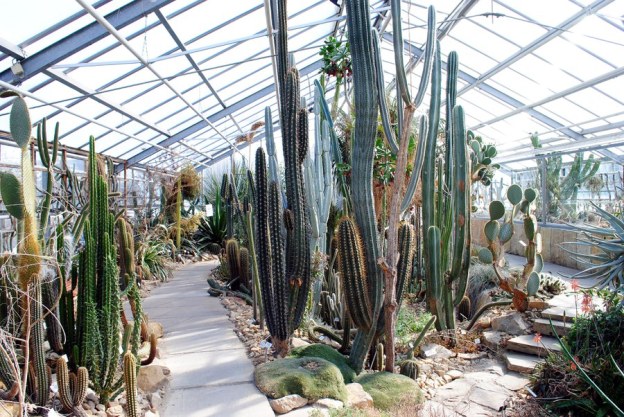
Botanic gardens around the world are struggling to find the space to conserve rare plants and save endangered species. “They can’t all fit,” said Brockington. Cambridge University Botanic Garden, for example, is home to more than 8,000 species. “That’s more than a tropical country like Vietnam, growing in a tiny little acreage of Cambridge.”…Threatened plants must compete for space in botanic gardens with beautiful, famous – but less endangered – flowers, trees and landscapes that will attract visitors and inspire people to learn about gardening and the natural world….The first botanic gardens were founded during the colonial era, and almost all are located in the west. In the past, botanists from these gardens would engage in “extractive, colonial-type practices”, visiting poorer nations to “pull out whatever plants they or their rich patrons were interested in, bring them back and cultivate them,” Brockington said.

In 1993, a United Nations Convention on Biological Diversity attempted to stop this by assigning sovereignty over biodiversity to national governments, enabling states to “own” the genetic material within their geopolitical boundaries…But this is hampering efforts of gardens to collect endangered plants in the wild, and exchange seeds and plant material to protect threatened species from extinction. To maintain diversity and preserve the world’s living collections, plants must be regularly replaced or propagated. But since the convention was introduced in 1993, the number of plants in botanic gardens collected from the wild has halved.

“Political boundaries do not help us share material and collectively steward the world’s most threatened biodiversity,” Brockington said. Brexit, for example, has been “catastrophic” for exchanges of plant material between European botanic gardens, he said. “The bureaucracy of seed exchange can be so costly now, it would be cheaper for our staff to personally fly to somewhere like Sweden, with a legal amount of seed, than send it by post.”…Brockington wants the world’s botanic gardens to collaborate to safeguard plant populations by creating one big “meta collection”, where individual specimens of an endangered wild species are extensively cultivated in multiple institutions.

Excepts from  Donna Ferguson, The risk of extinction is accelerating’: world’s botanic gardens raise alarm with space to protect endangered plants running out, Guardian, Jan. 25, 2025
Food Security: The Silicon Valley of Seeds

The Communist Party’s top disciplinary body—after punishing graft in the military, domestic security organs and the financial sector—is now hunting officials, merchants and farmers it suspects of harvesting illicit profits from trade in grains and seeds. Tasked with being more forceful in safeguarding the nation’s “seed security,” authorities have investigated dozens of cases involving seed-related misconduct and, in several instances, imprisoned grain-sector officials on corruption charges…Officials say the goal is to stop the proliferation of fake and substandard seeds that could jeopardize food production and safety, while punishing officials, merchants and farmers who siphon agricultural subsidies and peddle low-grade seeds.

Xi has often highlighted food security as a national interest, calling on officials to ensure that China can fully nourish its 1.4 billion people. His demands have taken on greater urgency in recent years as he pushed to prepare his country for a potential confrontation with the U.S.—a major source of Chinese grain imports, including soybeans and corn—and forestall disruptions to food supplies for one of the world’s most populous nations…Today, Beijing sees the seed sector as one of several strategic industries where Western powers could flex their technological superiority to strangle a lagging China. Demonstrating his personal interest in this field, Xi has twice visited a seed-breeding base in the island province of Hainan that officials call the “Silicon Valley” of China’s seed industry.

China is the world’s largest grain producer, growing one-quarter of global supply on less than 10% of the world’s arable land. But its ability to feed its own people has slipped over recent decades by some estimates. ..Officials and state media have taken to comparing seeds to advanced semiconductor chips, a technology that China has pledged to master in its quest for a national renaissance…While China’s seed industry is strong enough to survive foreign strangulation, the country still falls behind in seed quality, according to the Farmers’ Daily, which recommended measures including “resolutely cracking down” on the trading of fake and mislabeled seeds, whereby officials and merchants defraud farmers with counterfeit or lower-grade goods marked as top-quality seeds….

Excerpts from China’s Corruption Hunters Target Produce Aisle in Push for Seed Security, WSJ, July 25, 2023

Stealing Patent-Protected Seeds

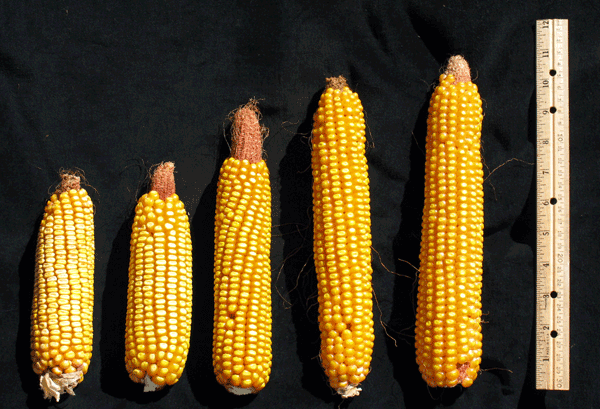
A Chinese man pleaded guilty in a US court on January 27, 2016 to stealing patent-protected corn seed from agribusiness giants Monsanto and DuPont to take back to China for commercial use.  Mo Hailong, 46, participated in a plot to steal inbred corn seeds from the two US companies so that his then employer, Beijing Dabeinong Technology Group, could use them in its own seed business, the US Department of Justice said.Mo “admitted to participating in the theft of inbred – or parent – corn seeds from fields in the southern district of Iowa for the purpose of transporting those seeds to China,” the department said in a statement.“The stolen inbred seeds constitute the valuable intellectual property of DuPont Pioneer and Monsanto.”..

Man admits stealing patented corn seeds from US fields to take to China, Guardian, Jan. 27, 2016