U.S. military researchers asked in 2019 two companies to develop new kinds of biological sensors that can detect underground disturbances or the presence of buried chemicals or weapons.
Officials of the U.S. Defense Advanced Research Projects Agency (DARPA) in Arlington, Va., are looking to Raytheon BBN Technologies, and Signature Science, for the BioReporters for Subterranean Surveillance program. This project seeks to use indigenous and engineered organisms to sense changes of interest to military commanders in natural and built environments. Raytheon BBN and Signature Science won separate $1.6 million contracts for the Subterranean Surveillance progam.
The two companies will perform laboratory research and proof-of-concept demonstrations of biological sensing systems in well- controlled field tests that take advantage of recent advances in microbial science and synthetic biology to develop biological sensors, signal transducers, and reporters that can reveal subterranean phenomena at a distance. Bio Reporters should be able to sense a phenomenon at least one meter below the surface, propagate a signal to the surface within seven days, and be continuously detectable on the surface at a distance of 10 meters over the subsequent seven days.
DARPA researchers want Raytheon BBN and Signature Science experts to take advantage of the extensive biological networks that exist underground to monitor large areas to increase the military’s ability to detect subterranean events without the need for precise coordinates.
Excerpts from John Keller, Researchers eye new biological sensors to to detect underground objects like buried chemicals and weapons, https://www.militaryaerospace.com, Nov. 6, 2019
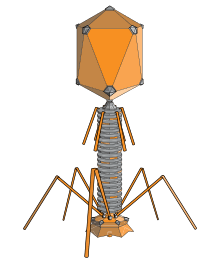
In more detail Signature Science and its partner, the Texas A&M University Center for Phage Technology, aim to leverage modern and synthetic phage biology and the straightforward molecular genetics of the harmless soil bacterium Bacillus subtilis to generate a new platform to recognize and report on specific chemical threats underground. The Spore-Phage Amplified Detection (SPADe) method, potentially extensible to explosives, radiation or physical disturbance sensing, seeks to substantially advance currently used techniques which rely heavily on manual soil testing.
 Law-In-Action