Tag Archives: utilities and drones

Why Americans Love Chinese Drones

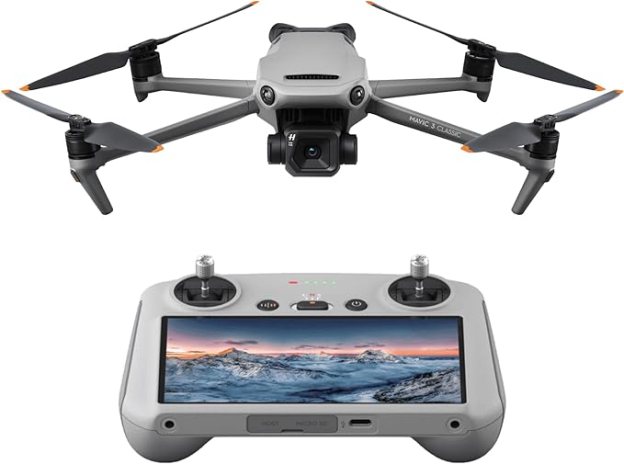
China’s DJI drones  have been labeled a national-security risk by Republicans and Democrats, military officials and federal regulators. The U.S. government has placed tariffs on the drones and largely prohibited federal agencies from using DJIs. 

Yet DJI accounts for around 70% to 90% of the American commercial, local government and hobbyist drone market. Real-estate agents, movie producers, firefighters, roof inspectors, utilities and law enforcement have all come to depend on the brand. The Secret Service bought more than 20 of them in 2022 just before restrictions were put in place, according to federal purchasing records…Small drones have become essential tools in U.S. commerce and emerged as critical weapons in modern combat, handing the world’s largest supplier—DJI—enormous power. National-security experts say reliance on Chinese drones creates a dangerous dependency that China could exploit in a conflict.  Ukrainians have relied on DJI, while American models have often failed on the front lines—although soldiers have had to contend with security vulnerabilities…

American drones are in short supply with long wait times. Drone buyers say they sometimes have to wait close to five months for a U.S. drone, while DJIs are available immediately. “Are American drone companies ready to fill the void?” said Trevor Perrott, chief executive of Florida drone maker Censys Technologies. “No, we’re not ready. But DJI may very well be a Band-Aid we need to rip off for long-term gain.” 

Excerpts from Heather Somerville, Why First Responders Don’t Want the U.S. to Ban Chinese Drones, WSJ, Aug. 8, 2024
Drones for Renewable Energy

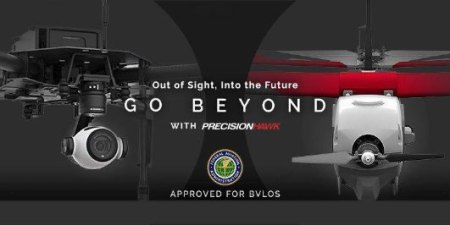
Utilities in Europe are looking to long-distance drones to scour thousands of miles of grids for damage and leaks in an attempt to avoid network failures that cost them billions of dollars a year. w altitudes over pipelines and power lines….Italy’s Snam, Europe’s biggest gas utility, told Reuters it is trialing one of these machines – known as BVLOS drones (Beyond Visual Line of Sight) because they fly ‘beyond the visual line of sight’ of operators – in the Apennine hills around Genoa. It hopes to have it scouting a 20 km stretch of pipeline soon.

France’s RTE has also tested a long-distance drone, which flew about 50 km inspecting transmission lines and sent back data that allowed technicians to virtually model a section of the grid. The company said it would invest 4.8 million euros ($5.6 million) on drone technology over the next two years.

At present, power companies largely use helicopters equipped with cameras to inspect their networks. They have also recently started occasionally using more basic drones that stay within sight of controllers and have a range of only about 500 meters.  However an industry-wide shift toward renewable energy, and the need to monitor the myriad extra connections needed to link solar and wind parks to grids, is forcing utilities to look at the advanced technology.  “It’s a real game changer,” Michal Mazur, partner at consultancy PwC, said of drones. “They’re 100 times faster than manual measurement, more accurate than helicopters and, with AI devices on board, could soon be able to fix problems.”

In-sight drones cost around 20,000 euros each and BVLOS ones will cost significantly more, according to executives at tech companies that make the machines for utilities, and a fleet of dozens if not hundreds would be needed to monitor a network.

Power grid companies are expected to spend over $13 billion a year on drones and robotics by 2026 globally, from about $2 billion now, according to Navigant Research.  But that is still dwarfed by the amount of money the sector loses every year because of network failures and forced shutdowns – about $170 billion, according to PwC…

BVLOS drone flights are largely prohibited because of safety concerns. However over the past year European watchdogs have for the first time granted special permits to allow utilities – namely RTE and Snam – to test prototypes. it…Xcel Energy (XEL.O) in April  2018 became the first American utility to gain approval for BVLOS flights.

Excerpts from Power to the drones: utilities place bets on robots, Reuters, July 16, 2018