Tag Archives: waste disposal

The Global Flows of Dirty Recyclables

For decades, America and much of the developed world threw their used plastic bottles, soda cans and junk mail in one bin. The trash industry then shipped much of that thousands of miles to China, the world’s biggest consumer of scrap material, to be sorted and turned into new products.  That changed last year when China banned imports of mixed paper and plastic and heavily restricted other scrap. Beijing said it wants to stimulate domestic garbage collection and end the flow of foreign trash it sees as an environmental and health hazard. Since then, India, Malaysia, Vietnam, Thailand and Indonesia—other popular markets for the West’s trash—have implemented their own restrictions…China’s 2018 restrictions on a variety of waste imports radically changed global flows of plastics, including polyethylene, a popular type used in shopping bags and shampoo bottles.

 
For years, the world’s bottles and boxes made their way to China on ships that offered deep discounts to avoid returning empty after dropping off cargo in the U.S. and other countries. Since 1992, China has imported 45% of the world’s plastic waste, according to data published in 2019 in the journal Science Advances. “It was a great relationship, where we bought their goods and sent them back the empty boxes,” says Brent Bell, vice president of recycling for Houston-based Waste Management, the largest waste management company in the U.S. In 2018, China instituted a ban on 24 categories of waste—including, for example, plastic clamshell containers, soda and shampoo bottles, and junk mail. It said foreign garbage was “provoking a public outcry.”

China accepted dirty and mixed recyclables because it had low-wage workers to sort out unwanted material, often by hand. That gave American contractors little incentive to weed out food scraps, plastic bags and nonrecyclable junk stateside. After China rejected imports, a flood of trash was rerouted to countries such as India, Indonesia and Malaysia. Many of those places now say they are overwhelmed and have imposed their own restrictions on paper or plastic imports. The countries also want to focus on developing their own waste collection industries.

Malaysia in May 2019 began sending back 60 containers of imported trash to the U.S. and other countries, complaining it had become a dumping ground for rich countries. The containers were meant to contain plastic scrap but were contaminated with other items such as cables and electronic waste. A government spokeswoman said more containers will be returned as Malaysia ramps up inspections.

Japan, which historically sent most of its plastic exports to China, had been redirecting trash to Malaysia, Thailand and Vietnam after China’s ban. But when those countries began turning dirty recycling away, Japanese collectors started stockpiling, in hopes a new market would arise. Over the past year, Japan has amassed 500,000 tons of plastic waste, according to Hiroaki Kaneko, deputy director of recycling at the environment ministry. Japan, the second-biggest exporter of plastic waste behind the U.S., is trying to stimulate domestic processing by earmarking billions of yen to subsidize plastic recycling machinery for private companies.

The U.K. is burning more of its trash, including dirty or low-value recycling. Attitudes toward incineration vary greatly by country. In the U.S., where space is plentiful, it has long been cheaper to send materials to landfills, and incineration has remained unpopular. Across much of Europe, by contrast, trash burned for energy has been popular for years. ….“The China ban has highlighted that we can no longer export our problem,” said managing director Bill Swan. Paper Round’s buyers have much higher standards now, he said, such as checking moisture levels, which can decrease the quality of paper.

Excerpts from Saabira Chaudhuri, Recycling Rethink: What to Do With Trash Now That China Won’t Take It, WSJ, Dec. 21, 2019
Keep it in Your Backyard Please! The Revolution against Recyclable Plastics

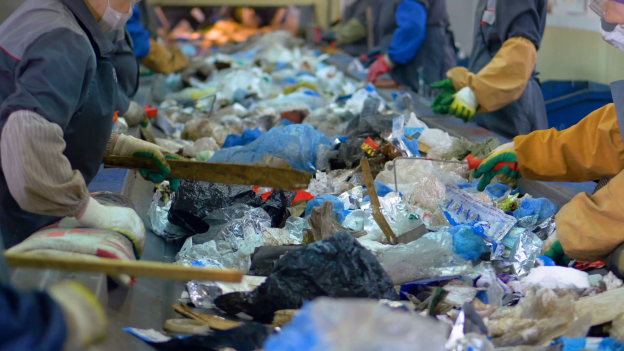
There is no point collecting recyclable waste unless someone is willing to buy it and actually do the recycling. Until late 2017 China was the world’s biggest importer of scrap by far.  All this came to a halt when the Chinese government banned the import of all but the purest scrap material in 2017, killing a trade worth $24bn a year. Waste dealers in the rich world had to scramble to find new buyers. South-East Asia soon emerged as the pre-eminent destination for foreign waste. Unfortunately, the region’s recycling industry is much smaller than China’s; its processing plants were quickly overwhelmed. Plastics from America and Europe have piled up in landfills. Lots of toxic rubbish has simply been torched.

South-East Asian governments are not pleased. They have begun to ban or crimp imports themselves, abruptly diminishing a booming business. On May 28th, 2919 Yeo Bee Yin, Malaysia’s environment minister, complaining that “garbage [was] being traded under the pretext of recycling”, announced that her government would be sending back 3,000 tonnes of foreign plastic. Much of it was of poor quality, she noted, and hence unrecyclable.  Thailand plans to ban plastic-waste imports by 2021. Vietnam’s government has similar ideas. Kate O’Neill of the University of California, Berkeley, reckons these bans are motivated not only by environmental concerns but also by pride: Asia does not want to be the world’s dumping ground.  Rodrigo Duterte, the president of the Philippines, recently threatened to go to war with Canada if it did not take back a shipment of plastic scrap. Canada agreed to take it away…

Excerpts from South-East Asian countries are banning imports of waste for recycling, Economist, June 15, 2019

The Future of Recycling

About 90 percent of the 8 billion soda cans sold in California every year get turned in for recycling and a 5¢ refund. But cheaper commodity prices, plus lower Chinese demand for America’s used bottles and cans, have upended the economics of the state’s recycling industry. Over the past two years, California’s recycling rate has fallen enough to relegate more than 2 billion containers a year to landfills.  About 700 of the 2,400 redemption centers California had in 2011 have closed, according to CalRecycle, the state’s recycling agency, the majority in the past year. The mostly small companies that run the shedlike centers in parking lots outside grocery stores are being squeezed by a commodity bust that’s lowered the price they receive for recycled glass, plastic, and aluminum. The price they have to pay consumers for this detritus has stayed fairly high. A state subsidy program that was supposed to help make up the difference hasn’t kept up.,,

The decline in the value of scrap is draining California’s Beverage Container Recycling Fund, which relies on the proceeds from bottle deposits consumers pay upfront to reimburse redemption centers. As of June 30, it had $195 million, down from $246 million a year earlier. At this rate, it’s expected to run out of money in the first half of 2018.

“There’s been a massive crisis and a massive failure to respond to that crisis,” says Susan Collins, president of the Container Recycling Institute, an advocacy group in Southern California. Collins says the state needs to boost its “outdated” payment formula by as much as $1 million a month or follow other states, where bottling companies pay recycling centers a fixed amount per container. A spokesman for CalRecycle says the state is looking at all options.

China is the largest destination for U.S. scrap exports, taking about 11 percent by volume in 2015. Since 2013, under a government program called Operation Green Fence, China has been aggressively inspecting and in some cases turning away bottles and cans that are mixed in with food waste or other nonrecyclable scrap. The policy has forced waste processors in the U.S. to screen discarded containers more carefully, driving up costs and diminishing the value of some waste.

Excerpts from California’s Recycling Industry is in the Dumps, Bloomberg Business Week, Oct. 6, 2016