Tag Archives: climate change and agriculture

Natural gas plant with steam emissions and active flare at sunset

How the U.S. Forced Europe to Change its Climate Rules

The European Union wants to suspend penalties for companies that breach new rules aimed at curbing global warming, after the Trump administration and industry groups said they were too hard to comply with and could lead to energy shortages. The European Commission, the EU’s executive arm, recommended in July 2026 that EU countries delay noncompliance penalties that had been set to take effect in 2027. The fines, which can be as high as 20% of a company’s annual revenue, wouldn’t come into play until 2030, the commission said.

The EU requires companies to monitor and report on methane emissions for oil, natural gas and coal they import, and is set to eventually cap the amount of methane that can be emitted for each unit of imported energy. The bloc wants to reduce emissions of methane because it is a potent greenhouse gas that traps heat in the atmosphere.

Disruptions to oil and gas shipments through the Strait of Hormuz have added to concerns in import-reliant Europe, where high prices are kneecapping companies’ ability to compete with the U.S. and China. The U.S. and other energy-exporting countries have pressed the EU to ease its methane rules. Some American multinationals such as Exxon Mobil have subsidiaries in Europe that import energy from outside the bloc, meaning the rules would apply to them, too.

In a joint letter in June 2026, the energy ministers of the U.S., Qatar, Algeria and Nigeria said they saw “no viable path to compliance” with the EU’s methane regulation, and called for a delay to the penalties and changes to the law.

Excerpt from Kim Mackrael, EU to Ease Methane Rules After U.S. Pressure, WSJ, July 20, 2026
Another Laughingstock: Carbon Offsets

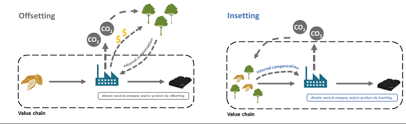
Carbon credits feature prominently in corporate climate strategies and have sparked public debate about their potential to delay companies’ internal decarbonisation. While industry reports claim that credit purchasers decarbonize faster, rigorous evidence is missing. This study (see below) provides an in-depth analysis of 89 multinational companies’ historical emission reductions and climate target ambitions. Based on self-reported environmental data and more than 400 sustainability reports, we find no significant difference between the climate strategies of companies that purchased credits and those that did not. Voluntary offsetting is not a central part of most companies’ climate strategies, and many pass credit costs directly onto their customers. While the companies within our sample retired one-fourth of all carbon credits in 2022, the top five offsetters’ expenditures on voluntary emission offsetting are, on average, only 1 percent relative to their capital expenditures.

Abstract from Niklas Stolz &  Benedict S. Probst, The negligible role of carbon offsetting in corporate climate strategies, Nature Communications,  Sept. 10, 2025

The Northern Frontier: Who’s Taking Advantage of Climate Change?

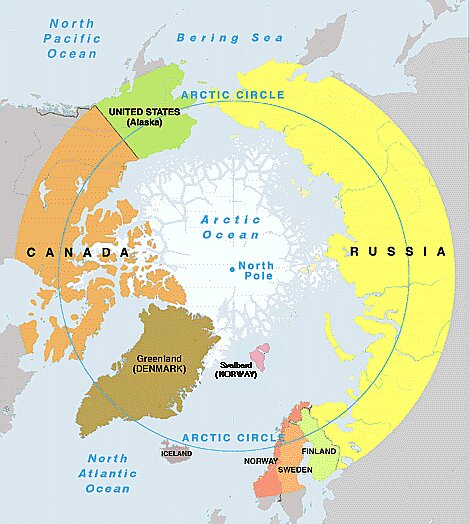
Owing to climate change…the share of boreal land that can support farming could increase from 8% to 41% in Sweden. It could increase from 51% to 83% in Finland. Efforts to farm these areas will alarm people who value boreal forests for their own sake. And cutting down such forests and ploughing up the soils that lie beneath them will release carbon. But the climatic effects are not as simple as they might seem. Northern forests absorb more heat from the sun than open farmland does, because snow-covered farmland reflects light back into space…

The fact that felling boreal forests may not worsen climate change, though, says nothing about the degree to which it could affect biodiversity, ecosystem services or the lives of forest dwellers, particularly indigenous ones.

Some governments are already keen to capitalize on climate change. Russia’s has long talked of higher temperatures as a boon. President Vladimir Putin once boasted that they would enable Russians to spend less money on fur coats and grow more grain. In 2020 a “national action plan” on climate change outlined ways in which the country could “use the advantages” of it, including expanding farming. Since 2015 Russia has become the world’s largest producer of wheat, chiefly because of higher temperatures.

Russia’s government has started leasing thousands of square kilometers of land in the country’s far east to Chinese, South Korean and Japanese investors. Much of the land, which was once unproductive, is now used to grow soybeans. Most are imported by China, helping the country reduce its reliance on imports from America. Sergey Levin, Russia’s deputy minister of agriculture, has predicted that soya exports from its far-eastern farmlands may reach $600m by 2024. That would be nearly five times what they were in 2017. The government of Newfoundland and Labrador, a province on the north-eastern tip of Canada, is also trying to promote the expansion of agriculture into lands covered by forests…

All told, the northern expansion of farmland will only go some way towards mitigating the damage climate change may do to agriculture. The societies that will benefit from it are mostly already wealthy. Poor places, which rely much more heavily on income from exporting agricultural produce, will suffer.

Excerpts from Farming’s New Frontiers: Agriculture, Economist, August 28, 2021