Tag Archives: data methane emissions

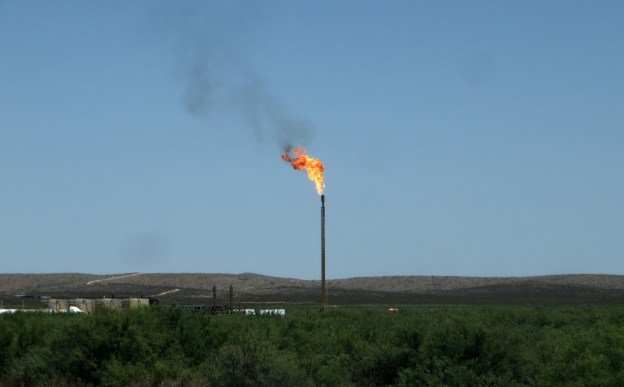
Natural gas plant with steam emissions and active flare at sunset

How the U.S. Forced Europe to Change its Climate Rules

The European Union wants to suspend penalties for companies that breach new rules aimed at curbing global warming, after the Trump administration and industry groups said they were too hard to comply with and could lead to energy shortages. The European Commission, the EU’s executive arm, recommended in July 2026 that EU countries delay noncompliance penalties that had been set to take effect in 2027. The fines, which can be as high as 20% of a company’s annual revenue, wouldn’t come into play until 2030, the commission said.

The EU requires companies to monitor and report on methane emissions for oil, natural gas and coal they import, and is set to eventually cap the amount of methane that can be emitted for each unit of imported energy. The bloc wants to reduce emissions of methane because it is a potent greenhouse gas that traps heat in the atmosphere.

Disruptions to oil and gas shipments through the Strait of Hormuz have added to concerns in import-reliant Europe, where high prices are kneecapping companies’ ability to compete with the U.S. and China. The U.S. and other energy-exporting countries have pressed the EU to ease its methane rules. Some American multinationals such as Exxon Mobil have subsidiaries in Europe that import energy from outside the bloc, meaning the rules would apply to them, too.

In a joint letter in June 2026, the energy ministers of the U.S., Qatar, Algeria and Nigeria said they saw “no viable path to compliance” with the EU’s methane regulation, and called for a delay to the penalties and changes to the law.

Excerpt from Kim Mackrael, EU to Ease Methane Rules After U.S. Pressure, WSJ, July 20, 2026
The Super Polluters: methane

Methane is a colorless, odorless greenhouse gas that makes up the bulk of the natural gas burned to heat homes, cook food and generate electricity. It is also the second largest driver of global warming after carbon dioxide, responsible for at least one-quarter of the rise in global average temperatures since the Industrial Revolution. Once emitted, methane molecules degrade in around a decade so they do not pile up in the atmosphere in the same way as carbon dioxide, which can persist for hundreds of years.

Slashing methane emissions, therefore, could help reduce the overall atmospheric volume of greenhouse gases and slow the pace of global warming in the near term. Patching up leaky oil-and-gas infrastructure, responsible for 22% of all man-made methane emissions, would help meet those goals. This has led to efforts to quantify methane leaks…

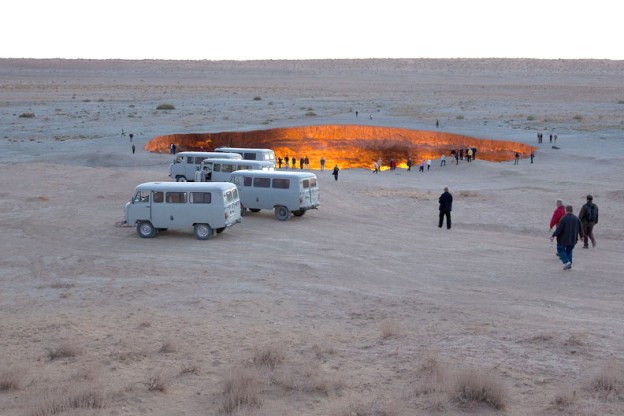
Two-thirds of the ultra-emitting events of methane were co-located with oil and gas production sites and pipelines; the rest came from coal production, agricultural or waste-management facilities. Accounting for 1.3m tonnes of methane per year, Turkmenistan is a ultra emitter of methane…followed by Russia, the United States, Iran, Kazakhstan and Algeria…

At the United Nations COP26 climate negotiations, held in November 2021 in Glasgow, leaders of more than 100 countries made a pact to reduce global emissions of methane by 30% by 2030. The cheapest, most cost-effective way of doing this will be to patch up oil-and-gas infrastructure, starting with the ultra-emitters…

Excerpts from Climate Change: Methane Mission, Economist, Feb. 5, 2022

Measuring Methane Emissions

The American gas industry faces growing pressure from investors and customers to prove that its fuel has a lower-carbon provenance to sell it around the world. That has led the top U.S. gas producer, EQ , and the top exporter, Cheniere Energy to team up and track the emissions from wells that feed major shipping terminals. The companies are trying to collect reliable data on releases of methane—a potent greenhouse gas increasingly attracting scrutiny for its contributions to climate change—and demonstrate they can reduce these emissions over time.

“What we’re trying to really do is build the trust up to the end user that our measurements are correct,” said David Khani, EQT’s chief financial officer. “Let’s put our money where our mouth is.” Natural gas has boomed world-wide over the past few decades as countries moved to supplant dirtier fossil fuels such as coal and oil. It has long been touted as a bridge to a lower-carbon future. But while gas burns cleaner than coal, gas operations leak methane, which has a more potent effect on atmospheric warming than carbon dioxide, though it makes up a smaller percentage of total greenhouse gas emissions.

Investors, policy makers and buyers of liquefied natural gas, known as LNG, are rethinking the fuel’s role in their energy mix …Those concerns, pronounced in Europe and increasingly in Asia, are a problem for LNG shippers, as some of their customers signal plans to ease gas consumption over time…Nearly every industry now faces some pressure to reduce its carbon footprint, as investors focus more on ESG—or environmental, social and governance—issues and push companies for trustworthy emissions data. But the pressure has become particularly acute for oil-and-gas companies, whose main products contribute directly to climate change.

The companies and researchers plan to test drones, specialized cameras that can see methane gas, and other technologies across about 100 wells in the Marcellus Shale in the northeast U.S., the Haynesville Shale of East Texas and Louisiana, and the Permian Basin of West Texas and New Mexico. EQT has said it would spend $20 million over the next few years to replace leaky pneumatic devices, which help move fluids from wells to production facilities and water tanks, with electric-drive valves, executives said. They expect that will cut about 80% of the company’s methane emissions. The company also began exclusively using electric-powered hydraulic fracturing equipment last year.

Excerpts from Collin Eaton Frackers, Shippers Eye Natural-Gas Leaks as Climate Change Concerns Mount, WSJ, Aug. 13, 2021