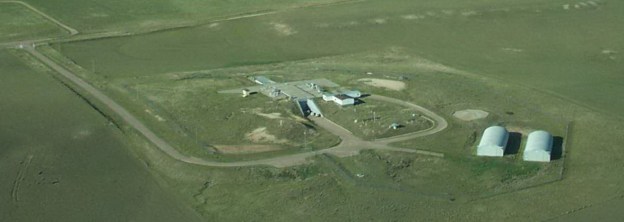
The Pentagon has revised the projected cost of refurbishing hundreds of nuclear missile silos to $141 billion, a $30 billion increase from an estimate provided in January. The U.S. Air Force project, known as Sentinel, includes replacing the Cold War-era intercontinental ballistic missiles inside the silos with newer models…Sentinel is part of a long-delayed nuclear-arms refresh that the Congressional Budget Office estimates will cost at least $1.5 trillion over the next 30 years…The missiles sitting inside some 450 silos are decades past their projected lifespan of 10 years. The underground silos require thousands of miles of new fiber-optic cabling. Underground command centers that control the missiles need to be rebuilt. Maintenance jobs that used to take two or three hours now take twice as long, and parts are more difficult to obtain, Air Force officials said.
“Its scale, scope and complexity are something we haven’t attempted as a nation for over 60 years,” Bill LaPlante, the Pentagon’s chief weapons buyer, told reporters in July 2024 as he cleared Sentinel to continue as a must-do program despite the surging costs. The Pentagon hired Northrop Grumman in 2020 to oversee the Sentinel program and do the initial engineering and design work. Northrop, aided by construction giant Bechtel, was the only bidder for the initial $13.3 billion contract after Boeing dropped out
“Most of the people who did it the last time aren’t even around anymore. So re-creating all of this has turned out to be a huge problem,” said Madelyn Creedon, a former senior Energy Department and Pentagon official who chaired a congressionally mandated panel on future U.S. nuclear and conventional forces…
Excerpt from Doug Cameron U.S. Nuclear Missile Silos Need Modernizing, but Fixes Aren’t Coming Soon, WSJ, Aug. 26, 2024

 Law-In-Action