Tag Archives: Africa

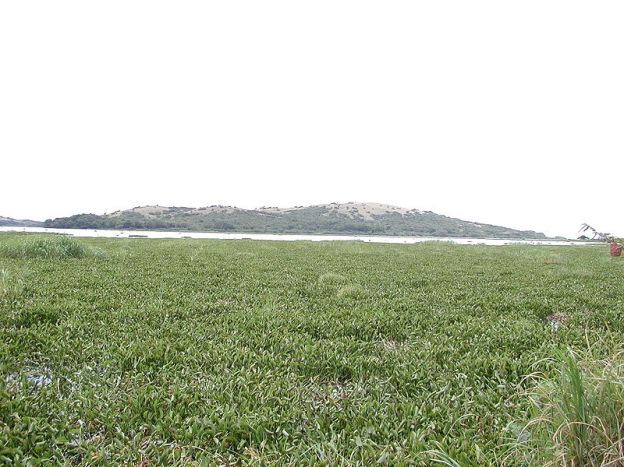
Choked by Hyacinths: Lake Victoria

The report, Freshwater biodiversity in the Lake Victoria Basin (2018), assesses the global extinction risk of 651 freshwater species, including fishes, molluscs, dragonflies, crabs, shrimps and aquatic plants native to East Africa’s Lake Victoria Basin, finding that 20% of these are threatened with extinction. Of the freshwater species assessed, 204 are endemic to the Lake Victoria Basin and three-quarters (76%) of these endemics are at risk of extinction.

The African Lungfish (Protopterus aethiopicus), for example, is declining in the Lake Victoria Basin largely due to overfishing, poor fishing practices and environmental degradation as wetlands are converted to agricultural land. The lungfish is considered a delicacy for some local communities and is an important local medicinal product, used to boost the immune system and treat alcoholism. The lungfish is also traded at market, making it important to the local economy.

Lake Victoria is the world’s second largest freshwater lake by surface area. Its catchment area includes parts of Kenya, Tanzania, Uganda, Burundi and Rwanda. Also referred to as ‘Darwin’s Dreampond’, Lake Victoria is known for its high levels of unique biodiversity. The Lake Victoria Basin harbours immense natural resources including fisheries, forests, wetlands and rangelands….

Pollution from industrial and agricultural sources, over-harvesting of resources and land clearance are among the primary threats to biodiversity in this region. Invasive species also present an important threat to native biodiversity in the basin, affecting 31% of all species and 73% of threatened species. The purple flowered Water Hyacinth (Eichhornia crassipes) was accidentally introduced to Lake Victoria from South America in the 1980s, and at its peak covered close to 10% of the lake surface in dense floating mats. These mats reduce the oxygen and nutrient availability in the water column, which negatively affects native biodiversity. Opportunities for harvesting and exploiting the Water Hyacinth, for example by using the species as fuel in bio-digesters for energy production, are under investigation.

Excerpts from Livelihoods at risk as freshwater species in Africa’s largest lake face extinction – IUCN Report, IUCN Report, Apr. 30, 2018
Cultivating the Many Gaddafis

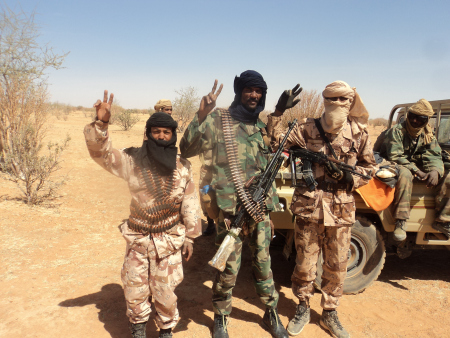
When Doundou Chefou first took up arms as a youth a decade ago, it was for the same reason as other ethnic Fulani herders along the Niger-Mali border: to protect his livestock.  He had nothing against the Republic of Niger, let alone the United States of America. His quarrel was with rival Tuareg cattle raiders.
Yet in October 2017 he led dozens of militants allied to Islamic State in a deadly assault against allied US-Niger forces, killing four soldiers from each nation and demonstrating how dangerous the West’s mission in the Sahel has become.

The transition of Chefou and men like him from vigilantes protecting their cows to jihadists capable of carrying out complex attacks is a story Western powers would do well to heed, as the pursuit of violent extremism in West Africa becomes ever more enmeshed in long-standing ethnic and clan conflicts.

For centuries Tuareg and Fulani lived as nomads herding animals and trading – Tuareg mostly across the dunes and oases of the Sahara and Fulani mostly in the Sahel, a vast band of semi-arid scrubland that stretches from Senegal to Sudan….Though they largely lived peacefully side-by-side, arguments occasionally flared, usually over scarce watering points. A steady increase in the availability of automatic weapons made the rivalry more deadly.

A turning point was the Western-backed ousting of Libya’s Muammar Gaddafi in 2011. With his demise, many Tuareg who fought as mercenaries for Gaddafi returned home, bringing with them the contents of Libya’s looted armouries.  Some returnees launched a rebellion in Mali to create a breakaway Tuareg state in the desert north, a movement hijacked by al Qaeda-linked jihadists who had been operating in Mali for years. In 2012, they swept across northern Mali, seizing key towns and prompting a French intervention that pushed them back in 2013.

Amid the violence and chaos, some Tuareg turned their guns on rivals from other ethnic groups like the Fulani, who then went to the Islamists for arms and training.

“The Tuareg were armed and were pillaging the Fulani’s cattle,” Niger Interior Minister Mohamed Bazoum told Reuters. “The Fulani felt obliged to arm themselves.”..

Tuareg in Mali and Niger dreamed of and sometimes fought for an independent state, Fulani generally been more pre-occupied by concerns over the security of their community and the herds they depend on. “For the Fulani, it was a sense of injustice, of exclusion, of discrimination and a need for self-defence,”  A militant who proved particularly good at tapping into this dissatisfaction was Adnan Abu Walid al-Sahrawi, an Arabic-speaking north African, several law enforcement sources said.  Al-Sahrawi recruited dozens of Fulani into the Movement for Unity and Jihad in West Africa (MUJWA), loosely allied to al Qaeda in the region and controlled Gao and the area to the Niger border in 2012.

Why pastoralists in Mali and Niger turned to jihad, Reuters, Nov. 13,  2017

Let them Bleed: Pretend to Care for Peace

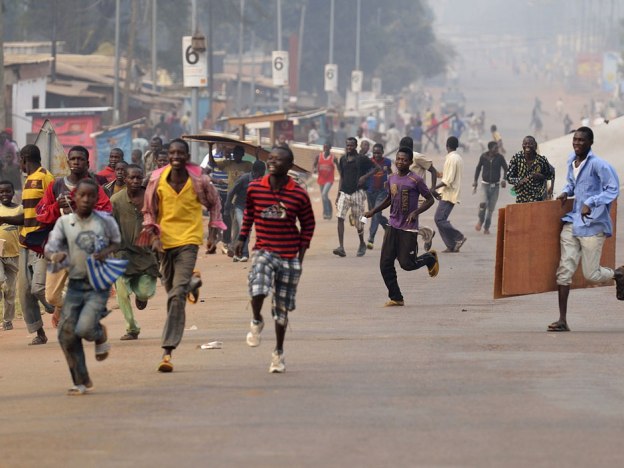
World alarm grew over the Central African Republic (CAR) on November 21, 2013, with France joining a chorus warning of possible genocide in the mineral-rich but poor country torn by strife since a March 2013 coup.  France’s Foreign Minister Laurent Fabius warned that the CAR was “on the verge of genocide”, while the United Nations has mooted sending thousands of peacekeepers to the landlocked nation, where unprecedented sectarian bloodshed has erupted.

In parts of the CAR, fighting has broken out between mainly Muslim former rebels who seized power in March and militia groups set up to protect Christian communities, which make up about 80 percent of the population. Both churches and mosques have been razed to the ground.”It’s total disorder,” Fabius told France 2 television, adding that the UN was considering authorising African and French troops to intervene. A regional peacekeeping force known as MISMA is currently deployed, but consists of only 2,500 men hampered by a lack of funds, arms and training.

In the latest of a long line of rebellions and coups, the Seleka rebel coalition ousted president Francois Bozize in March and put the CAR’s first Muslim leader, President Michel Djotodia, in power.Djotodia, who has officially disbanded the Seleka coalition and incorporated some of its forces into the army, announced “exceptional measures” to quell conflict, but a statement issued by his office gave no details…[The government] formed in the capital Bangui has little control of the rest of the nation, where armed groups – the remnants of successive rebellions, mutinies and insurgencies – hold sway over a people facing atrocities, food shortages and the collapse of health care.”You have seven surgeons for a population of five million, an infant mortality rate of 25 percent in some areas and 1.5 million people who have nothing, not even food, and armed gangs, bandits, etc,” Fabius said of France’s former colony in equatorial Africa.

The UN Security Council plans to vote in early December on a resolution that would allow CAR’s neighbours, the African Union and France to intervene in the sprawling nation….Plans are afoot to place MISMA under the aegis of the African Union and bring it up to 3,600 men, but diplomats and military experts warn that this number will be nowhere near enough. The bulk of MISMA is provided by Chad, with troops from Gabon, Cameroon and Equatorial Guinea.

By Nicholas Barret, France joins global warnings of ‘genocide’ in C. Africa,  Agence France Presse, Nov. 22, 2013