Tag Archives: Basel Convention

Malaysia Says No to Plastics from U.S.

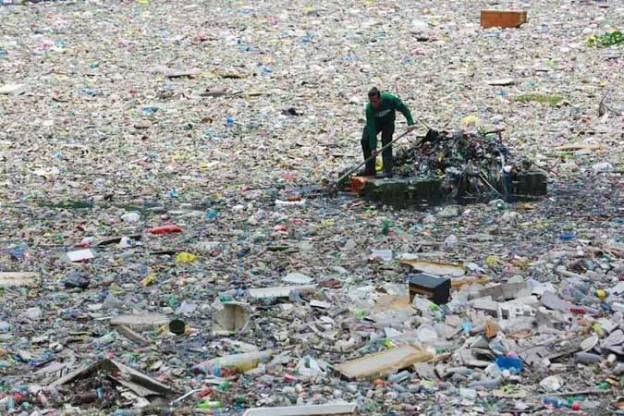
Malaysia emerged as a major destination for U.S. waste after China banned American waste imports in 2018. California shipped 864 shipping containers, or more than 10 million pounds of plastic waste, to Malaysia in 2024, according to the Basel Action Network, an advocacy group…

Under Malaysian waste guidelines announced recently, the country is no longer accepting plastic waste and hazardous waste from nations that didn’t ratify the Basel Convention, the international treaty designed to reduce the international movement of hazardous and other waste. The U.S. is one of just a handful of countries, including Fiji and Haiti, that hasn’t signed the pact….The coming ban has already disrupted trash export routes significantly, particularly for the plastics used in grocery bags, trash can liners and food wrap.

According to California’s waste agency, CalRecycle, the state exported 11.3 million tons of recyclable materials overseas to places such as Malaysia, Thailand, Vietnam, China, Taiwan, South Korea, Mexico and Canada — in 2022. That number includes 100 million pounds of scrap plastic…

Excerpt from Susanne Rust, Malaysia no longer takes U.S. plastic waste, creating a dilemma for California, Los Angeles Times, July 3, 2025

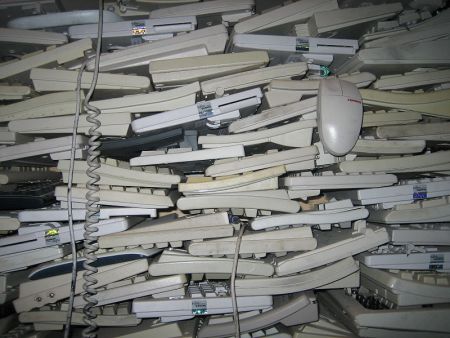
Electronic Waste: 100 million tonnes 2020

Exports of electronic waste or e-waste are banned in Europe, but remain legal in America. The United States is the only developed country that has refused to ratify the 1989 Basel Convention, an international treaty controlling the export of hazardous waste from wealthy countries to poorer ones. America has also refused, along with Canada and Japan, to accept the Basel Convention’s 1995 amendment that imposes an outright ban on such trade.

There have been repeated attempts in Congress to pass legislation that would make it illegal to send toxic waste to other countries. The Responsible Electronics Recycling Act of 2013 failed to gain a consensus. A similar act, introduced in March 2014, remains stuck in the Senate.

Not that the Europeans behave all that ethically. Inspections of 18 European seaports in 2005 found nearly half the e-waste destined for export was actually illegal. Shippers use various tricks to circumvent the Basel ban. For instance, waste labelled as goods for refurbishing or reuse can pass muster, even if it gets incinerated or dumped in landfills on arrival.

Chinese authorities tried, unsuccessfully, to put a stop to such false labeling back in 2000, by banning all imports of e-waste, whatever their intended use. Today, Guiyu, a city in Guangdong province, is the e-waste capital of the world. There, glass-to-glass recycling of computer monitors and television sets costs a tenth of what it does in America. Cathode-ray tubes, with their high concentrations of lead and chemically hazardous phosphors, are the most difficult of all e-waste to process. With an abundance of recycled glass from CRTs, China has become a leading exporter of bottles and jars.

The e-waste industry in Guiyu is said to employ 150,000 people, including large numbers of children, disassembling old computers, phones and other devices by hand to recover whatever metals and parts that can be resold. Circuit boards are soaked in acid to dissolve out the lead, cadmium and other metals. Plastic cases are ground into pellets, and copper wiring is stripped of its plastic coating. Anything not salvageable is burned.

The air pollution and contamination of the local water supply in Guiyu are said to be horrendous. A medical researcher from nearby Shantou University found concentrations of lead in the blood of local children to be on average 49% over the maximum safe level. The highest concentrations were in children living in homes with workshops for recycling circuit boards on the premises.

India is fast becoming another big dumping ground for Western e-waste. Greenpeace reckons there are 25,000 workers employed in recycling computers, phones and other hardware in Delhi alone, where up to 20,000 tonnes of e-waste are processed a year. The preferred method for recycling circuit boards is to toss them into an open fire—to melt the plastics and burn away everything but the gold and copper. Similar recycling dumps have been found in Mumbai, Bangalore and several other cities.

With the global mountain of e-waste growing bigger by 8% a year, the 20m-50m tonnes the EPA reckoned was produced globally in 2009 could easily reach 100m tonnes by 2020.

Excerpts from Where Gadgets Go to Die, Economist, Sept. 6, 2014, at 9
Breaking Up Toxic Ships – Pakistan

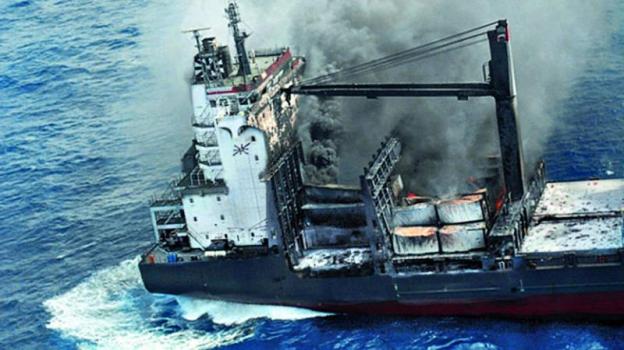
WWF-Pakistan has warned Pakistan against the import of a European ship, which is suspected to have burnt containers and cargo that may contain a substantial amount of hazardous materials such as heavy metals or PCBs.  Moreover, the vessel is suspected to carry dangerous substances in fire fighting water as well as a significant amount of fuels and oil. This container ship caught fire in July (2013) and was later towed to Port-Louis in Mauritius. (MV “HANSA BRANDENBURG”,).MV Hansa Brandenburg is a 2002-built Liberian-flagged container ship operated by the German shipping company Leonhardt & Blumberg.

WWF-Pakistan considers that this ship if imported to Pakistan may cause severe marine pollution in the Gadani area, which is already stressed because of a number of economic and industrial activities. Unplanned construction such as Fish harbour has already had serious environmental impact in the area, which is also designated as energy corridor and construction of power plants may have impact on the marine environment of the area unless proper mitigative measures are taken. According to WWF-Pakistan Technical Adviser (Marine Fisheries) Muhammad Moazzam Khan, the area of the Gadani is a part of Sonmiani, which is considered to have a rich marine biodiversity especially around Churna and Kaio islands. Dumping of toxic waste might seriously harm the fragile ecosystem of the area.

Agencies asked not to import vessel loaded with toxic chemicals, Daily Times (Pakistan) October 4, 2013


Shipbreaking Business or Europe Dumps Hazardous Waste in South Asia

Hundreds of European vessels are scrapped under hazardous conditions in South Asia every year. European parliamentarians have approved a new regulation to tackle the problem – but critics say it will have very limited impact…“With this, we will have a safer disposal of ships. About 90 percent of the European vessels are scrapped illegally and the Basel Convention has failed to do something about this,” said Swedish Green MEP Carl Schlyter, who negotiated the agreement with the Council and guided the legislation through the European Parliament. “Last year one European ship was sent to a substandard beaching yard in South Asia every day.”

European Union-registered ships will now have to be recycled at EU-approved facilities that meet specific safety and environmental requirements and are certified and regularly inspected. The European Commission would be obliged to act if NGOs report irregularities.  Both EU ships and non-EU ships would also have to carry an inventory of hazardous materials when calling at ports in the EU. The regulation is likely to enter into force in the beginning of 2014.

Patrizia Heidegger from Shipbreaking Platform, a global coalition of organisations working for safe and sustainable ship recycling, is not pleased with the outcome…She says that the regulation will not have a large impact since ship owners can easily flag out and circumvent the regulation if they don’t want to comply. The coalition wants the regulation to apply to all ships calling at European ports, instead of only the EU-flagged vessels.

Schlyter pushed for an EU fund to subsidise safe recycling of the ships. The fund would have been financed by fees on ships docked in EU ports, but the parliament rejected this part of the proposal.  “Without the ship recycling fund the new regulation won’t be effective. A ship recycling fund would put obligations on the ship owners beyond the flag,” Heidegger said.  “The fund was supported by all the political groups, but then the parliament voted it down after strong lobbying from ship owners and EU ports. The ports claimed that the arrangement would result in over 100 percent increase in fees, which is not true,” Schlyter told IPS.  Schlyter says that with a fund in place it would not pay to flag out. He says that the commission might propose creation of a fund later if the new regulation proves insufficient….

European ship owners dumped 365 toxic ships on South Asian beaches last year, according to the Shipbreaking Platform.  Of the top 10 European “global dumpers” in 2012, Greek ship owners were number one, dumping 167 ships on Asian beaches. German ship owners represented the second largest group of toxic ship dumpers with 48 ships, followed by ship owners from the UK with 30 ships, and Norway with 23 ships scrapped on beaches in South Asia.  According to the coalition most of the end-of-life ships sent by European ship owners did not fly an EU flag but flags from Panama, Liberia, the Bahamas or St Kitts-and-Nevis.  Bangladesh tops the list of countries having the greatest number of ships scrapped every year, with India and Pakistan trailing far behind. Unskilled and unprotected workers manually handle poisonous chemicals and are also exposed to the risk of explosion while dismantling old vessels.

Excerpts,By  Ida Karlsson, New EU Rules ‘Fail’ Against Shipbreaking Dangers, IPS, July 17, 2013