Tag Archives: cars security cameras and right to privacy

In Your Bedroom and In Your Bathroom: META’s Glasses

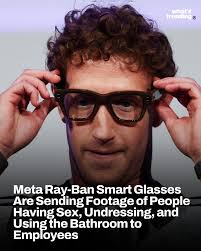
The META glasses—with chunky frames embedded with cameras and microphones—are the way Zuckerberg imagines AI will be democratized for personal users. Eventually, he wants to offer something akin to god-like superintelligence on demand. The promise of AI is that it will become more and more useful because such devices allow it to see and hear your daily life, gobbling up that information, processing it and using it to inform you about your life. But at what cost to privacy?

In March 2026, Meta was named in a lawsuit that seeks class-action status over concerns that data is being gathered from those glasses in ways that violate users’ privacy. The lawsuit, citing whistleblower complaints, alleges video captured on Meta’s devices are being routed to contractors in Africa to manually view and label the data to train Meta’s AI models. Among the videos in question? “People changing clothes, using the bathroom, engaging in sexual activity, handing financial information, and conducting other private activities inside their homes that no reasonable consumer would ever expect a stranger to watch,” the lawsuit said. 

Excerpt from Tim Higgins, The Backlash Against AI Devices That Are Always Watching, WSJ, Mar. 14, 2026
What Do You Do When You Are Up for Sale?

Under an executive order issued on February 28, 2024, specific classes of Americans’ sensitive data, including genomic, biometric, personal health, geolocation, financial and certain types of personal identifiers, will generally be barred from being sold or transferred in vast tranches to “countries of concern” or vendors known to supply data to them. The countries of concern are China, Russia, North Korea, Iran, Cuba and Venezuela, and have a record of misusing data on Americans, an official said.

In 2023, the U.S. intelligence community issued a groundbreaking report acknowledging that the vast amount of Americans’ personal data available for sale, which are often bought and repackaged by data brokers and then resold through a labyrinthine ecosystem of vendors and resellers, has provided a valuable stream of intelligence for the U.S. government and adversaries alike. The report, commissioned by Director of National Intelligence Avril Haines, admitted that such streams created significant threats to privacy, and had rapidly grown in scale such that they had begun to replicate the results of intrusive surveillance techniques, such as hacking, that are typically more targeted.

The executive order is notably silent on the purchasing of commercially available data sets by the U.S. government.

Excerpts from Dustin Volz, U.S. Limits Sales of Americans’ Personal Data to China, Other Adversaries, WSJ, Feb. 129, 2024