Tag Archives: AI and mental privacy

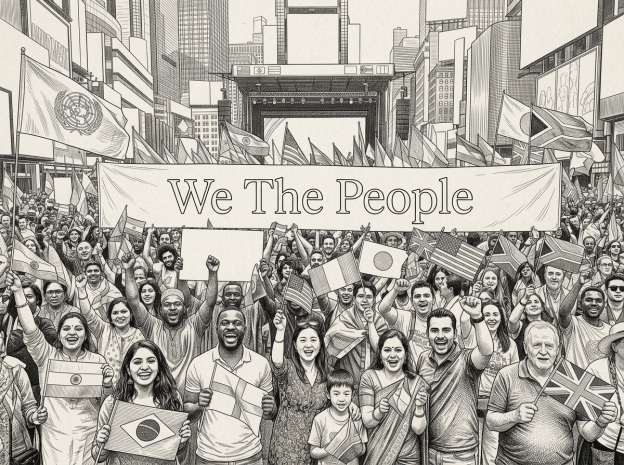
Change text to "We The People"

We The Subjects — Plundering Health Data

When geneticist Jingyuan Fu heard that an artificial intelligence (AI) group in China had downloaded a large biomedical dataset her team built in Europe, she felt pride — and a jolt of unease. “We spent millions on that dataset,” says Fu, a professor of systems medicine at the University of Groningen in the Netherlands. “And the Chinese bought the whole thing for around €2,000.” In recent years, Fu’s group, like many others, has also begun using such data as feedstock for artificial intelligence. The AI group in China that downloaded her dataset had the same goal. “The Chinese wanted all our data,” Fu says. “And they also wanted our insights into how to mine it for AI development.”
From her perspective, today’s global scramble for biomedical data looks increasingly lopsided. “China has collected a huge amount of data,” she says. “But their own data sharing and openness is very limited.”… China already holds the largest data repositories, with 1.4 billion people using the WeChat app, many of whom are already connected to hospital databases for data integration, analysis and even healthcare delivery. “China also runs the largest number of clinical trials in the world generating massive drug response and real-world-evidence datasets.”

[A]fter decades of policies pushing ‘open science’, governments are now promoting ‘data sovereignty’ — the idea that sensitive datasets should remain under national control and foreign access should be conditional. [In Europe] the stance is defensive. [Europe] is embarrassed about having allowed Chinese AI developers to plunder European biomedical databases, even while China blocks foreign access to Chinese datasets. They are now belatedly closing international access to biomedical databases, after years of championing cross-border sharing…“According to the European Commission “there are currently no partnerships involving the sharing of such data with China or the United States for AI development”….

As of April 2025, the 2.5 petabytes of omics data in the US Cancer Genome Atlas Program database are now closed to Chinese researchers, and UK Biobank data, containing whole-genome and exome sequences for 500,000 people, is no longer internationally downloadable. UK Biobank data must now be analyzed on the Biobank’s own platform, which provides a cloud-based ‘reading room’ without allowing individual data downloads…In September 2025, the US National Institutes of Health issued new regulations for genomic data repositories and users aimed at “protecting Americans’ sensitive personal health-related data from misuse by foreign adversaries” while enhancing “the privacy and autonomy of research participants”….In December 2025, the US State Department launched its Pax Silica initiative, aimed at forming an international AI alliance that hedges against China. [Furthermore], data that are generated and held by hospitals, insurers, device makers, drug makers and data platform companies. are abundant For example, US-based electronic health records vendor Epic Systems Corporation manages records for over 300 million US patients and says that it has more than 150 AI features in development…

[But]AI models developed using sequestered datasets often ‘overfit’ to the specific demographics or clinical practices of their training environment…. “Without external, international validation, these biases are frequently only discovered after they have caused clinical harm,” …[For example] many high-performing AI tools for melanoma detection show a precipitous drop in accuracy when applied to darker skin tones. “Because major datasets are often skewed toward light-skinned northern European or North American populations, “these tools can misclassify malignant lesions as benign in under-represented groups.”

Excerpt from Paul Webster, Who Owns by Health Data?, Nature Medicine,  April 24, 2026

Illustration of global remote workers connected via AI central cognition hub

How Stealing Does Look Like: Mercor

Training artificial-intelligence models demands massive amounts of fresh data. Mercor, a $10 billion startup, whose clients have included OpenAI, Anthropic and Meta, has been hit with at least seven class-action lawsuits following a third-party data breach. Allegedly, it exposed Mercor contractor information ranging from recorded job interviews to facial biometric data and screenshots of workers’ computers. A class-action suit filed on April 21, 2026 in Northern California (Ananthula versus Meror.io) alleged that Mercor accumulated applicant-vetting data, including background checks, which it shared with partners, in breach of federal regulations.

According to plaintiffs, the company’s practices include monitoring its contractors’ computers and sharing that data with clients, using recorded candidate interviews to train AI models, and training client models on materials potentially owned by other companies…Previously, The Wall Street Journal reported that Mercor sought to buy prior work materials from people on LinkedIn: Those people said they didn’t own the rights to such work. Mercor has been offering to pay $100 each for contractors’ personal-finance documents, such as spreadsheets and PowerPoint presentations, according to postings online. The company has offered $100 for people’s Google Maps histories… As workers’ screenshots are alleged to be included in the breached data, contractors are suing Mercor not only for exposing their own personal information but also the information of their other employers…

Mercor hired 30,000 contractors in 2025. Its competitors include Handshake AI, Micro1 and Surge. Recently, LinkedIn started testing its own AI training marketplace. The testing was earlier reported by Business Insider. Handshake co-founder Garrett Lord recently posted to LinkedIn that his company was looking to purchase codebases, internal databases and more. “We anonymize everything,” he wrote. “The stuff that’s not on the internet is what we need.” …The way [AI companies use contractors] make responsibility for data provenance more ambiguous….“There’s an incentive right now to figure out the rules and regulations after, and to capture as much of the market in the short term first.”

Thitipun Srinarmwong, a plaintiff in the class-action suit filed on April 21, 2016, alleged that project managers and reviewers at Mercor encouraged workers to use real data from their firms, so long as the source was redacted or slightly changed. When Srinarmwong wrote in a way so as to protect confidential information, Mercor reviewers criticized the work as too short and vague, the suit said. David Bevvino-Berv, a Mercor contractor who previously worked at Goldman Sachs, alleges in the same suit that he saw financial models and prompts that he suspected came from workers sharing proprietary information from other companies…Bevvino-Berv, the plaintiff who worked at Goldman Sachs, alleged that the Insightful software he was required to use as an employee of Mercor captured usage of his bank account, health-insurance portals and around 240 other applications. The suit also alleged that Bevvino-Berv wasn’t “clearly informed” that Insightful would capture anything beyond his Mercor-related work.

Excerpts from Katherine Bindley, Workers Sue $10 Billion AI Startup for Collecting and Exposing Personal Data, WSJ, Apr. 22, 2026

In Your Bedroom and In Your Bathroom: META’s Glasses

The META glasses—with chunky frames embedded with cameras and microphones—are the way Zuckerberg imagines AI will be democratized for personal users. Eventually, he wants to offer something akin to god-like superintelligence on demand. The promise of AI is that it will become more and more useful because such devices allow it to see and hear your daily life, gobbling up that information, processing it and using it to inform you about your life. But at what cost to privacy?

In March 2026, Meta was named in a lawsuit that seeks class-action status over concerns that data is being gathered from those glasses in ways that violate users’ privacy. The lawsuit, citing whistleblower complaints, alleges video captured on Meta’s devices are being routed to contractors in Africa to manually view and label the data to train Meta’s AI models. Among the videos in question? “People changing clothes, using the bathroom, engaging in sexual activity, handing financial information, and conducting other private activities inside their homes that no reasonable consumer would ever expect a stranger to watch,” the lawsuit said. 

Excerpt from Tim Higgins, The Backlash Against AI Devices That Are Always Watching, WSJ, Mar. 14, 2026

Porn and Ads: How ChatGPT Plans for the Future

Sam Altman of OpenAI has expressed conflicted feelings about AI erotica (i.e., porn). When asked on a podcast in August 2025 if there were decisions he had made that were “best for the world, but not best for winning,” Altman replied: “We haven’t put a sex bot avatar in ChatGPT yet.” Altman indicated erotica would boost growth and revenue, but said it wouldn’t align with his company’s long-term incentive of serving users. “I’m proud of the company and how little we get distracted by that,” Altman said. “But sometimes we do get tempted.” But later in 2025, Altman posted that “We [OpenAI] “aren’t the elected moral police of the world,” “In the same way that society differentiates other appropriate boundaries (R-rated movies, for example) we want to do a similar thing here.”

Excerpt from Sam Schechner et al., OpenAI’s Bid to Allow X-Rated Talk Is Freaking Out Its Own Advisers, WSJ,  Mar. 15, 2026

On March 23, 205, it was announced that OpenAI has hired Meta Platform’s  advertising executive Dave Dugan to lead its global ad sales efforts, marking a further step in the company’s push to build out new revenue streams around its artificial intelligence products. Dugan brings experience working with large global brands at Meta, which generated nearly $200 billion in advertising revenue in 2025. (Yahoo Finance).


AI or Just Bots: the Truth about Artificial Intelligence

Americans are becoming increasingly convinced that artificial intelligence is actually thinking like humans do…This fuels narratives about a future in which AI takes over the economy, leading to heightened insecurity for all of us while providing cover for companies that might be laying off workers for other reasons. It leads us to accept as true answers that are frequently made up or incorrect, even when we are repeatedly told that chatbots can’t stop delivering this kind of misinformation…Our cognitive biases developed to help us survive in complex social environments… We have evolved to view linguistic fluency as a proxy for intelligence, and engagement and helpfulness as indicators of trustworthiness. Builders of AI tools lean in to this deliberately. The humanlike qualities of chatbots are a calculated effort by designers and engineers to make AI more useful, but also more compelling and stickier [i.e. addictive]—just like social media.

Microsoft AI chief Mustafa Suleyman… warned that today’s seemingly conscious AIs [consists of a bunch of] highly accelerated information processors. “These systems are not waking up,” he wrote. “They are retracing and mirroring the contours of human drama and debate, as documented in their vast training data.” He recommends a solution: “Developers must actively engineer the illusion of consciousness out of the products.”…

Humans have a tendency to anthropomorphize animals and even inanimate objects, says Ayanna Howard, dean of Ohio State University’s College of Engineering and a robotics….Humans’ trusting nature makes sense for social creatures who must cooperate with members of their own tribe to survive. With AI and robots, however, this same tendency leads us to trust any system that appears to listen, understand and want to help, a phenomenon Howard calls “over-trust.” Today’s AIs are engineered to actively induce us to over-trust them, she adds. They do this by behaving in ways that are friendly and helpful, mimicking us through memory and personalization.

Excerpt from Christopher Mims, Why Even Smart People Believe AI Is Really Thinking, WSJ, Mar. 20, 2026

The Right to Mental Privacy: How AI Can Read You Like a Book

A technique called ‘mind captioning’ described in a scientific paper published on November 5, 2025 generates descriptive sentences of what a person is seeing or picturing in their mind using scans of their brain activity. It is based 1) on artificial intelligence models trained on the text captions of thousands of videos,0 and 2) brain scans of people watching them. The technique could help those with language difficulties to communicate better… But it raises concerns of mental privacy…

Excerpt from Max Kozlov, Mind-captioning’ AI decodes brain activity to turn thoughts into text, Nature, Nov. 5, 2025