Tag Archives: climate change and mining

Another Laughingstock: Carbon Offsets

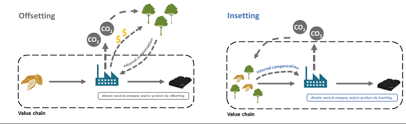
Carbon credits feature prominently in corporate climate strategies and have sparked public debate about their potential to delay companies’ internal decarbonisation. While industry reports claim that credit purchasers decarbonize faster, rigorous evidence is missing. This study (see below) provides an in-depth analysis of 89 multinational companies’ historical emission reductions and climate target ambitions. Based on self-reported environmental data and more than 400 sustainability reports, we find no significant difference between the climate strategies of companies that purchased credits and those that did not. Voluntary offsetting is not a central part of most companies’ climate strategies, and many pass credit costs directly onto their customers. While the companies within our sample retired one-fourth of all carbon credits in 2022, the top five offsetters’ expenditures on voluntary emission offsetting are, on average, only 1 percent relative to their capital expenditures.

Abstract from Niklas Stolz &  Benedict S. Probst, The negligible role of carbon offsetting in corporate climate strategies, Nature Communications,  Sept. 10, 2025
The Real Price for ‘Green’ Energy

Civilization would not exist were it not for miners. Every year the world’s oldest industry supplies hundreds of megatons of the primary metals and minerals that are essential to all subsequent industries—from medical devices to kitchen appliances, aircraft, toys, power plants, computers and cars. Hence it’s consequential when the governments of Europe and the U.S. implement policies requiring that global mining expand, and soon, by 400% to 7,000%. Those policies are meant to force a transition away from the oil, natural gas and coal that supply 80% of global energy. But it’s an unavoidable fact that building the favored transition machines—wind turbines, solar panels, electric cars—will require astonishing quantities of minerals to produce the same amount of energy.

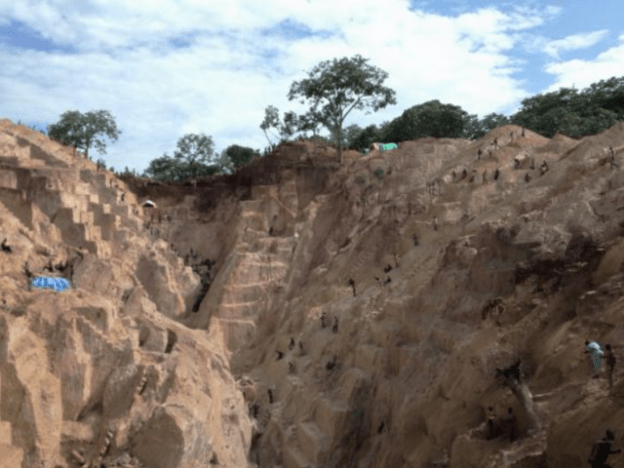
The other challenge involves people. Mining has always been as much about people as it has about geology, technology and money. In “The War Below: Lithium, Copper, and the Global Battle to Power Our Lives,” Ernest Scheyder highlights the myriad difficulties faced by the people who build mines, as well as those hurt by or opposed to them. As Mr. Scheyder notes, mining is “dirty work.” That’s no invective; it’s just reality…He focuses on the social and political dynamics that accompany big mining projects because, as he writes, there’s “no way around the fact that mines are gargantuan creations that maim the Earth’s surface.” He makes clear that his goal isn’t to question the need for more mines but to understand “whether these lands should be dug up in an attempt to defuse climate change,” especially when some lands are considered sacred by their neighbors and inhabitants.

Excerpts, ‘Mark P. Mills, The War Below’ Review: Digging for Minerals, WSJ, Mar. 3, 2024

Greening the Mining Industry

An Australian regulator recently told Peabody Energy Glencore they couldn’t export coal from a new mine to countries that haven’t signed the Paris climate agreement. Two other Australian coal projects were scuttled in 2019, partly out of concern about greenhouse-gas emissions overseas.  Investors, too, are growing inquisitive about miners’ records on their customer emissions—partly out of fear about potential liability. Miners are responding by increasing carbon-impact disclosure, forming alliances with buyers and investing in technology to cut emissions from steel mills and power plants.  BHP  has said its scope 3 emissions—pollution mostly created when customers transport and use the commodities it produces—are almost 40 times greater than those generated at its own operations.

In the oil industry, facing similar pressures, there is friction among large companies over whether to commit to reducing greenhouse-gas emissions from products such as gasoline—in big part because emissions vary hugely depending on the vehicle…

Threats to miners’ business go beyond pushback on new projects. Consumer brands could stop buying commodities they consider too dirty, experts say. Many are already innovating with recycled materials.

In July 2019, BHP pledged to spend $400 million over five years to develop technologies that can reduce emissions both from its operations and its customers’.  “We won’t stop at the mine gate,” BHP Chief Executive Andrew Mackenzie said. …Rio Tinto is also drawing up scenarios for decarbonizing the steel industry. Success could materially affect the value of its core iron-ore business, it said.  Meantime, miners are touting their role in the shift to a low-carbon economy by producing commodities such as copper and nickel for wind turbines and electric vehicles.

Excerpts from Rhiannon Hoyle, Miners’ New Worry: Other People’s Pollution, WSJ, Oct. 9, 2019