Tag Archives: coal

Un-addicted to Coal – United States

The U.S. Environmental Protection Agency released on June 2, 2014 the Clean Power Plan proposal, which for the first time cuts carbon pollution from existing power plants, the single largest source of carbon pollution in the United States…

Power plants account for roughly one-third of all domestic greenhouse gas emissions in the United States. While there are limits in place for the level of arsenic, mercury, sulfur dioxide, nitrogen oxides, and particle pollution that power plants can emit, there are currently no national limits on carbon pollution levels.

[Goals to be achieved by 2030]

· Cut carbon emission from the power sector by 30 percent nationwide below 2005 levels, which is equal to the emissions from powering more than half the homes in the United States for one year;

· Cut particle pollution, nitrogen oxides, and sulfur dioxide by more than 25 percent as a co-benefit;

· Avoid up to 6,600 premature deaths, up to 150,000 asthma attacks in children, and up to 490,000 missed work or school days—providing up to $93 billion in climate and public health benefits; and

· Shrink electricity bills roughly 8 percent by increasing energy efficiency and reducing demand in the electricity system.

The Clean Power Plan will be implemented through a state-federal partnership under which states identify a path forward using either current or new electricity production and pollution control policies to meet the goals of the proposed program. The proposal provides guidelines for states to develop plans to meet state-specific goals to reduce carbon pollution and gives them the flexibility to design a program that makes the most sense for their unique situation. States can choose the right mix of generation using diverse fuels, energy efficiency and demand-side management to meet the goals and their own needs. It allows them to work alone to develop individual plans or to work together with other states to develop multi-state plans.

Also included in today’s proposal is a flexible timeline for states to follow for submitting plans to the agency—with plans due in June 2016, with the option to use a two-step process for submitting final plans if more time is needed. States that have already invested in energy efficiency programs will be able to build on these programs during the compliance period to help make progress toward meeting their goal.

Excerpt, EPA Proposes First Guidelines to Cut Carbon Pollution from Existing Power Plants/Clean Power Plan is flexible proposal to ensure a healthier environment, spur innovation and strengthen the economy, US EPA Press Release, June 2, 2014
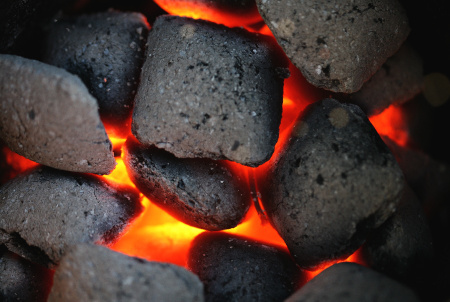
The Fatal Attraction to Coal: World

Coal is cheap and simple to extract, ship and burn. It is abundant: proven reserves amount to 109 years of current consumption… Just as this wonder-fuel once powered the industrial revolution, it now offers the best chance for poor countries wanting to get rich.  Such arguments are the basis of a new PR campaign launched by Peabody, the world’s largest private coal company (which unlike some rivals is profitable, thanks to its low-cost Australian mines). And coal would indeed be a boon, were it not for one small problem: it is devastatingly dirty. Mining, transport, storage and burning are fraught with mess, as well as danger. Deep mines put workers in intolerably filthy and dangerous conditions. But opencast mining, now the source of much of the world’s coal, rips away topsoil and gobbles water. Transporting coal brings a host of environmental problems.

The increased emissions of carbon dioxide from soaring coal consumption threaten to fry the planet…he CO2 makes the oceans acid; burning coal also produces sulphur dioxide, which makes buildings crumble and lungs sting, and other toxic chemicals. By some counts, coal-fired power stations emit more radioactivity than nuclear ones. They release tiny, lethal particulates. Per unit generated, coal-fired stations cause far more deaths than nuclear ones, and more even than oil-fired ones.

But poverty kills people too, and slow growth can cost politicians their jobs. Two decades of environmental worries are proving only a marginal constraint on the global coal industry. The International Energy Agency has even predicted that, barring policy changes, coal may rival oil in importance by 2017… As countries get richer they tend to look for alternatives—China is scrambling to curb its rising consumption. But others, such as India and Africa, are set to take up the slack

America’s gas boom has prompted its coal miners to seek new export markets, sending prices plunging on world markets. So long as consumers do not pay for coal’s horrible side-effects, that makes it irresistibly cheap. In Germany power from coal now costs half the price of watts from a gas-fired power station. … Its production of power from cheap, dirty brown coal (lignite) is now at 162 billion kilowatt hours, the highest since the days of the decrepit East Germany.  Japan, too, is turning to coal in the wake of the Fukushima nuclear disaster. On April 11th the government approved a new energy plan entrenching its role as a long-term electricity source.

International coal companies face two worries. One is that governments may eventually impose punitive levies, tariffs and restrictions on their mucky product. The other is the global glut. Prices for thermal coal (the kind used for power and heating) are at $80-85 a tonne, which barely covers the cost of capital. Some Australian producers are even mining at a loss, having signed freight contracts with railways and ports that make them pay for capacity whether they use it or not….

Perhaps the biggest hope for all involved in the coal industry is technology. Mining and transporting coal will always be messy, but this could be overlooked were it burned cheaply and cleanly. Promising technologies abound: pulverising coal, extracting gas from it, scrubbing emissions and capturing the CO2. But none of these seems scalable in the way needed to dent the colossal damage done by coal. And all require large subsidies—from consumers, shareholders or taxpayers.

A $5.2 billion taxpayer-supported clean-coal plant in Mississippi incorporates all the latest technology. But at $6,800 per kilowatt, it will be the costliest power plant yet built (a gas-fired power station in America costs $1,000 per kW). At those prices, coal is going to stay dirty.

The fuel of the future, unfortunately: A cheap, ubiquitous and flexible fuel, with just one problem, Economist,  Apr. 19, 2014, at 55