In paper in 2018 in Nature Plants, researchers at the Royal Botanic Gardens, Kew, detail for the first time the scale of threatened species that are unable to be conserved in seed banks. The paper reveals that when looking at threatened species, 36 per cent of ‘critically endangered species produce recalcitrant seeds . This means they can’t tolerate the drying process and therefore cannot be frozen, the key process they need to go through to be safely ‘banked’.
In the paper, Kew scientist Dr. John Dickie, former Kew scientist Dr. Sarah Wyse, and former Director of Science at Kew Prof. Kathy Willis, found that other threatened categories and global tree species list also contain high proportions of species that are unbankable including 35% of ‘vulnerable’ species, 27% of ‘endangered’ species and 33% of all tree species.
Among these species are important UK heritage trees such as oaks, horse chestnuts and sweet chestnuts, as well as worldwide food staples like avocado, cacao, and mango. This latest research reveals that the scale of plants unable to be conserved in seed banks is much higher for threatened species. The issue is particularly severe for tree species, especially those in tropical moist forests where a half of the canopy tree species can be unsuitable for banking…
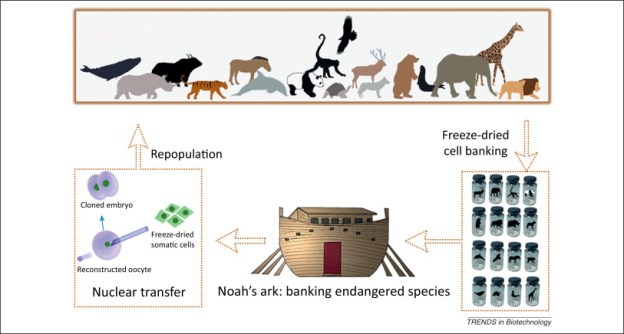
Currently, seed banking is the most commonly practiced way of conserving plantsoutside of their natural habitats. Seed banking works as an ‘insurance policy’ against the extinction of plants in the world—especially for those that are rare, endemic and economically important—so that they can be protected and utilised for the future.
[The scientists proposed]cryopreservation—a form of preservation using liquid nitrogen which offers a potential long-term storage solution for recalcitrant seeds. In seed banks, seeds are dried and frozen at -20°C whereas cryopreservation involves removing the embryo from the seed and then using liquid nitrogen to freeze it at a much colder temperature of -196°C…As well as allowing ‘unbankable’ species to be stored, cryopreservation also helps to extend the lifespans of orthodox seeds that otherwise have storage lives that are too short at -20°C.
Excerpts from Seed banking not an option for over a third of threatened species
November 2, 2018, Royal Botanic Gardens, Kew
 Law-In-Action