Tag Archives: earthquake prone areas and nuclear power plants

The Devil’s Scenario: Drone Striking Nuclear Power Plant

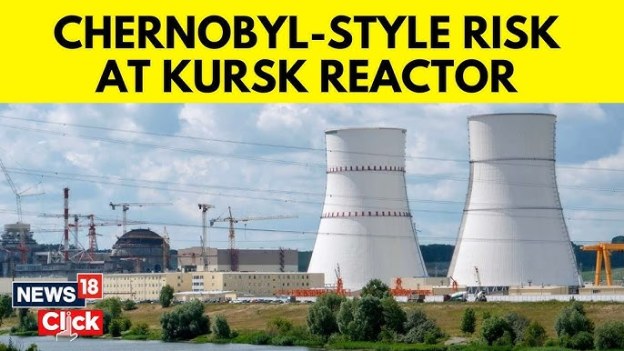
The International Atomic Energy Agency (IAEA) was informed on August 22, 2024 by Russia that the remains of a drone had been found within the Kursk nuclear power plant. Russian President Vladimir Putin on Thursday accused Ukraine of trying to strike the Kursk nuclear power plant in an overnight attack. The nuclear plant is located in western Russia, where fighting is raging between Russian and Ukrainian forces, is especially vulnerable to a serious accident because it lacks a protective dome that could shield it from missiles, drones or artillery, the head of IAEA said on August 27, 2024.

The nuclear plant– the same model as the Chernobyl plant in Ukraine that witnessed the world’s worst civilian nuclear disaster in 1986 – lacks the containment dome and protective structure that is typical of modern nuclear power stations. According to Grossi, director-general of the IAEA: “This means that the core of the reactor containing nuclear material is protected just by a normal roof. This makes it extremely exposed and fragile, for example, to an artillery impact or a drone or a missile,” So this is why we believe that a nuclear power plant of this type, so close to a point of contact or a military front, is an extremely serious fact that we take very seriously.”

Excerpt from UN watchdog says Russian nuclear plant ‘extremely exposed’ if attacked, Reuters, Aug. 27, 2024
Earthquake-Tested Nuclear Power Plants

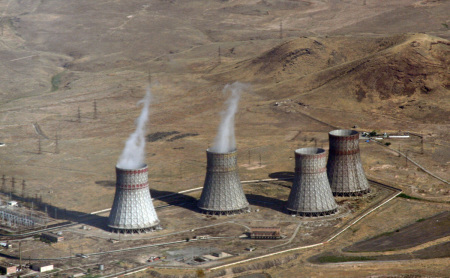
The fate of the 41-year-old Armenian Nuclear Power Plant (ANPP), commonly known as Metsamor, is up for debate yet again as reports have emerged questioning whether the Armenian government will abandon plans for renewal or replacement altogether.  Metsamor, which is the only nuclear energy plant in the South Caucasus and one of the five remaining Soviet nuclear reactors of its kind, provides energy to 40% of Armenian consumers. Despite its critical role in Armenia’s modern energy economy, its aging design and proximity to earthquake-prone areas make it among the most dangerous nuclear plants in the world.

Built in 1976, the plant was shut down in 1989 by Soviet officials, following the devastating Spitak Earthquake. However, the economic difficulty and energy scarcity in Armenia after the collapse of the USSR in 1991, motivated the new Armenian government to relaunch the second of the plant’s two units.  Since then, the reactor’s operations have been a contentious issue both domestically and internationally. The issue was even addressed in an impending EU-Armenia trade agreement, where a 350-page, publicly-released draft text stipulated the reactor should be closed and replaced (though practical measures in enforcing this were notably vague).

For years, Armenian officials have pledged to build a new nuclear plant, which was originally scheduled to expire in 2016, but in 2015, an extension was granted by the International Atomic Energy Agency (IAEA) allowing the site to continue operating until 2027…

Replacing the plant will require serious investment—around five billion dollars—which would fund a medium capacity plant (600 megawatts). Closing the plant would deprive millions of people of electricity, without a viable alternative, and would deal a blow to the security of the country.

Excerpts from The Uncertain Fate of Armenia’s Nuclear Power Plant, The Armenian Weekly, Oct. 20, 2017