Tag Archives: EW (electronic warfare)

Who is Ready for the Future Global War?

The Economist magazine estimates that the new defense commitments of all countries …will generate over $200bn-$700bn in extra defense spending globally each year…
China’s defense budget has grown by about 75% in real terms in the past ten years. It wants to “basically complete modernization” of its forces by 2035, and become a “world class” military power by 2049. America thinks China wants the capability to invade Taiwan as early as 2027… Overall America’s advantage over its rivals has eroded in the past century…During the first, second and cold wars America’s adversaries had much smaller economies than America did. No longer. Today China’s GDP alone is nearly 80% of America’s.

In the decades after the cold war, the thinking was that to spend less on armies meant to spend more on infrastructure and public services and to lower debt or taxes. Since the 1960s the world has “released” about $4trn a year of spending at current prices in this way, equivalent to the global government budget for education. Now the peace dividend is turning into a “war tax”. How heavy will it be?…

America, by far the world’s largest defense spender, is devoting growing sums to research and development of future weapons. This includes hypersonic missiles, to catch up with China and Russia; “directed energy” such as powerful lasers to shoot down drones and missiles; and artificial intelligence and robotics. It is also buying as many munitions as its factories can produce—from 155mm artillery shells to anti-ship missiles. The war in Ukraine has exposed the extraordinary quantities of munitions needed in a conflict, as well as the inability of peacetime production lines to meet such demand.

America, Russia and China are investing in their nuclear arsenals, too. America is upgrading all legs of its “triad” of ground-, air- and submarine-launched nukes. Russia is working on esoteric weapons, such as the long-distance, nuclear-powered Poseidon torpedo designed to set off an underwater nuclear explosion that, propagandists boast, can cause destructive tidal waves. China is quickly expanding its arsenal, from several hundred warheads to 1,500 by 2035, according to the Pentagon…

Cyber-security, drones and satellite technology straddle both the civilian and military worlds. SpaceX, founded by Elon Musk, has launched American military satellites. Ukrainian warriors make extensive use of his Starlink constellation of satellites. It all amounts to a change of cultural mindset from tech firms that once shunned defense as morally tainted. A defense-tech ecosystem has sprung up in America…

One way or another, a new era of rearmament beckons. As General Mark Milley, chairman of America’s joint chiefs of staff, told the Senate recently: “Preventing great-power war through readiness and deterrence is very expensive, but not as expensive as fighting a war.” And the only thing more costly than that, as he explained, is losing one.

Excerpts from Farewell peace dividend: The Cost of the Global Arms Race, Economist, May 27, 2023 

Under Zero Trust: the U.S. Chip Resurgence

The Defense Advanced Research Projects Agency launched its Electronic Resurgence Initiative (ERI)  to help reboot a domestic chip industry that has been moving steadily offshore for decades…. Program officials and chip industry executives foresee the emergence of a “5th generation of computing” based on current cloud infrastructure while combining AI, the Internet of Things (IoT) and 5G wireless networks to deliver big data.

“The U.S. microelectronics industry is at an inflection point,” Ellen Lord, undersecretary of defense for acquisition and sustainment, told the virtual ERI summit. After decades of offshoring of chip fabrication, packaging and testing capabilities, “How do we reverse this trend?”  The Defense Department is expanding its technology base efforts by implementing a “step-by-step process for reconstituting the microelectronics supply chain,” focusing on various segments of the semiconductor ecosystem, including memory devices, logic, ICs and advanced packaging along with testing and assembly.

“While DoD does not drive the electronics market,” constituting only about 1 percent of demand, “we can drive significant R&D,” ERI is advancing public-private partnerships that provide a framework for commercial innovation. The result would be “pathfinder projects” geared toward a renewal of U.S. chip manufacturing. As trade frictions with China grow, ERI is placing greater focus on ensuring the pedigree of U.S. electronics supply chain. “We need to find a path to domestic sources,” said Lord.

While nurturing government-industry partnerships as part of an emerging next-generation U.S. industrial policy, this year’s DARPA summit also emphasized chip standards and processes for securing fabs, foundry services, devices and foundational microelectronics. In that vein, U.S. officials stressed new chips metrics like “quantifiable assurance” to secure dual-use devices that could end up in weapons or an IoT device.

“Our interests to protect both the confidentiality and the integrity of our supply chain are aligned with commercial interests, and we will continue to work across government and industry to develop and implement our quantitative assurance strategy based on zero trust,” said Nicole Petta, principal director of DoD’s microelectronics office. The “zero trust” approach assumes no device is safe, and that all microelectronics components must be validated before deployment. The framework marks a philosophical departure from DoD’s “trusted foundry” approach instituted in the 1990s, largely because “perimeter defenses” failed to account for insider threats…

DARPA Chip Efforts Pivots to Securing US Supply Chain, https://www.hpcwire.com, Aug. 24, 2020

Electronic Warfare: Algorithm Dominance

US Army Secretary Eric Fanning announced [in August 2016] a new Rapid Capabilities Office to accelerate the development of cyber, electronic warfare…That rapid technological progression is on full display, for example, in eastern Ukraine, where Ukrainian soldiers have been battling Russian-backed forces since 2014. For example, Russian-backed separatists have used EW and GPS-spoofing to jam and misdirect the drones that Ukrainian troops use to scope out enemy positions. “Over the past several years we’ve learned from what we’ve seen from Russia and Ukraine, and later in Syria, and from the different capabilities they’ve brought to the battlefield. We’ve seen the combination of unmanned aerial systems and offensive cyber and advanced electronic warfare capabilities and how they provided Russian forces a new degree of sophistication,” said Fanning…

“My guess is … that after 15 years of doing largely counter-insurgency operations in the Middle East, the Army is now taking a look at how it would do large force-on-force conflict in a place like Europe. ”

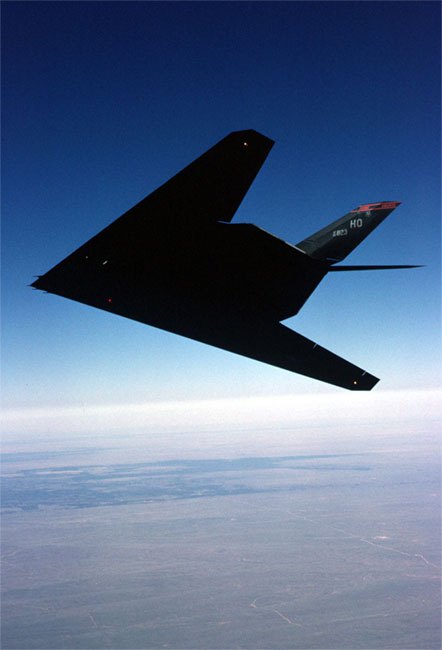
The pace of innovation in EW — in the form of novel new waveforms that can disrupt an adversary’s electronics, paint enemy stealth aircraft* etc. — has surprised many in the military. That’s because EW innovation has become less and less a hardware challenge and more of a software challenge. You can make a new weapon as quickly as your algorithm can pull together a new waveform from the spectrum. But the military, too often, still procures EW assets the same way it buys jets and boats. Slowly.

Excerpts from To Counter Russia’s Cyber Prowess, US Army Launches Rapid-Tech Office, DefenseOne, Aug. 31, 2016

*Radar-absorbent material (RAM), often paints used on aircraft,: absorb radiated energy from a ground or air based radar station into the coating and convert it to heat rather than reflect it back thus avoiding detection by the radar.