Tag Archives: export controls rare earths

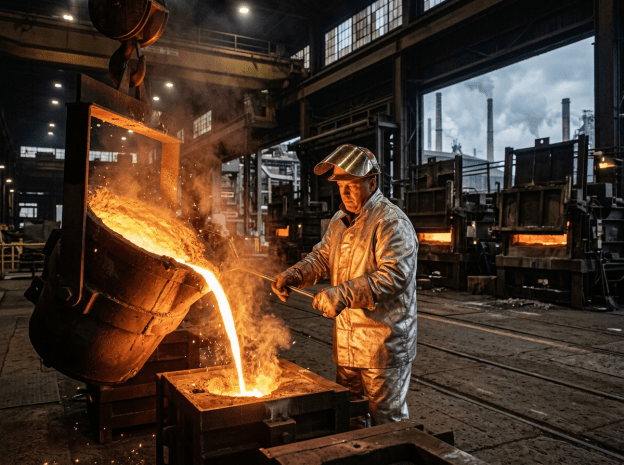
Worker in protective gear pouring molten metal into mold in foundry

The Struggle to Catch Up with the Great Industrial Superpower-It’s Real

In 2026, the U.S. Army is leasing land on bases across the country to companies that will build and operate critical mineral processing plants. The Army awarded long-term leases to mining and extraction companies Titan Mining Corporation, EnergyX, Ioneer and REalloys for processing and refining critical minerals that are essential to American defense, but the production of which China dominates.

The military has been seeking ways to make better use of its 15 million acres of property, including opening them up to data center construction…The critical minerals processing plants will be located on Army depots that are already heavy industrial sites…EnergyX has already acquired more than 50,000 acres of mineral rights for lithium deposits near the Red River Army Depot on the border between Texas and Arkansas….“It’s a pretty cool situation, because the lithium that can go into those batteries can come from right underneath the ground in which they stand,” said Teague Egan, the founder and CEO of EnergyX.

China controls around 90% of the processing of many rare-earth elements…[As a result] the margins [of processing and refining] critical minerals are so low and the startup costs for these plants, without government subsidies, are so high that they often don’t make financial sense. “The reason it works in China is because it is the global industrial superpower,” according to Alvin Camba, scientist at the defense company Lyvi.

Excerpt from Heather Somerville et al., Army Will Lease Land on Bases for Critical Mineral Production, June 25, 2026
Free Trade is Dead: Protect, Protect, Protect…

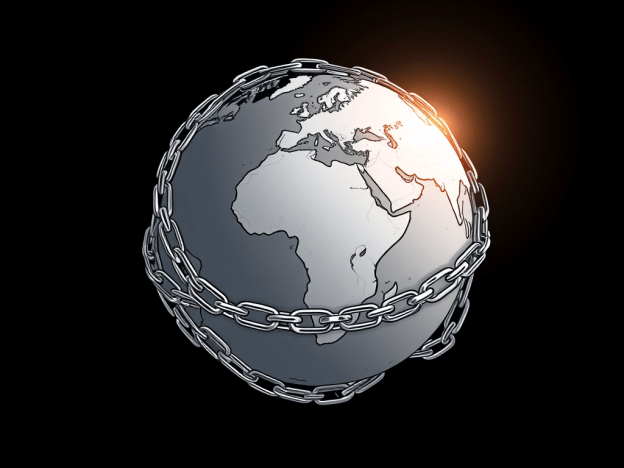
There were three times the number of discriminatory trade policies—including tariffs, export controls and sanctions—introduced from 2020 through 2025 than in the preceding five years. The world’s shift to protectionism likely stems “from a succession of shocks,” starting with the pandemic-related disruptions of 2020, followed by China’s power-market shortage in 2021* and then the food and energy market crises in 2022 after Russia invaded Ukraine.

As a result, countries have become much more focused on resource security. India, for example, stocked up on rice inventories after the 2022-23 global food crisis. China, which typically consumes about 14 million tons of copper a year, has been buying 1 million to 2 million tons more than its economy needs…The country has also been building up its oil reserves. Earlier this month, the U.S. unveiled a $12 billion critical-minerals stockpile.

Excerpt from Jinjoo Lee, Global Markets No More: Trade Barriers Mess With Commodities From Metals to Oil, WSJ, Feb. 21, 2026

  • In late 2021, China experienced a severe electricity supply crisis that affected 20 provinces. Industrial activity was curtailed, and even households suffered prolonged outages in some areas.

Who is Afraid of China? the United States Army

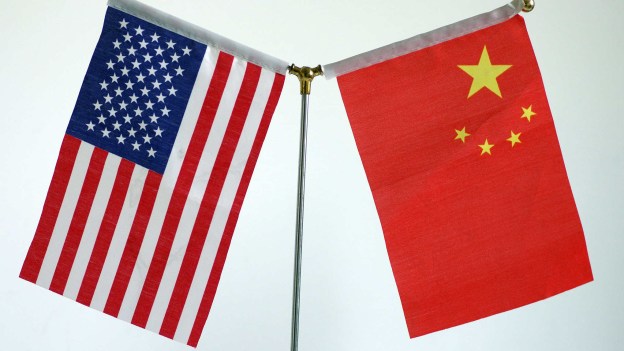
China plans to ease the flow of rare earths and other restricted materials to the U.S. by designing a system that will exclude companies with ties to the U.S. military while fast-tracking export approvals for other firms…The “validated end-user” system, or VEU, would enable Chinese leader Xi Jinping to follow through on a pledge to President Trump to facilitate the export of such materials while ensuring that they don’t end up with U.S. military suppliers, a core concern for China…  The VEU mechanism that Beijing is considering is modeled on U.S. laws and procedures, as is much of Beijing’s export-control architecture.

Under the American version of the VEU system, which has been active since 2007, certain Chinese companies are cleared to buy sensitive goods under a general authorization—essentially a simplified export-approval mechanism—instead of needing individual licenses for each purchase. This makes it easier to import controlled goods such as chemicals or chip-making equipment, but requires companies to put up with U.S. government inspections of their facilities, among other steps, to verify compliance with the program…

Companies in the U.S. and Europe have complained of reduced access to rare-earth magnets from China. Though China has periodically agreed to relax magnet restrictions, Chinese rare-earth magnet exports to the U.S. declined 29% in September 2025 from the month before

Excerpt from Jon Emont et al, China Hatches Plan to Keep U.S. Military From Getting Its Rare-Earth Magnets, WSJ, Nov. 10, 20215