Tag Archives: weaponize rare earths trade

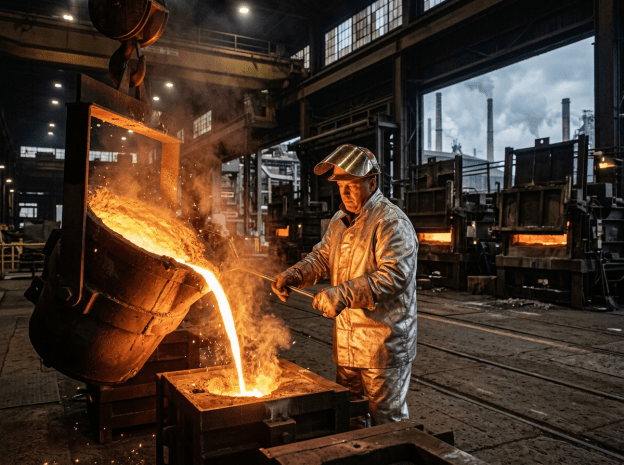
Worker in protective gear pouring molten metal into mold in foundry

The Struggle to Catch Up with the Great Industrial Superpower-It’s Real

In 2026, the U.S. Army is leasing land on bases across the country to companies that will build and operate critical mineral processing plants. The Army awarded long-term leases to mining and extraction companies Titan Mining Corporation, EnergyX, Ioneer and REalloys for processing and refining critical minerals that are essential to American defense, but the production of which China dominates.

The military has been seeking ways to make better use of its 15 million acres of property, including opening them up to data center construction…The critical minerals processing plants will be located on Army depots that are already heavy industrial sites…EnergyX has already acquired more than 50,000 acres of mineral rights for lithium deposits near the Red River Army Depot on the border between Texas and Arkansas….“It’s a pretty cool situation, because the lithium that can go into those batteries can come from right underneath the ground in which they stand,” said Teague Egan, the founder and CEO of EnergyX.

China controls around 90% of the processing of many rare-earth elements…[As a result] the margins [of processing and refining] critical minerals are so low and the startup costs for these plants, without government subsidies, are so high that they often don’t make financial sense. “The reason it works in China is because it is the global industrial superpower,” according to Alvin Camba, scientist at the defense company Lyvi.

Excerpt from Heather Somerville et al., Army Will Lease Land on Bases for Critical Mineral Production, June 25, 2026
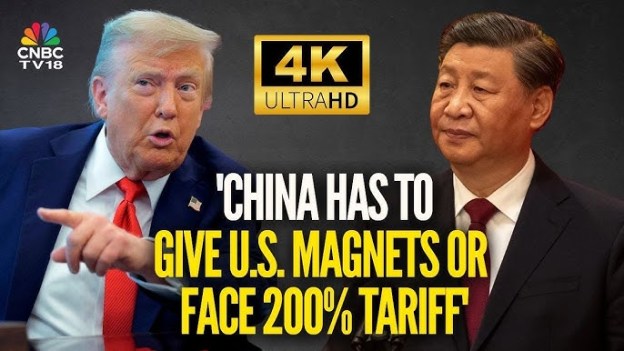
While United States Hibernated, China Salivated

When China tightened restrictions on rare-earth exports in October 2025, stunning the United States, it was the latest reminder of Beijing’s control over an industry vital to the world economy. China’s dominance was decades in the making. Since the 1990s, China has used aggressive tactics to build up and maintain its lock over rare-earth minerals, which are essential to making magnets needed for cars, wind turbines, jet fighters and other products. Beijing provided financial support to the country’s leading companies, encouraged them to snap up rare-earth assets abroad, and passed laws preventing foreign companies from buying rare-earth mines in China. It eventually consolidated its domestic industry from hundreds of businesses into a few giant players, giving it further leverage over prices…

In 1995, Chinese state-linked companies received U.S. government approval to buy the rare-earth materials and magnet business started by General Motors, called Magnequench. In the following years, the Chinese ownership shut down all its rare-earth plants in the U.S. and shipped the equipment to China. Top American engineers were offered opportunities to go to China and set up new plants there.  “There were some colleagues that were dead set against it, saying they would never help China learn our technology,” said one magnet expert who ultimately agreed to go to China. “When I arrived, I could not believe what I was seeing. The number of new factories being built, and the rate at which they were being built, was mind-blowing,” he said….  By the mid-2000s, the U.S. rare-earth industry had been all but wiped out. Mountain Pass, America’s major rare-earth mine, had been shut down, as had virtually all American facilities that processed rare earths and turned them into magnets. China produced around 97% of the world’s rare earths, giving it what was effectively a global monopoly…

By 2021, the U.S. government was growing more worried about China’s ability to weaponize rare earths, causing prices to jump. Washington began offering large-scale funding for new rare-earth plants, including a refinery in Texas to be built by Lynas, an Australian rare-earth company. But in 2021, the Association of China Rare Earth Industry issued a warning: to China’s leadership If Beijing wanted to maintain “China’s absolute dominant position,” the country needed to relax state production quotas. Beijing responded in 2022 by pushing up output by 25%, the most in years, with another large increase the following year. Prices tanked, hitting the bottom lines of Western producers and leading some to unload assets…Beijing also introduced new measures preventing the transfer of its rare-earth processing technology abroad.

Excerpt from Jon Emont, How China Took Over the World’s Rare-Earths Industry, WSJ. Oct. 19, 2025