Tag Archives: gammy squirrels

Mining the Seabed: By hook or by crook

The Trump administration is reportedly considering an executive order that would accelerate deep-sea mining in international waters by allowing companies to bypass a United Nations-backed review process. The order would affirm the United States’ right to extract critical minerals from the ocean floor, enabling companies to seek permits directly from the National Oceanic and Atmospheric Administration (NOAA).

The International Seabed Authority (ISA), established in 1982 under the UN Convention on the Law of the Sea (UNCLOS)—which the U.S. has not ratified—has spent years developing regulations for deep-sea mining.  In 2021, the island nation of Nauru sponsored Canada’s The Metals Company (TMC) to begin deep-sea mining, forcing the ISA to draft rules before any company could start extracting minerals in international waters. The 36-member ISA council has since met repeatedly to finalize regulations. In March 2025, officials gathered in Jamaica to review hundreds of proposed amendments to a 256-page draft mining code, but the session ended without a resolution.

Frustrated by the ISA’s slow progress, TMC in March 2025 formally urged the Trump administration to issue deep-sea mining permits, arguing that “commercial industry is not welcome at the ISA.” “The Authority is being influenced by a faction of States allied with environmental NGOs who see the deep-sea mining industry as their ‘last green trophy,’” TMC chairman and chief executive, Gerard Barron. “They have worked tirelessly to continuously delay the adoption of the Exploitation Regulations with the explicit intent of killing commercial industry.”

Governments interested in developing deep-sea mining within their territorial waters — typically 200 nautical miles from shore — include the Cook Islands, Norway and Japan.

Proponents of seabed mining contend that its environmental impact is lower than land-based extraction. Critics warn that the long-term consequences remain uncertain and advocate for further research before large-scale operations begin.

Excerpt from Cecilia Jamasmie, Trump eyes executive order to fast-track deep-sea mining, Mining.com, Apr. 1, 2025

Gummy Squirrels v. Cobalt: Mining the Seabed for Real


Sometimes the sailors’ myths aren’t far off: The deep ocean really is filled with treasure and creatures most strange. For decades, one treasure—potato-size nodules rich in valuable metals that sit on the dark abyssal floor—has lured big-thinking entrepreneurs, while defying their engineers. But that could change April 2019 with the first deep-sea test of a bus-size machine designed to vacuum up these nodules.

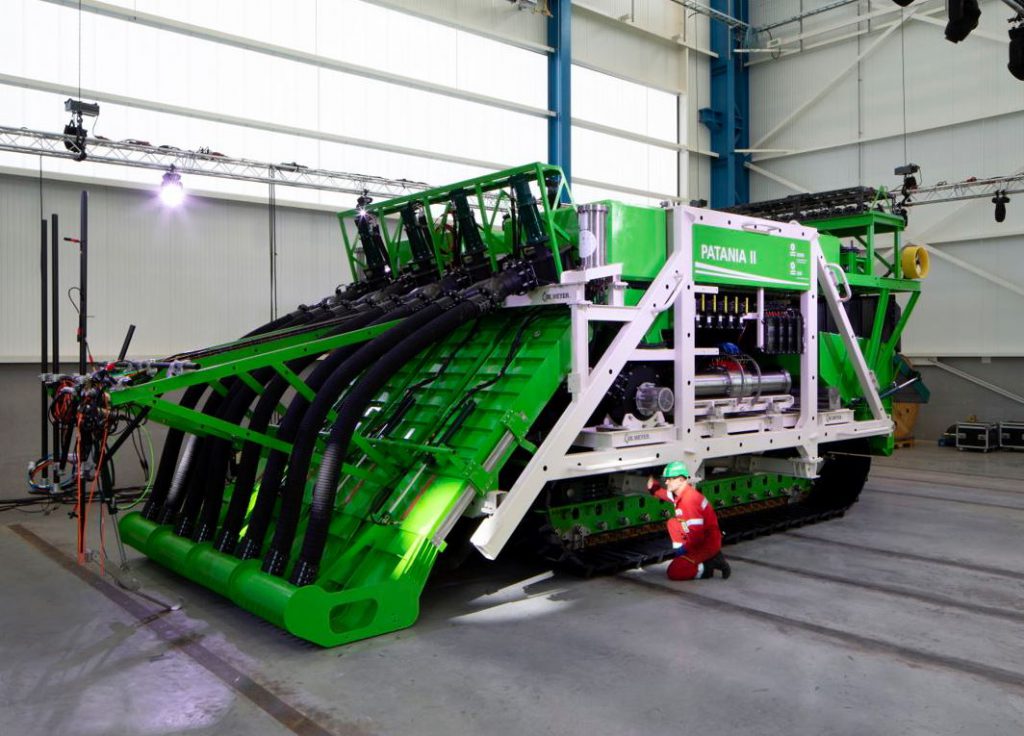
The trial, run by Global Sea Mineral Resources (GSR), a subsidiary of the Belgian dredging giant DEME Group, will take place in the international waters of the Clarion-Clipperton Zone (CCZ), a nodule-rich area the width of the continental United States between Mexico and Hawaii. The Patania II collector, tethered to a ship more than 4 kilometers overhead, will attempt to suck up these nodules through four vacuums as it mows back and forth along a 400-meter-long strip.

Patantia Vessel for Deep Sea Mining by DEME

Ecologists worried about the effect of the treasure hunt on the fragile deep-sea organisms living among and beyond the nodules should get some answers, too. An independent group of scientists on the German R/V Sonne will accompany GSR’s vessel to monitor the effect of the Patania II’s traverses. The European-funded effort, called MiningImpact2, will inform regulations under development for seafloor mining,…

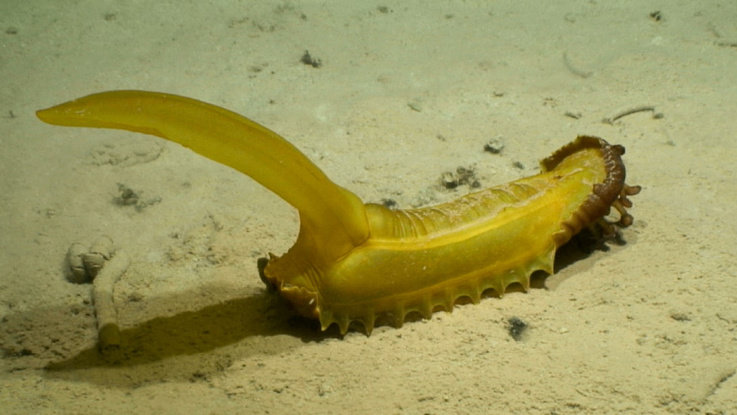
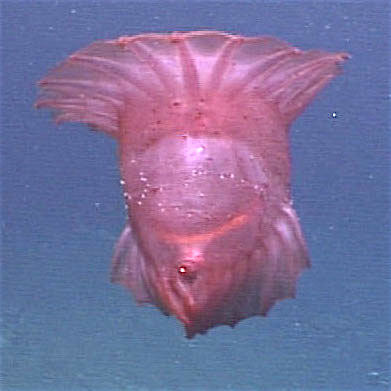
The nodules are abundant, and they are rich in cobalt, a costly metal important for many electronics that is now mined in the forests of the Democratic Republic of the Congo, a conflict zone…Ideal for nodule formation, the CCZ is estimated to contain some 27 billion metric tons of the ore. But its abyssal plain is also a garden of exotic life forms. Craig Smith, a benthic ecologist at the University of Hawaii in Honolulu, has helped lead biological surveys in the CCZ that, in one case, revealed 330 species living in just 30 square kilometers, more than two-thirds of them new to science. The CCZ’s inhabitants include a giant squid worm,  green-yellow sea cucumbers that researchers called “gummy squirrels,” and a greater variety of bristle worms than ever reported before.

gummy squirrel on seabed

Mining could leave a lasting imprint on these ecosystems. In 2015, MiningImpact scientists visited the site of a 1980s experiment off Peru in which a small sledge was pulled along the bottom to simulate nodule harvesting. Three decades later, “It looked like the disturbance had taken place yesterday,” says Andrea Koschinsky… Many of the species in the deep seabed, such as corals and sponges, live right on the nodules. “They will be sucked up and are gone. You can’t go back.”Such concerns make many environmentalists wary of opening any of the deep sea to mining…

For one thing, the legal framework for mining in international waters is uncertain. Although the United Nations’s International Seabed Authority has granted contracts for exploration, it is still drafting rules that will govern commercial operations and set limits for environmental damage. The rules are unlikely to be final before 2021…

These sensors will focus on the plume of sediment the collector kicks up. The waters of the CCZ are some of the clearest in the world, and scientists have long feared that mining could spread a vast blanket of silt, hurting life far outside the mining area. Recent experiments, however, suggest most of the silt particles will clump together and fall out within a kilometer or two, Koschinsky says. But a film of finer nanoparticles might spread farther.

Excerpts from Scheme to Mine the Abyss Gets Sea Tria, Science,  Mar. 15, 2019