Tag Archives: germplasm resources

Bureaucracy Against Biodiversity

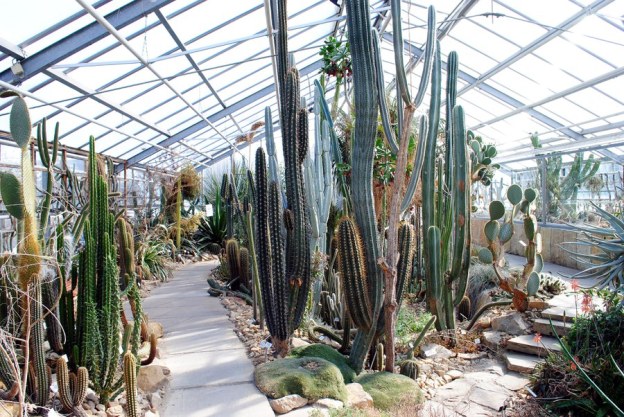
Botanic gardens around the world are struggling to find the space to conserve rare plants and save endangered species. “They can’t all fit,” said Brockington. Cambridge University Botanic Garden, for example, is home to more than 8,000 species. “That’s more than a tropical country like Vietnam, growing in a tiny little acreage of Cambridge.”…Threatened plants must compete for space in botanic gardens with beautiful, famous – but less endangered – flowers, trees and landscapes that will attract visitors and inspire people to learn about gardening and the natural world….The first botanic gardens were founded during the colonial era, and almost all are located in the west. In the past, botanists from these gardens would engage in “extractive, colonial-type practices”, visiting poorer nations to “pull out whatever plants they or their rich patrons were interested in, bring them back and cultivate them,” Brockington said.

In 1993, a United Nations Convention on Biological Diversity attempted to stop this by assigning sovereignty over biodiversity to national governments, enabling states to “own” the genetic material within their geopolitical boundaries…But this is hampering efforts of gardens to collect endangered plants in the wild, and exchange seeds and plant material to protect threatened species from extinction. To maintain diversity and preserve the world’s living collections, plants must be regularly replaced or propagated. But since the convention was introduced in 1993, the number of plants in botanic gardens collected from the wild has halved.

“Political boundaries do not help us share material and collectively steward the world’s most threatened biodiversity,” Brockington said. Brexit, for example, has been “catastrophic” for exchanges of plant material between European botanic gardens, he said. “The bureaucracy of seed exchange can be so costly now, it would be cheaper for our staff to personally fly to somewhere like Sweden, with a legal amount of seed, than send it by post.”…Brockington wants the world’s botanic gardens to collaborate to safeguard plant populations by creating one big “meta collection”, where individual specimens of an endangered wild species are extensively cultivated in multiple institutions.

Excepts from  Donna Ferguson, The risk of extinction is accelerating’: world’s botanic gardens raise alarm with space to protect endangered plants running out, Guardian, Jan. 25, 2025

Radical New Potatoes

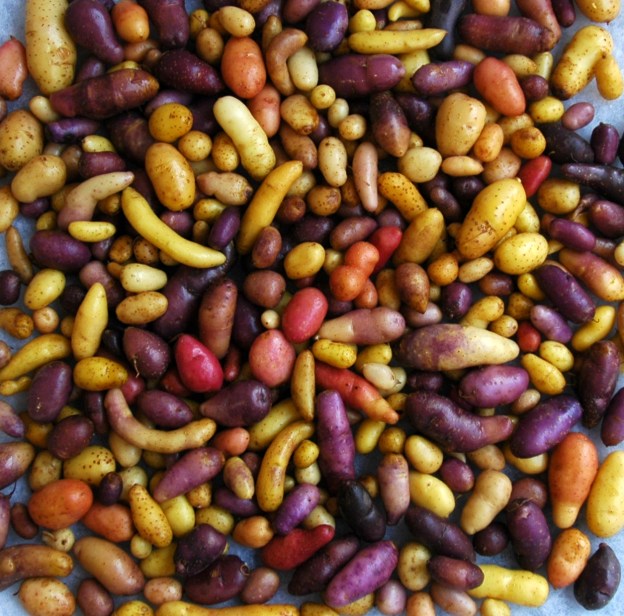
Potatoes are already a staple for 1.3 billion people… but unlike other major crops, however, the potato has not had a breeding breakthrough of the kind that helped dramatically boost yields during the Green Revolution of the 1950s and 1960s. The reason is that creating a new potato variety is slow and difficult, even by the patient standards of plant breeders…Readying a new potato variety for farm fields can take a decade or more.  Many countries continue to plant popular potato varieties that have remained essentially unchanged for decades. But new approaches, including genetic engineering, promise to add more options. Potato breeders are particularly excited about a radical new way of creating better varieties. This system, called hybrid diploid breeding, could cut the time required by more than half, make it easier to combine traits in one variety, and allow farmers to plant seeds instead of bulky chunks of tuber

Solynta Hybrid Potato Seeds

To breed a better potato, it helps to have plenty of genetic raw material on hand. But the world’s gene banks aren’t fully stocked with the richest source of valuable genes: the 107 potato species that grow in the wild. Habitat loss threatens many populations of those plants. In a bid to preserve that wild diversity before it vanishes, collectors have made their biggest push ever, part of a $50 million program coordinated by the Crop Trust, an intergovernmental organization based in Bonn, Germany.

The Crop Trust has provided grants and training to collectors around the world. The effort on wild potatoes, which wraps up this month, has yielded a collection representing 39 species from six nations: Peru, Brazil, Ecuador, Guatemala, Costa Rica, and Chile. Zorrilla’s team alone found 31 species in Peru, including one for which no seeds had ever been collected. They plan to continue to search for four other species still missing from gene banks. “We will not stop,” she says. The plants are being stored in each nation’s gene bank, CIP, and the Millennium Seed Bank at the Royal Botanic Gardens, Kew, in the United Kingdom. The stored seeds will be available to potato breeders worldwide.

THE HARDEST PART comes next: getting desirable genes from wild species into cultivated potatoes….Other researchers are skirting the limitations of traditional breeding by using genetic engineering. CIP’s Marc Ghislain and colleagues, for example, have directly added genes to already successful potato varieties without altering the plants in any other way—an approach not possible with traditional breeding. They took three genes for resistance to late blight from wild relatives and added them to varieties of potato popular in East Africa.

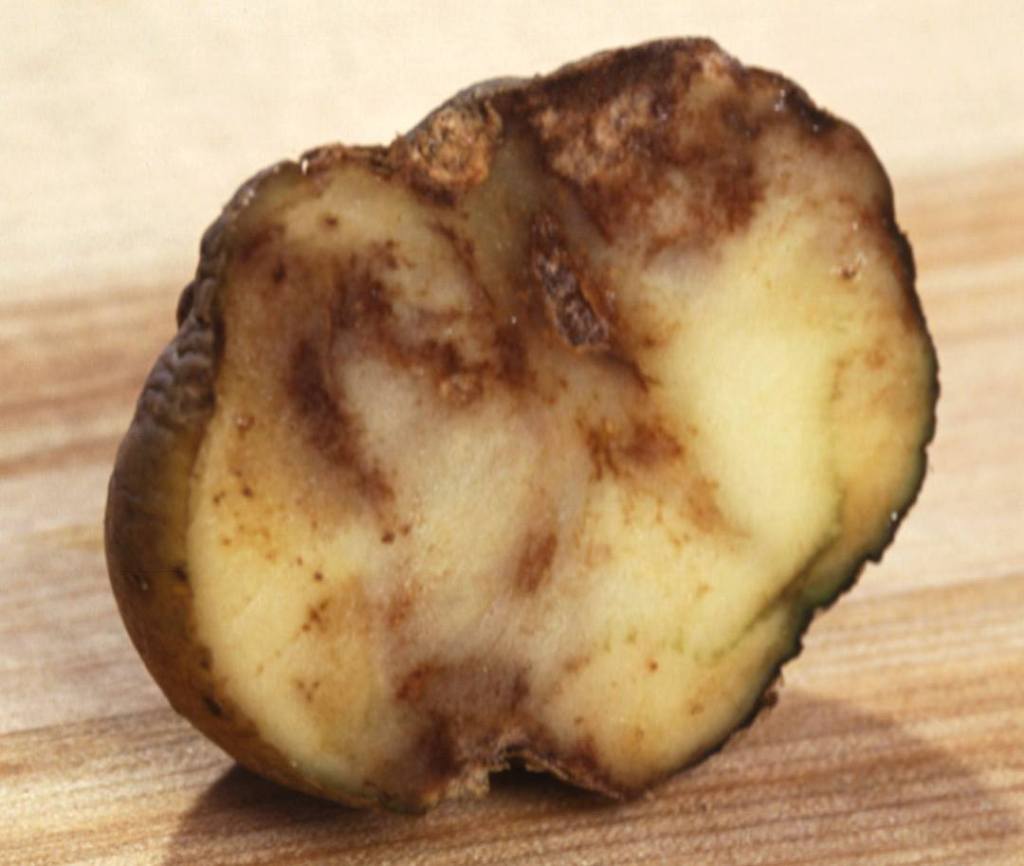
Potato Blight , a disease affecting potatoes

The engineered varieties have proved successful in 3 years of field tests in Uganda and are undergoing final studies for regulators. Transgenic potatoes that resist late blight have already been commercialized in the United States and Canada….

Pim Lindhout has been plotting a revolution that would do away with much of that tedium and complexity. As head of R&D for Solynta, a startup company founded in 2006, he and his colleagues have been developing a new way to breed potatoes….Breeders reduce the complexity either by using species with only two sets of chromosomes (known as diploids) or by manipulating domesticated potatoes to cut the number of chromosomes in half. With persistence, diploid potatoes can be inbred. In 2011, Lindhout published the first report of inbred diploid lines that are vigorous and productive. More recently, Jansky and colleagues also created inbred diploid lines.

Such diploid inbred plants are at the heart of Solynta’s strategy to revolutionize potato breeding. Other firms, including large seed companies, are also working to develop hybrid potatoes. HZPC in Joure, the Netherlands, has begun field trials in Tanzania and in several countries in Asia.

Excerpt from Erik Stokstad, The new potato, Science, Feb. 8, 2019

Unjustifiable Extinctions

The world’s botanic gardens contain at least 30% of all known plant species, including 41% of all those classed as ‘threatened’, according to the most comprehensive analysis to date of diversity in ‘ex situ’ collections: those plants conserved outside natural habitats.

The study, in September 2017 in the journal Nature Plants, found that the global network of botanic gardens conserves living plants representing almost two-thirds of plant genera and over 90% of plant families.  However, researchers from the University of Cambridge discovered a significant imbalance between temperate and tropical regions. The vast majority of all plants species grown ex situ are held in the northern hemisphere. Consequently, some 60% of temperate plant species were represented in botanic gardens but only 25% of tropical species, despite the fact that the majority of plant species are tropical.

For the study, researchers analysed datasets compiled by the Botanic Gardens Conservation International (BGCI)….

“The global network of botanic gardens is our best hope for saving some of the world’s most endangered plants,” said senior author Dr Samuel Brockington, a researcher at Cambridge’s Department of Plant Sciences as well as a curator at the University’s own Botanic Garden….“Currently, an estimated one fifth of plant diversity is under threat, yet there is no technical reason why any plant species should become extinct.   “If we do not conserve our plant diversity, humanity will struggle to solve the global challenges of food and fuel security, environmental degradation, and climate change.”

The plants not currently grown in botanic gardens are often more interesting than those that are, say the researchers. Hydrostachys polymorpha, for example, an African aquatic plant that only grows in fast flowing streams and waterfalls, or the tiny parasitic plant Pilostyles thurberi – only a few millimetres long, it lives completely within the stem tissue of desert shrubs.  Species from the most ancient plant lineages, termed ‘non-vascular’ plants, are currently almost undocumented in botanic gardens – with as few as 5% of all species stored in the global network. These include plants such as the liverworts and mosses.

“Non-vascular species are the living representatives of the first plants to colonise the land,” said Brockington. “Within these plants are captured key moments in the early evolutionary history of life on Earth, and they are essential for understanding the evolution of plants”

Excerpts from World’s botanic gardens contain a third of all known plant species, and help protect the most threatened, Press Release of Botanic Gardens Conservation International, Sept. 25, 2016