Tag Archives: green-energy metals

To Own Means Nothing-To Do Means More: Metals and Minerals of the World

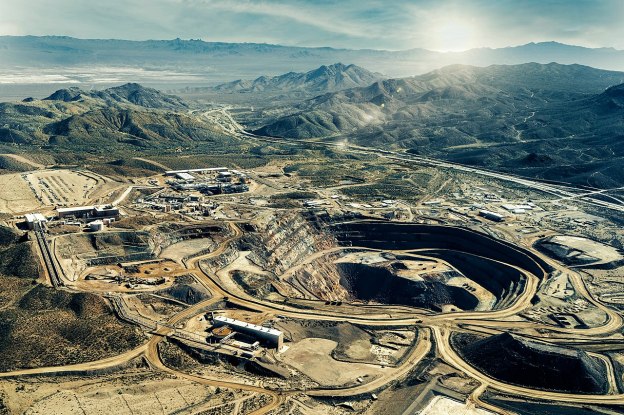
Trump wants to secure the minerals the U.S. needs for everything from smartphones to jet fighters by striking deals in Ukraine, Greenland and even Russia. But even if the Trump administration secures more mines for American companies through agreements like the mineral-rights deal being discussed with Ukraine, it may have to send much of the minerals to China—its main geopolitical rival—to be processed…

In truth, the U.S. already has abundant supplies of rare earths, but it relies on China to refine them. That is because the U.S. has lost much of its capacity to process minerals, while China has become the world’s dominant refiner of rare earths, cobalt, copper and many other metals.

Until the 1990s, the U.S. was a major refiner of minerals and metals. But then China emerged as the dominant player, powered by its cheap labor force and looser environmental regulations of a sector that can be highly polluting. The voracious need of Chinese manufacturers for raw materials during the country’s years of explosive growth was also a boon for Chinese refiners. Today, the sheer scale of China’s refining industry makes it difficult for others to compete. According to industry estimates, the cost of building a refinery plant in China is a third of the cost in the U.S.

Excerpts from  Jon Emon, How China Beat Out the U.S. to Become the Top Player in Rare-Earths Refining, WSJ, Mar. 25, 2025
How to Kill People 8 000 Feet Below Ground

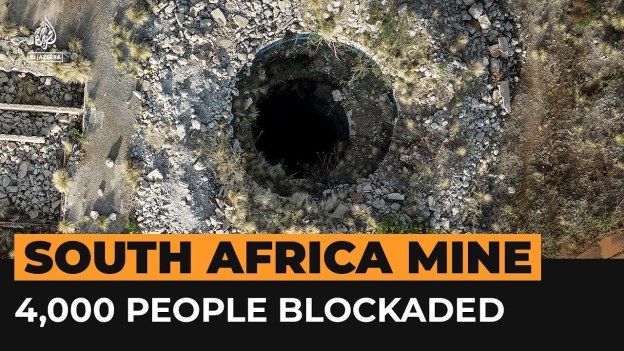
The South Africa’ government has been trying to starve out 1,000 informal prospectors so as to force them out of the Buffelsfontein mine, which extends some 8,000 feet below ground. For months in 2024, police have been sealing most entrances to the tunnels, blocking food and water deliveries and stationing guards at remaining exits to arrest any miners who make their way to the surface. In recent days, nearly 1,200 have surrendered. Police estimate that hundreds of men remain below, but it isn’t clear if they are unwilling or unable to reach the surface.

The operation is part of what police call their “Close the Hole” plan to combat illegal mining, an acute problem in what was once the gold-mining capital of the world. The South African government estimates that illegal gold mining costs the country the equivalent of over $3.8 billion a year in lost revenue, and is often associated with a jump in violent crime in nearby communities and an influx of migrants from neighboring countries… Facing a 42% unemployment rate, impoverished South Africans and migrants from nearby countries pry open sealed entrances and venture thousands of feet underground to try their luck. Locals call the men zama zamas, a Zulu phrase meaning “take a chance.”

Whole ecosystems exist below ground, with entrepreneurs selling miners everything from soda to toothpaste to sex.  The miners in Stilfontein, 100 miles southwest of Johannesburg, are suffering from hunger and dehydration, according to police. Industry experts say the zama zamas are often the lowest-level workers for larger criminal gangs that ultimately sell the gold abroad. Those who have migrated from elsewhere are sometimes victims of abuse, forced to work underground to pay off debts. Police said most miners who emerge will be charged with crimes and imprisoned or deported. 

Excerpt from Alexandra Wexler, The Standoff Deep Inside an Abandoned South African Gold Mine, WSJ, Nov. 15, 2024

Mining the Earth to Save it

The rush to secure green-energy metals is bringing new life to one of the world’s oldest mining hubs. Like the United States, Europe is worried that it is too reliant on China for supplies of once-obscure natural resources, such as lithium and rare-earth metals, that are seen as climate-friendly successors to oil and gas…. 

On both sides of the Atlantic, one of the best answers to long-simmering worries about green-energy security is to look north…, for example, to the “Canadian Shield,” a vast band of rock encircling Hudson Bay. The “Baltic Shield” that stretches across Scandinavia to western Russia is similarly mineral-rich. It helps explain why Sweden in particular has such a long mining heritage. In the mid-17th century, the country’s “Great Copper Mountain” near Falun provided two-thirds of the world’s copper. Even today, 80% of iron ore mined in the EU comes from a site near the Arctic town of Kiruna that Swedish state operator LKAB has exploited for well over a century.

The energy transition is an opportunity for Sweden’s mining complex. LKAB said in January 2023 that it had identified Europe’s largest body of rare-earth metals close to its existing Kiruna operation…Digging up the planet to save it is an awkward pitch. The only way for miners to counter accusations that they are adding to the problem they want to solve is by decarbonizing operations. Here Sweden is again helped by the geology of the Baltic Shield, whose river valleys are favorable for green-energy production. Roughly 45% of the country’s electricity comes from hydroelectric power, with much of the remainder provided by nuclear and wind. It is also cheap, particularly in the Arctic, where many mines are located. Against a favorable geopolitical backdrop, the biggest risk for investors is political. Mines, which can bring a lot of noise and relatively few jobs to an area, don’t tend to be popular locally.

There is a reason the West relies on autocracies for a lot of its oil.

Excerpts from Stephen Wilmot, For Mining EV Metals, the Arctic Is Hot, WSJ, Feb. 14, 2023